 Chinese
 English
 Russian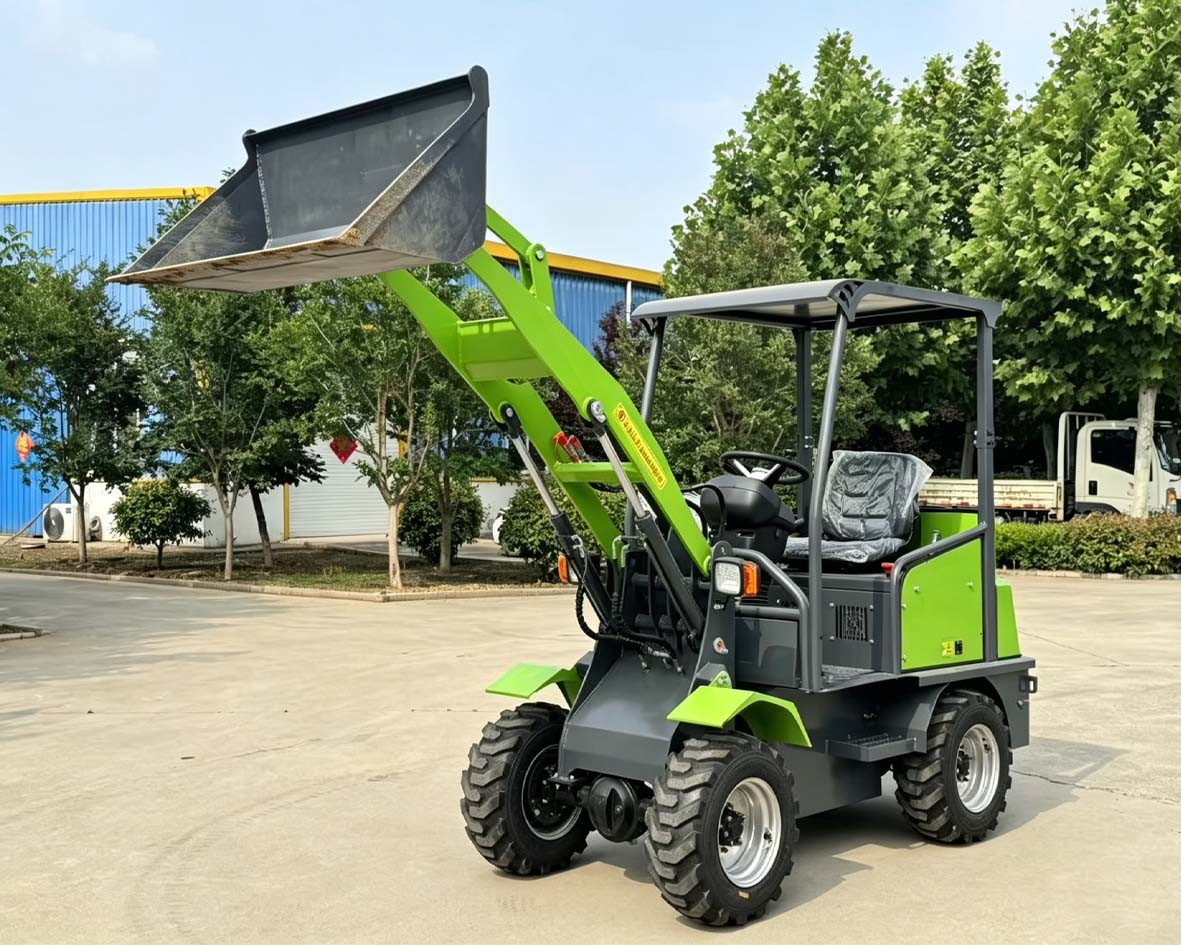
I. Commercial Livestock Farms: Calm Animals, Safe Floors, Dawn Manure Scraping
1. The Pain: Diesel Loaders Are an Invisible Killer on Farms
In modern layer houses and dairy barns across the Netherlands, Germany, and the Middle East, internal aisles typically measure just 1.1–1.3 meters, with minimal ventilation to retain heat. Once a diesel mini-loader enters, the problems cascade:
Bio-security disaster: Carbon monoxide (CO), nitrogen oxides (NOx), and PM2.5 particulates from diesel combustion accumulate rapidly in enclosed spaces. Field data from an 8-house layer farm in Flevoland, Netherlands, showed PM2.5 levels spiking to 4× normal after just one pass of a diesel loader. Egg production dropped 8%, and a batch of hens developed widespread respiratory infections, pushing veterinary costs up by €3,000 in a single month.
Noise stress: At 90dB, the diesel engine's roar reverberates inside closed houses, keeping flocks in chronic stress. During hot summers, stress-induced feather pecking and cannibalism push mortality up by 2–3 percentage points.
Floor destruction: Anti-corrosive, non-slip concrete slatted floors cost €40–60 per panel. A diesel loader's hard tires generate massive shear force during loaded turns, scuffing 15%–20% of slats in a single season. Repair costs far exceed fuel expenses.
Time-window lockdown: The 5–7 AM window is prime for manure scraping, but diesel noise triggers neighbor complaints. Many farms cut scraping frequency, allowing manure to pile up and ammonia to spike—a vicious cycle.
2. How XHD500 Breaks Through
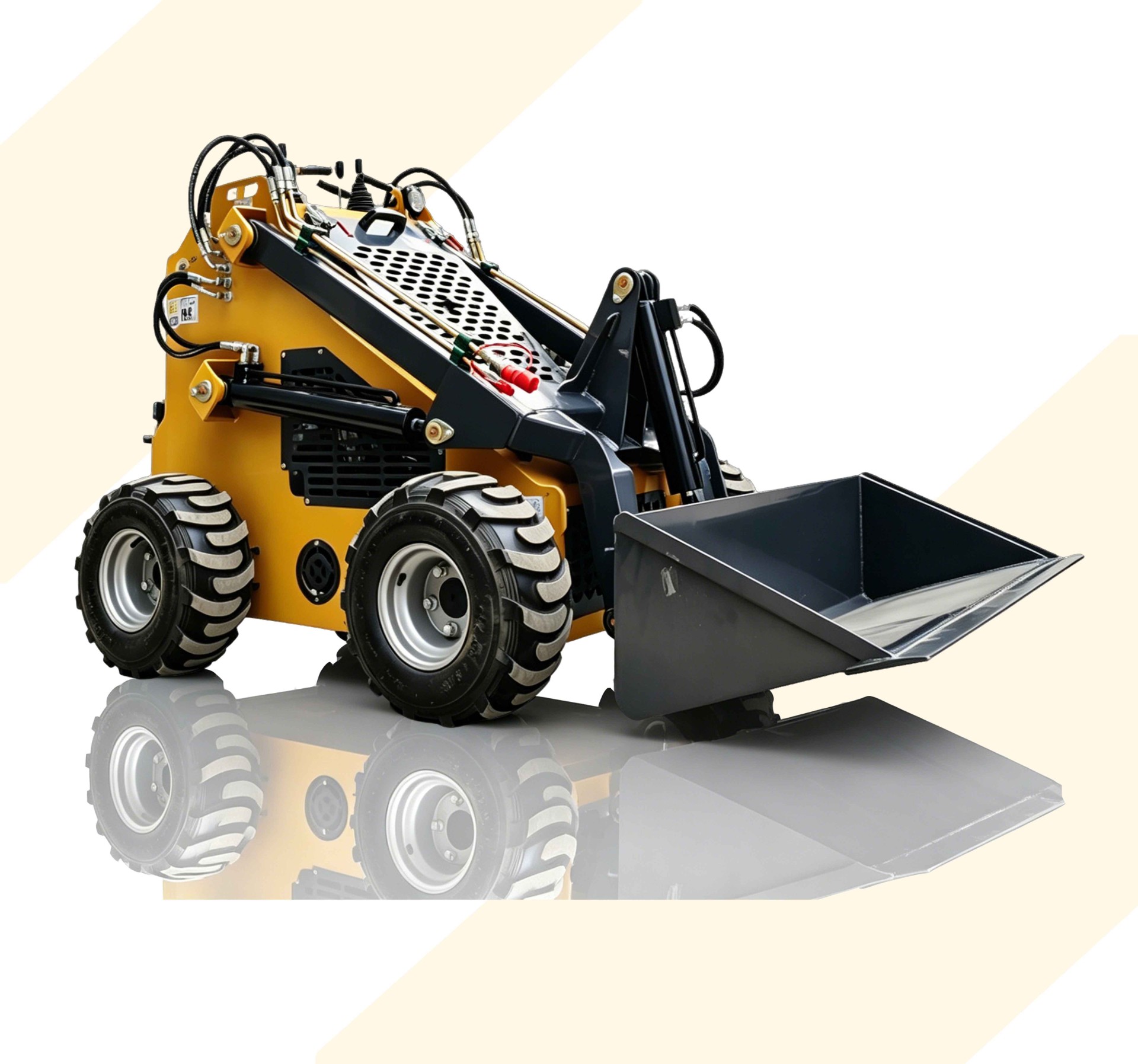
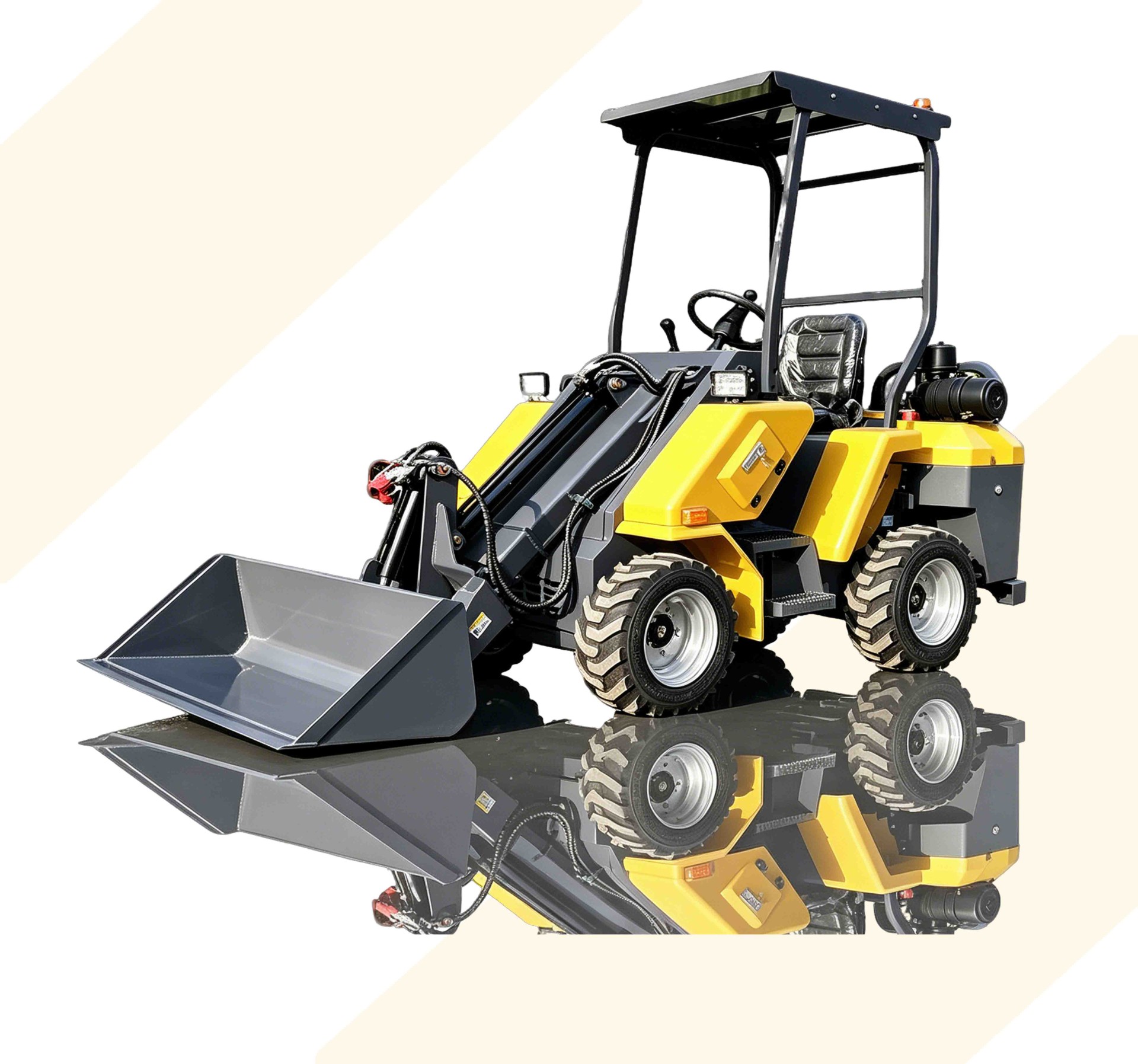
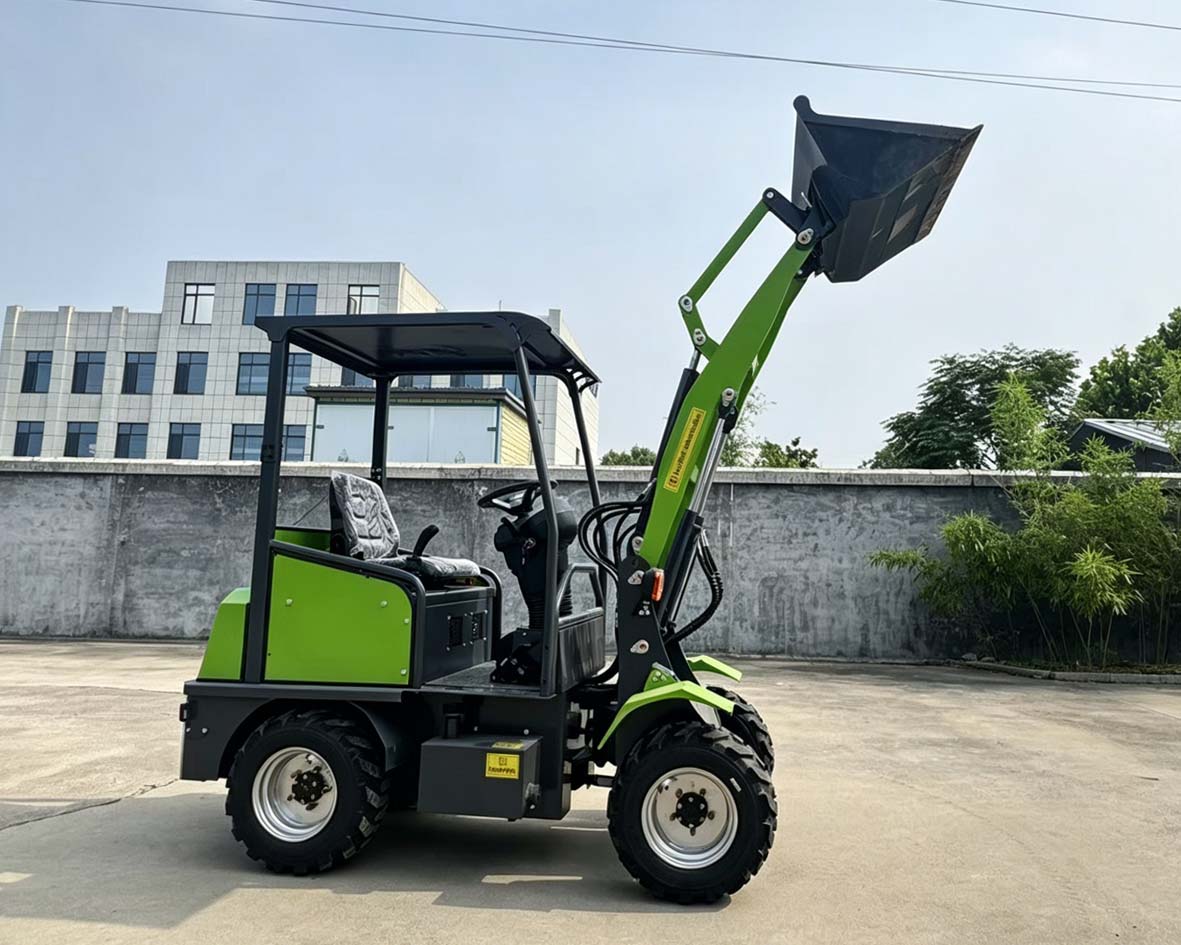
Narrow-body access: At 1060mm wide, it leaves 4cm clearance in a 1.1m aisle. Foldable mirrors prevent wall-scraping.
Zero emission protects bio-security: Third-party testing in the same hen house: after 1 hour of diesel operation, CO hit 35ppm. The XHD500 lithium version ran for 4 continuous hours with CO staying below 2ppm and PM2.5 dropping over 70%. Birds remained calm—no panic flights, no agitation.
68–72dB "vacuum cleaner" volume: No engine knock. Noise comes only from tire friction and slight hydraulic overflow. At 5 AM, noise dissipates beyond the barn walls. A free-range egg farmer in Yorkshire, UK, reported: "Since switching to electric, the hens don't even stop laying while we scrape."
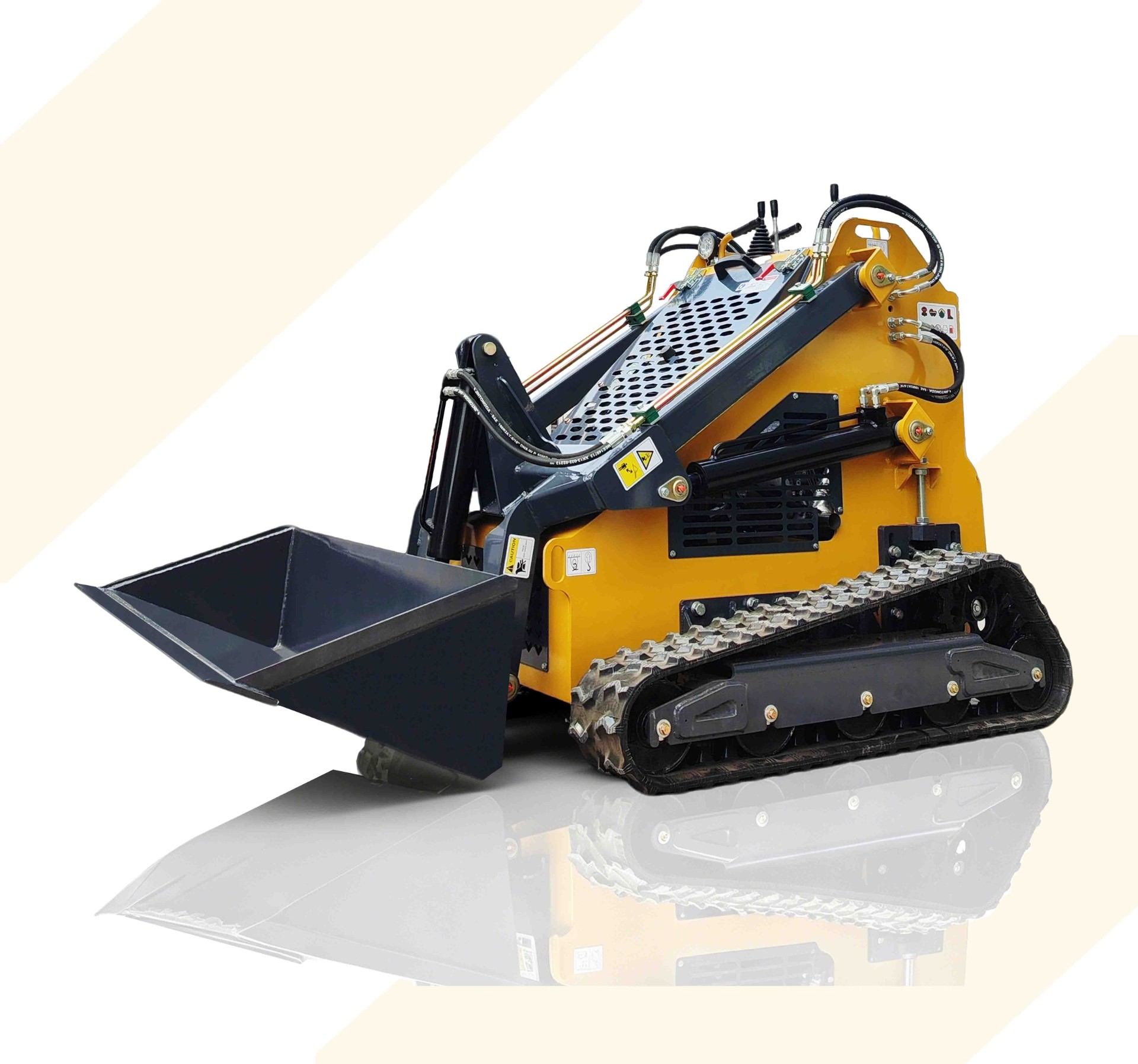
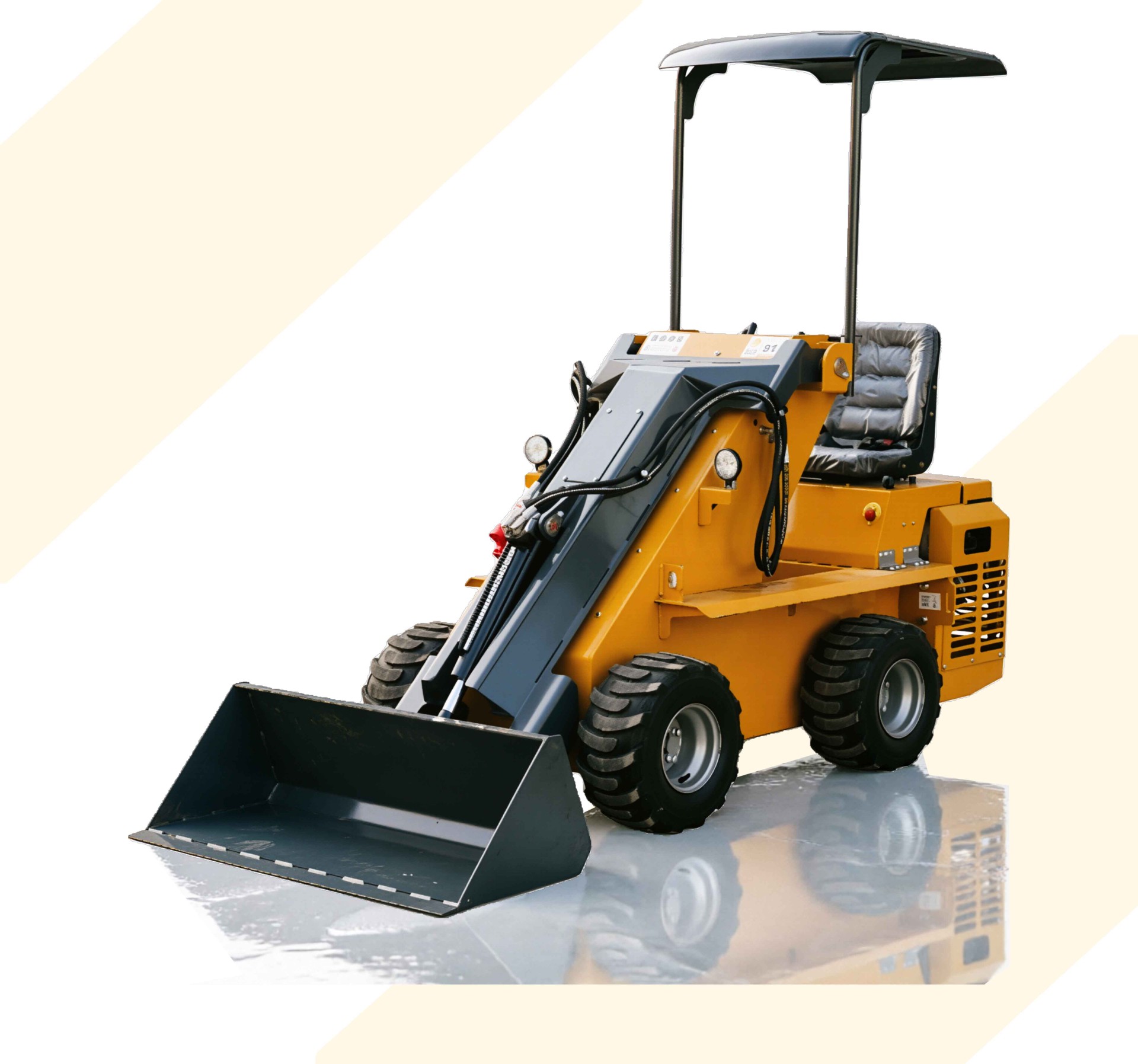
Zero-damage rubber tires: Standard 23 * 8.5-12 pneumatic tires exert ground pressure lower than an adult footprint. On wet manure alleys and rough slats, they leave no black marks or scratches. Fitted with a manure bucket or the standard 680mm manganese steel bucket, one operator cleans a 120m house in 3 hours.
Attachment versatility: Forks move feed pallets and vaccine boxes. A sweeper attachment clears access roads of leaves and feathers. One machine, year-round uptime.
3. Buying Decision
Farms with ≥800 annual manure hours and organic/export certification → 64V lithium version. Payback in 10–14 months via restored egg yield (+6%–8%), lower vet bills, and zero floor repairs.
Seasonal smallholders, <400 hours/year → 60V lead-acid version. Lower upfront cost, charged overnight after single-shift use.
II. Orchards & Nurseries: Row-Pass Without Root Compaction, One Machine for Four Seasons
1. The Pain: Diesel Tractors Are Soil Killers in Orchards
In Chile's Maipo Valley, California's Central Valley, and Turkey's Aegean coastal vineyards and walnut groves, row spacing is 1.2–1.5m with slopes of 15°–20°. Diesel tractors here face a triple threat:
Soil compaction cuts yields: A 2-ton diesel tractor compresses soil under its tires, dropping porosity by 30%–40% per pass. INIA (Chile's agricultural institute) tracking data showed walnut yields in compacted rows running 12%–15% below unaffected areas, with lower sugar content.
Rainy-season paralysis: Spring in the Andes foothills means wet grass slopes. Two-wheel-drive diesel tractors spin out at 15° inclines—rollover risk is real. Fertilizer season (Sept–Oct) coincides with rain. Four workers with two carts finish just 2 mu (~0.13 hectares) per day.
Pruning waste bottleneck: Grape vines and walnut branches are bulky but light. Manual removal is slow. Burning is banned; composting needs extra land and equipment.
2. How XHD500 Breaks Through
Dual-drive climbing without fishtailing: The 4KW flat-wire motor delivers high low-RPM torque. Electronic differential control ensures smooth starts on wet 18° slopes without wheel spin. A Maipo Valley grower's log: the XHD500 climbed a rain-soaked 18° incline with 300kg of organic fertilizer—no slip. His old diesel loader needed wooden planks to escape the same spot.
Low ground pressure protects roots: At 1240kg operating weight spread across wide tires, ground pressure is a fraction of a tractor's. Soil porosity testing showed only a 2%–3% drop after XHD500 passes, versus 35% for tractors. Tree growth stays uniform; fruit quality holds.
Year-round attachments:
Spring (Sep–Nov): Forks move 500kg of fertilizer bags or seedling trays—6× faster than manual.
Summer (Dec–Feb): Grapple clears winter pruning debris, loads directly onto trucks.
Autumn (Mar–May): Bucket grades and fills rain-washed gullies between rows.
Winter (Jun–Aug): Snow blade clears orchard access roads in cold regions.
Zero emission protects blossoms: Diesel exhaust sulfur compounds scorch open blossoms, cutting fruit set. The XHD500's zero-emission operation during pollination season protects bee activity—critical for organic certification.
3. Buying Decision
Orchard owners, horticultural contractors, nursery cooperatives → 64V lithium + fork + grapple kit. Covers all four seasons, replaces 4 seasonal laborers, cuts labor 75%. Full payback within one harvest cycle.
Snow regions → Add snow blade to eliminate off-season downtime.
III. Indoor Demolition & Basement Hauling: No Windows, No Vent, Diesel Banned
1. The Pain: Diesel in Enclosed Spaces Is a Lethal Weapon
Dubai 5-star hotel P2 garage renovation. London West End shopping mall mezzanine retrofit. Singapore MRT ventilation shaft maintenance. These projects share one trait: fully or semi-enclosed spaces relying entirely on mechanical ventilation.
CO asphyxiation risk: In a basement with limited airflow, 20 minutes of diesel idle pushes CO past the 25ppm safety threshold. Even with respirators, workers experience dizziness and nausea. On a Dubai project, 5 workers were hospitalized for mild CO poisoning in the first three days of diesel use.
Noise resonance triggers complaints: Concrete structures amplify sound. At 90dB, diesel noise creates standing waves that penetrate floor slabs into guest rooms. The Dubai hotel initially logged 7 formal complaints from floors 12 and above. Management nearly shut the project down.
Epoxy floor "death sentence": Premium basements use epoxy coatings—stain-resistant but oil-phobic. One diesel drip leaves a permanent brown渗透 stain. Repairing a 2m2 patch requires full grinding and recoating: $2,000+ in materials and labor. Including downtime, a single leak can cost $5,000–$8,000.
Regulatory red line: Dubai Municipality, Singapore BCA, and UK HSE explicitly prohibit diesel equipment below certain underground levels. Violations in Dubai carry fines of 5,000 AED (~$1,360) per incident.
2. How XHD500 Breaks Through
Zero emission = no ventilation ducts needed: Pure electric requires no oxygen, produces no fumes. It operates safely even with mechanical ventilation fully shut down. No respirators needed—cutting PPE costs and discomfort-related slowdowns.
68dB "invisible construction": At 68–72dB, noise drops to background levels above the concrete slab. After switching entirely to XHD500, the Dubai hotel received zero new noise complaints. The hotel's operations director wrote in the acceptance report: "If I hadn't seen the basement renovation myself, I wouldn't have known it was happening."
Sealed hydraulics, zero epoxy risk: The fully enclosed hydraulic circuit, tested to 2,000 hours without leakage, leaves no oil marks on epoxy. Rubber tires leave no black tracks. Post-completion inspection at the Dubai site showed 100% epoxy integrity—zero repairs needed.
Lift height matches vertical logistics: 2950mm max lift and 2200mm dump height allow direct loading into elevator hoppers or mini dumpers—eliminating intermediate handling. The 7-second lift / 3-second dump hydraulic circuit lets one operator complete the full "scoop–haul–dump" cycle at 8–10× the speed of manual carts.
Night-work compliance passport: The low-noise + zero-emission combo is one of the few legal pathways to nighttime urban demolition permits. The Dubai hotel leveraged this to compress a 30-day basement schedule to 18 days—reopening 12 days early and recovering ~$50,000 in parking revenue.
3. Buying Decision
Municipal renovation crews, specialized demolition subcontractors, underground engineering contractors → 64V lithium version is the "entry permit." Without it, you may not even qualify to bid.
Equipment rental companies → Deploy 2–3 XHD500 lithium units targeting the urban night-work and indoor demolition niche. Payback in ~5 months. Rental premiums in these high-barrier scenarios reach 1.5–2× standard day rates.
Conclusion: Match the Scene and It Prints Money
The XHD500 is not a "universal" machine trying to replace a 3-ton loader. Its value lies in hitting the intersection of four exact conditions: aisle ≤ 1.15m + noise limit ≤ 75dB + mandatory zero emission + medium duty (under 500kg). When all four align, diesel equipment either can't enter, gets fined out, or is outright illegal—and the XHD500 stands alone in that gap.
Poultry farms use it to protect egg yield. Orchards use it to protect soil and production. Indoor demolition uses it to protect schedule and compliance. Three completely different industries. One answer. That is the power of the right scenario.