 Chinese
 English
 Russian
Introduction: Compliance is the Only Ticket to the EU Market
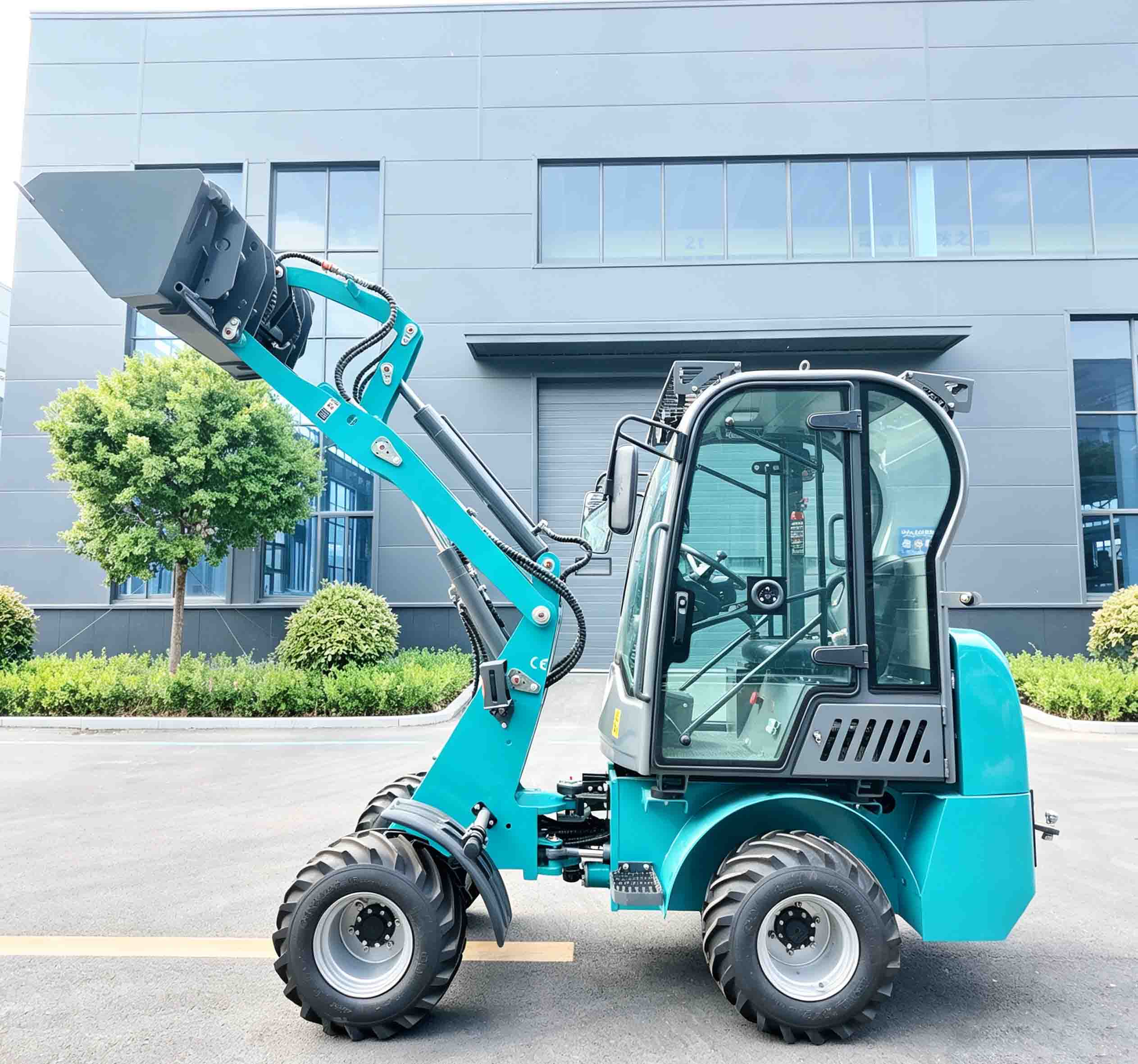
"Since it's electric and has no engine, does it still need CE certification?" This is the most frequent misconception encountered by Jining Xinghang Machinery Manufacturing Co., Ltd. when handling EU inquiries. Many new buyers assume that bypassing diesel Stage V emissions eliminates EU compliance barriers. Consequently, shipments often arrive at Hamburg or Rotterdam ports only to be detained by customs due to missing mandatory documentation, risking costly returns or fines. In reality, while electric loaders are exempt from engine emissions (Stage V), as machinery placed on the EU market, they must clear higher safety and technical hurdles. This article deciphers the logic of EU compliance and demonstrates how Xinghang secures your customs clearance and tender bids.
Debunking Myths: Stage V Exemption ≠ CE Exemption
The EU regulatory framework is complex; buyers must distinguish two core concepts:
Stage V (Regulation (EU) 2016/1628): Pertains solely to harmful pollutants from internal combustion engines. Electric loaders produce zero exhaust; hence, they are fully exempt from Stage V. Any supplier demanding DPF or SCR additions on electric units misunderstands the regulation.
CE Marking (Machinery Directive 2006/42/EC): This is the EU's "Safety Passport," mandatory for all machinery regardless of power source. It proves conformity with EU health, safety, and environmental protection requirements. Electric loaders must satisfy these core directives:
Machinery Directive (MD): Ensuring structural integrity, including ROPS/FOPS strength, emergency stop systems, and guarding of moving parts.
Low Voltage Directive (LVD 2014/35/EU): Governing chargers, high-voltage harnesses, and controllers to prevent electric shock risks through insulation, dielectric strength, and thermal stability.
Electromagnetic Compatibility (EMC 2014/30/EU): Ensuring the machine does not generate excessive electromagnetic interference (affecting airport towers/hospitals) and is immune to external interference (e.g., not crashing near power lines).
Power Batteries: The Dual Thresholds of UN38.3 and IEC 62619
The battery is the heart of the machine and a primary focus for EU customs, classified as Dangerous Goods (Class 9) under transport regulations.
UN38.3 Testing: Per the UN Manual of Tests and Criteria, lithium batteries must pass eight stringent tests (altitude simulation, thermal, vibration, shock, short circuit, etc.) simulating transport extremes. Without a UN38.3 report, batteries cannot fly.
MSDS (Material Safety Data Sheet): Detailing chemical composition, physical properties, and emergency measures.
IEC 62619 Standard: The International Electrotechnical Commission's safety standard for industrial lithium batteries. EU customs and clients frequently cite this to audit electrical safety, thermal runaway propagation protection, and BMS reliability.
Jining Xinghang subjects all battery batches at our Yanzhou facility to charge-discharge curve analysis and destructive physical testing, retaining raw records. We deliver not just paperwork, but physical resilience.
Documentation: The "Talisman" for Clearance and Tenders
Missing technical files are the leading cause of customs failure. Many buyers focus on the iron while neglecting "soft power." As an integrated manufacturer, Jining Xinghang includes these standard documents in our delivery package:
Declaration of Conformity (DoC): A legal document signed by the manufacturer's legal representative, affirming compliance with all applicable EU directives. It is the legal basis for the CE mark.
EN Test Reports: Specifically EN 61000-6-2 (Immunity) and EN 61000-6-4 (Emission) reports proving EMC compliance.
Technical File: Including the full English manual (with safety warnings), electrical schematics, hydraulic diagrams, and a Bill of Materials (BOM).
Traceability Records: Desensitized Customs Declarations for shipments to France, Germany, or the UK, proving successful market entry of the same model.
Xinghang's Transparency Pledge: Factory to Job Site
Compliance is not mere paperwork; it reflects manufacturing prowess.
ISO 9001 Quality Management: Xinghang strictly adheres to ISO 9001, with documented processes from Incoming Quality Control (IQC) and In-Process Quality Control (IPQC) to Final Quality Control (FQC).
Third-Party Verification: We welcome and facilitate pre-shipment inspections by SGS, TUV, or your designated agency. Our test reports are raw data—no Photoshop or falsification.
Open Test Facilities: During video audits, we showcase our post-weld aging areas, 3E system traceability databases, and dynamic water spray test bays. Our transparency stems from absolute confidence in our quality.
Case Study: Winning a French Municipal Tender
Early 2024, a French municipality tendered electric loaders for indoor demolition. Bidders included Chinese and European brands. Jining Xinghang won. Beyond price, the decisive factor was our "Compliance Documentation Package":
Provided CE certificates involving EU Notified Bodies.
Batteries passed IEC 62619, mitigating thermal runaway concerns.
Submitted on-site video proof of the same model operating in Paris suburbs.
Client feedback: "Xinghang's documentation left no doubt during evaluation. We were certain this was a legal, safe, and eco-friendly machine."
Advice for Buyers: How to Vet Compliant Suppliers
Conduct "Compliance Due Diligence" before signing:
Request Samples: Ask for previews of the DoC and EN test reports (original scans).
Beware of Low-Price Traps: Compliance has costs. If a factory quotes drastically below market rate and claims "free CE certificates" or "no EMC testing needed," be cautious. CE fraud is a criminal offense in the EU, and importers bear liability.
Confirm Support: Inquire about multilingual (EN/DE/FR) manuals and after-sales service.
Conclusion
Choosing Jining Xinghang Machinery Manufacturing Co., Ltd. means choosing a compliant, safe, and efficient export pathway. We provide not just high-quality electric loaders, but comprehensive compliance solutions ensuring zero customs barriers and confident bidding. In a rules-based market, compliance is the ultimate competitive edge.