 Chinese
 English
 Russian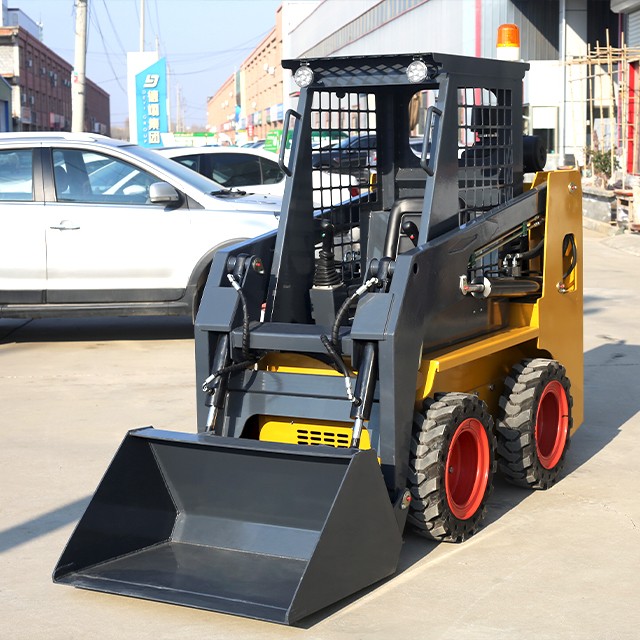
Introduction: The Modern Contractor’s Spatial Dilemma
In the current landscape of urban renewal and high-density construction, space has become the ultimate luxury—and the primary obstacle. Contractors today face a paradox: the machinery required to perform heavy-duty tasks is often too large for the very sites where the work needs to happen. Standard compact excavators and wheel loaders, while powerful, frequently exceed 1,500mm in width. This dimensional bulk renders them useless at garden gates, narrow basement entries, interior demolition projects, and densely packed urban lots. The result is a "logistical bottleneck" that forces crews into unsustainable manual labor, slowing project timelines and inflating costs.
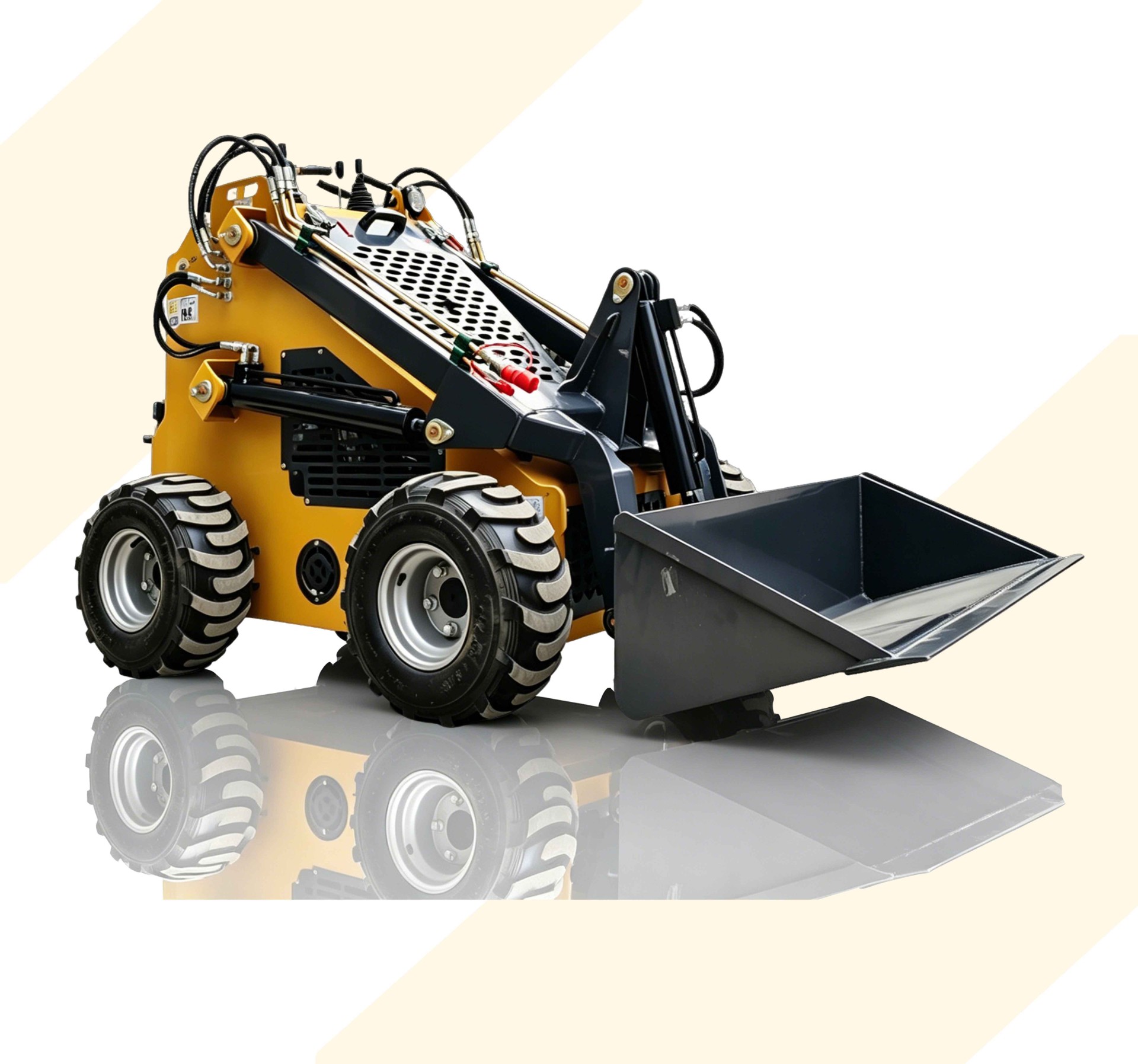
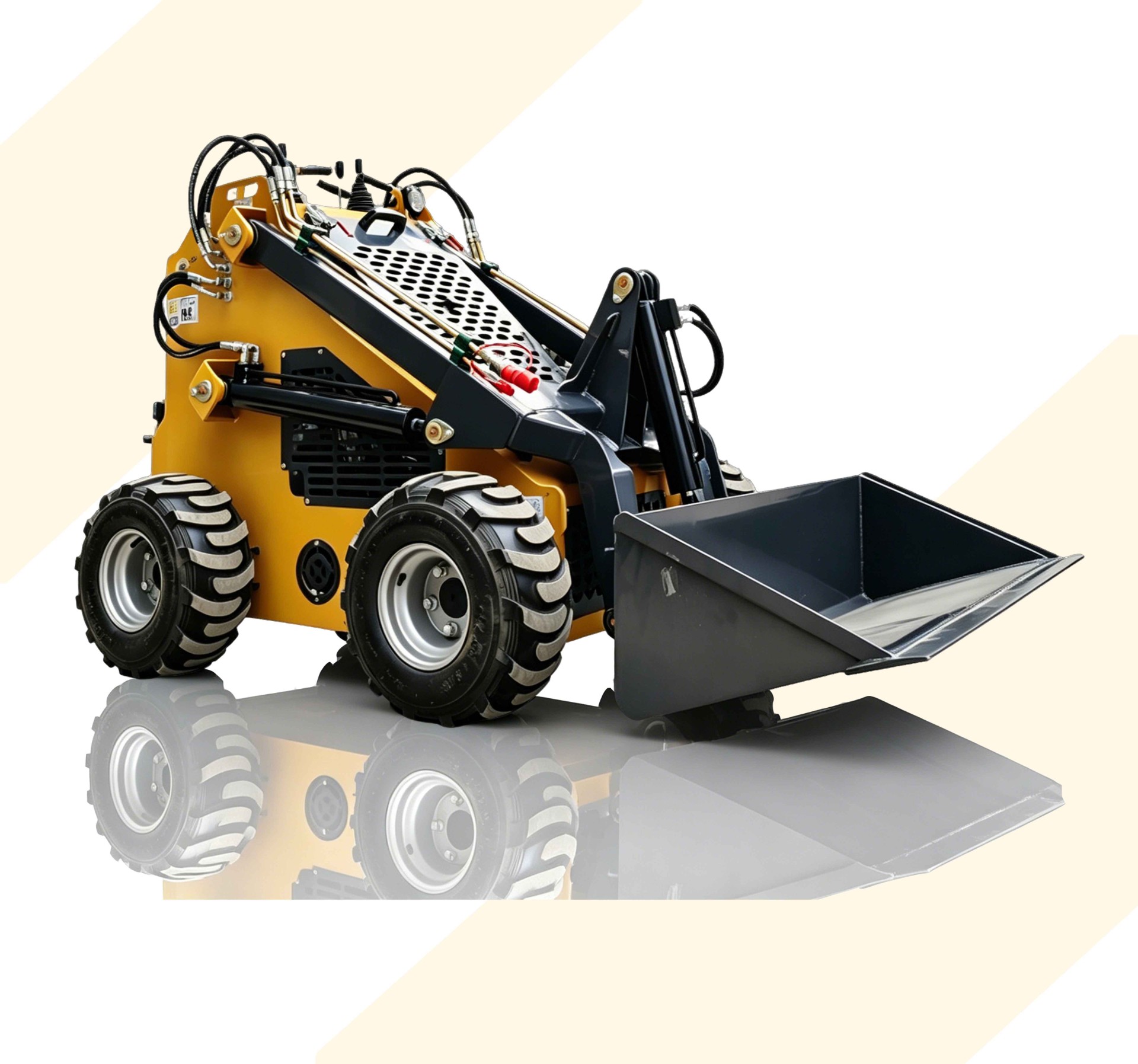
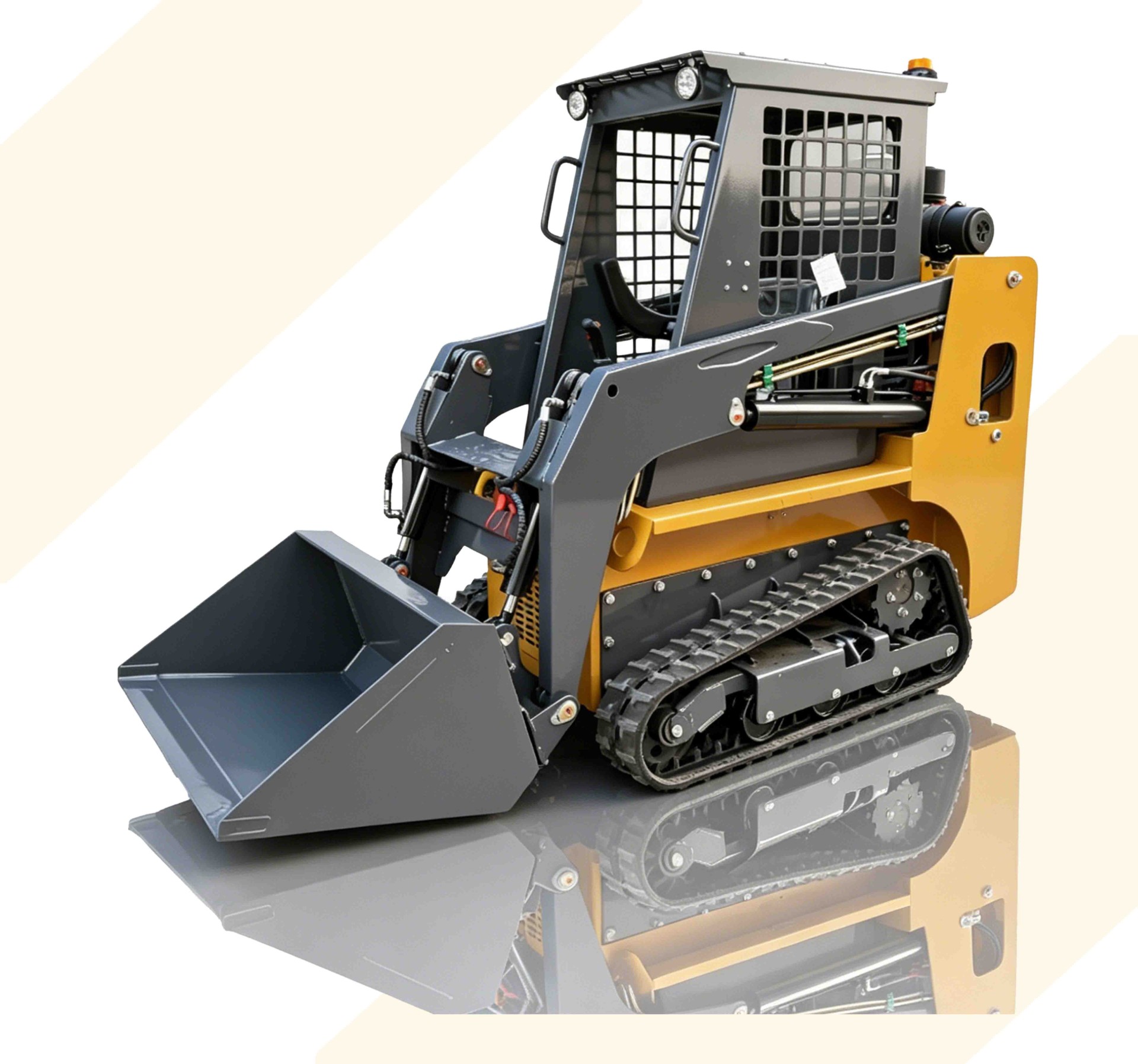
This is where the compact skid steer loader redefines the rules of engagement. With chassis widths starting as low as 900mm, these machines are purpose-built to navigate environments that other equipment simply cannot access. They do not just move dirt; they restore productivity to confined job sites. This article provides an in-depth analysis of why a skid steer loader is the definitive solution for tight-access work, examining the mechanical advantages of its steering geometry, the engineering behind its stability, and its transformative impact on modern workflows.
1. The Geometry of Access: Zero-Turn Radius
The single most important feature of a skid steer loader is its unique steering mechanism. Unlike traditional vehicles that use a steering axle to turn the front wheels, skid steers utilize a differential steering system. By independently driving the left and right side wheels or tracks at different speeds—or in opposite directions—the machine achieves a "zero-turn radius."
Pivoting in Place: In a narrow courtyard or a basement corridor, a skid steer can execute a 360-degree spin without changing its physical footprint. This allows operators to reposition the machine instantly to scoop, grade, or lift without the multi-point backing maneuvers required by larger equipment.
Doorway Navigation: A standard residential doorway typically measures between 760mm and 910mm. While a skid steer might be slightly wider than the door frame, its ability to "crab" sideways (on wheeled models) or pivot sharply allows it to enter openings that would permanently block a rigid-axle machine.
Operational Efficiency: Time spent maneuvering is time not spent working. On a typical landscaping project involving 20 tons of material transport through a 900mm gate, a skid steer can complete the task in a fraction of the time it would take a larger machine to stage materials outside the gate for manual transfer.
2. Engineering Stability: The Fixed Chassis Advantage
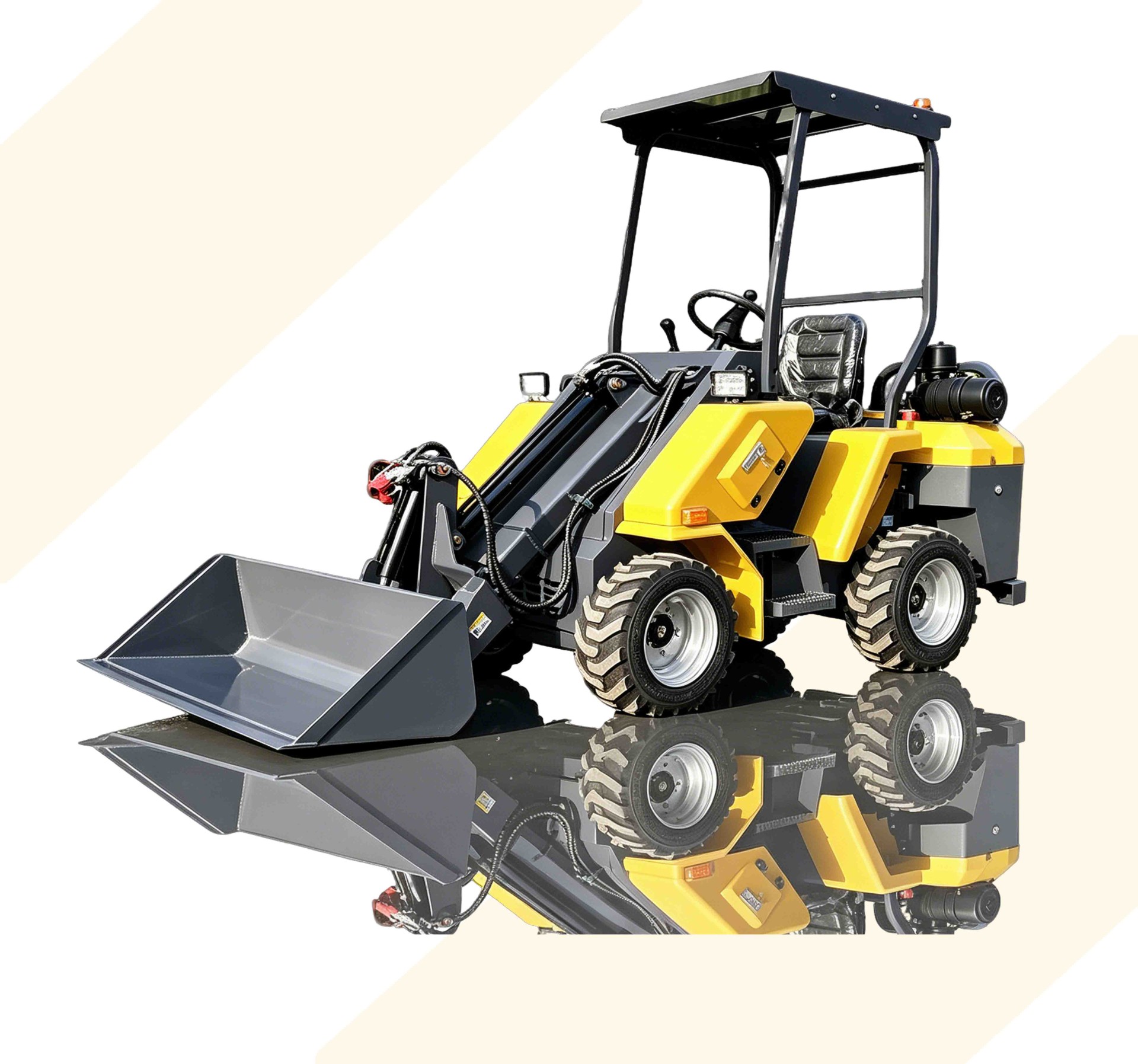
A common misconception is that smaller machines are inherently less stable. However, the skid steer’s fixed chassis design offers superior stability compared to articulated loaders in confined spaces.
Low Center of Gravity: Skid steers are designed with the engine and heavy hydraulic components positioned low and centered within the chassis. This low center of gravity minimizes the risk of tipping when operating on uneven ground or when lifting loads.
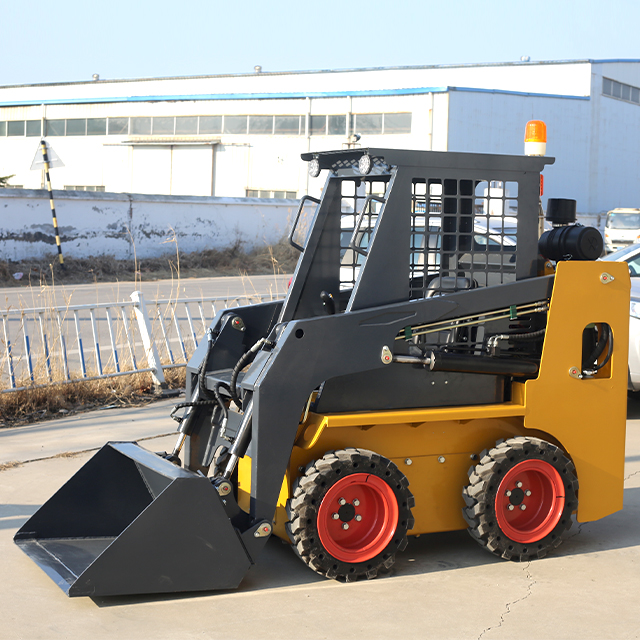
Rigid Frame Integrity: Because there is no articulation joint (the "hinge" found on many compact loaders), the skid steer maintains full structural integrity during lifting operations. When a load is raised, the entire machine acts as a single, solid unit, distributing weight evenly across the undercarriage.
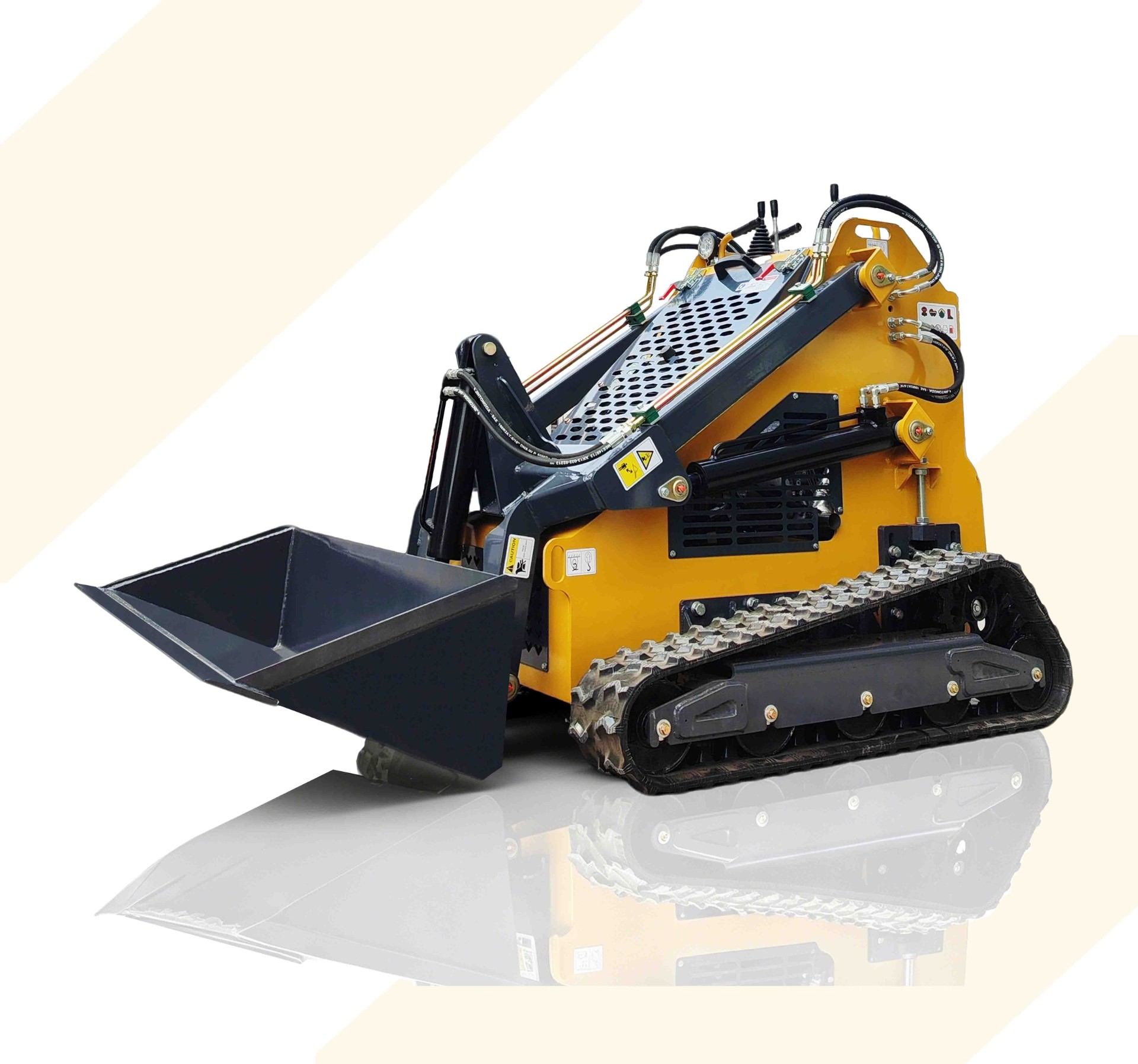
Track vs. Wheel Dynamics: For extreme soft-soil conditions, tracked skid steers offer unparalleled flotation. The rubber track distributes the machine's weight over a much larger surface area, resulting in low ground pressure. This prevents the machine from sinking into mud, sand, or sensitive turf, ensuring continuous operation where wheeled units might get stuck.
3. Ground Protection: Preserving Client Assets
On finished job sites—such as completed basements, polished concrete floors, or meticulously maintained lawns—damage caused by heavy equipment is a major liability. Skid steers are engineered to minimize this risk.
Non-Marking Tires: Many skid steers can be equipped with non-marking tires, which prevent the black scuff marks commonly left by standard industrial tires on concrete or asphalt. This is essential for indoor demolition and finishing work.
Rubber Tracks: On landscaping projects, rubber tracks provide exceptional grip without tearing up grass or leaving deep ruts. Unlike steel tracks, they protect hardscaping features like pavers and decorative stone.
Low Ground Pressure: Even on wheeled models, the concentrated weight distribution over four points results in manageable ground pressure, significantly reducing the likelihood of floor cracking or subsurface damage compared to heavier, bulkier machinery.
4. The Multi-Tool Advantage: Maximizing Utility in Confined Quarters
Space constraints often limit the number of machines that can be on-site simultaneously. The skid steer’s universal quick-attach system turns a single machine into a multi-functional powerhouse.
The 4-in-1 Bucket: In a tight space, swapping a standard bucket for a 4-in-1 bucket allows the operator to doze, grapple, level, and dump without leaving the cab. This eliminates the need for a second machine or additional manual labor.
Hydraulic Augers: Installing fence posts or deck footings near a house wall requires precision. A skid steer-mounted auger can drill holes inches away from a foundation, a task impossible for larger drills or manual post-hole diggers in tight corners.
Breakers and Planers: For interior demolition or asphalt cutting in narrow alleys, hydraulic breakers and cold planers attached to a skid steer allow for surgical removal of material without damaging surrounding structures.
5. Operator Ergonomics and Safety
Working in confined spaces increases the risk of collision and operator fatigue. Modern skid steers incorporate advanced ergonomic features to mitigate these risks.
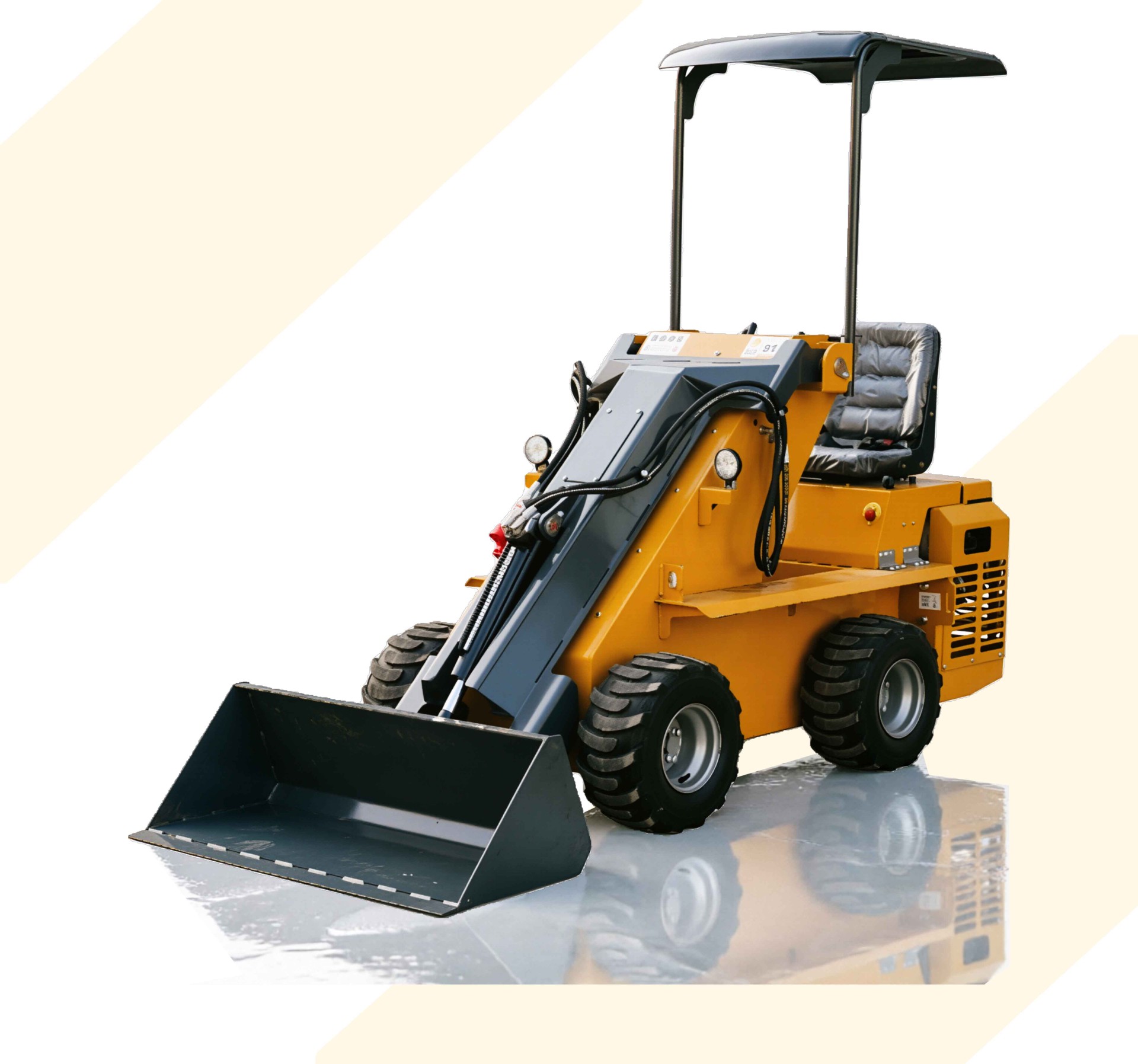
Visibility: ROPS/FOPS certified cabs are designed with narrow cab posts and large windows to maximize the operator's peripheral vision. This is critical when working near walls, personnel, or delicate fixtures.
Control Systems: Intuitive joystick controls reduce the physical strain of operating in tight quarters. "Hand-Foot" coordination is simplified, allowing the operator to focus on the task rather than complex machine handling.
Reduced Manual Handling: By mechanizing the transport of heavy materials (soil, stone, debris) through narrow gates, skid steers drastically reduce the incidence of musculoskeletal injuries among the crew. This lowers insurance costs and improves long-term workforce sustainability.
6. Strategic Applications: Real-World Scenarios
To understand the true value of a compact skid steer, consider these specific applications:
Basement Renovations: Moving old furnaces, water heaters, or piles of demolition debris out of a basement and new materials in is a nightmare with a wheelbarrow. A skid steer navigates the stairs (with proper ramps) or narrow internal stairwells with ease.
Urban Landscaping: In "zero-lot-line" properties where homes are inches apart, a skid steer is the only machine capable of bringing in topsoil, mulch, and pavers without driving over the neighbor's property.
Utility Work: Trenching in a narrow alleyway behind a row of shops requires a machine that can dig, lift the spoil, and then backfill—all within a 1,200mm wide path. The skid steer performs all three tasks efficiently.
Conclusion: The Logical Choice for Modern Efficiency
The compact skid steer loader is not merely a smaller version of a larger machine; it is a specialized tool designed to solve the specific problem of spatial constraint. Its zero-turn radius, fixed-chassis stability, ground-protecting undercarriage, and multi-attachment versatility make it the most efficient asset for any contractor facing tight-access challenges. While the initial investment may seem significant, the savings in labor hours, the reduction in property damage claims, and the ability to take on jobs that competitors cannot access provide a return on investment that justifies the purchase within months. For the modern contractor, the question is no longer if they need a skid steer, but how soon they can put one to work.