 Chinese
 English
 Russian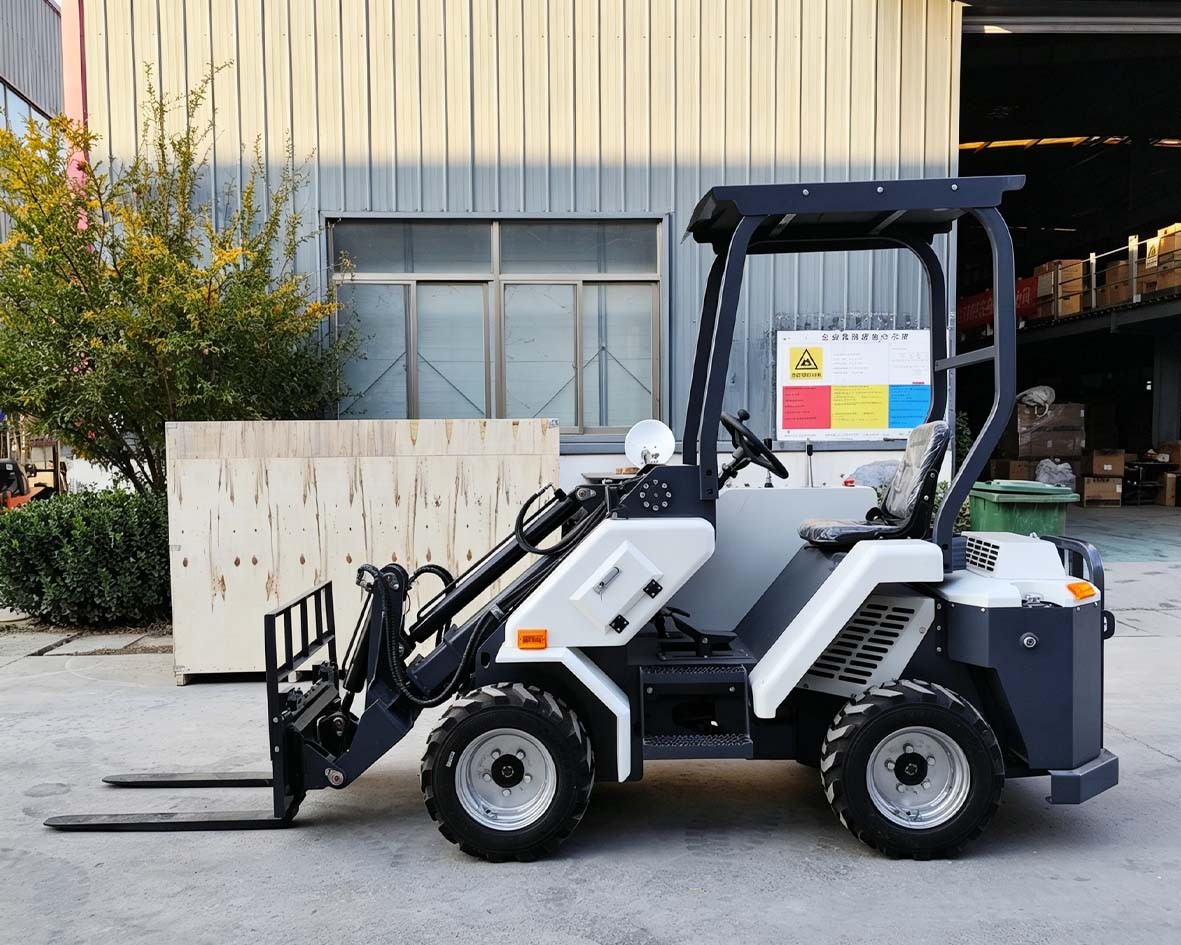
Introduction to Indoor Operational Challenges in Modern Construction
Indoor construction and maintenance work present a unique set of challenges that traditional diesel-powered machinery simply cannot meet without compromise. Whether the project involves basement renovation, warehouse material stacking, underground utility maintenance, or interior demolition in occupied buildings such as hospitals and schools, the two most critical constraints are air quality and noise control. In a confined space, diesel exhaust containing carbon monoxide, nitrogen oxides, and particulate matter accumulates rapidly, creating severe health hazards for operators and nearby workers. Additionally, internal combustion engines generate high decibel levels that exceed acceptable indoor noise thresholds, leading to regulatory violations and occupant complaints.
The global construction equipment industry has responded with the electrification of compact machinery. Among these innovations, electric mini wheel loaders and electric skid steer loaders have emerged as the definitive solution for enclosed and semi-enclosed job sites. Jining Xinghang Machinery Manufacturing Co., Ltd., based in Yanzhou District, Jining—one of China’s six major construction machinery hubs—has positioned itself at the forefront of this transformation. With a corporate philosophy rooted in environmental protection, energy efficiency, and high-performance innovation, Xinghang has developed a comprehensive electric loader lineup under the XHD and XHDL series, ranging from 0.4-ton to 2.5-ton classes, specifically engineered to thrive where diesel equipment fails.
The Science Behind Zero Emissions and Health-Centric Design
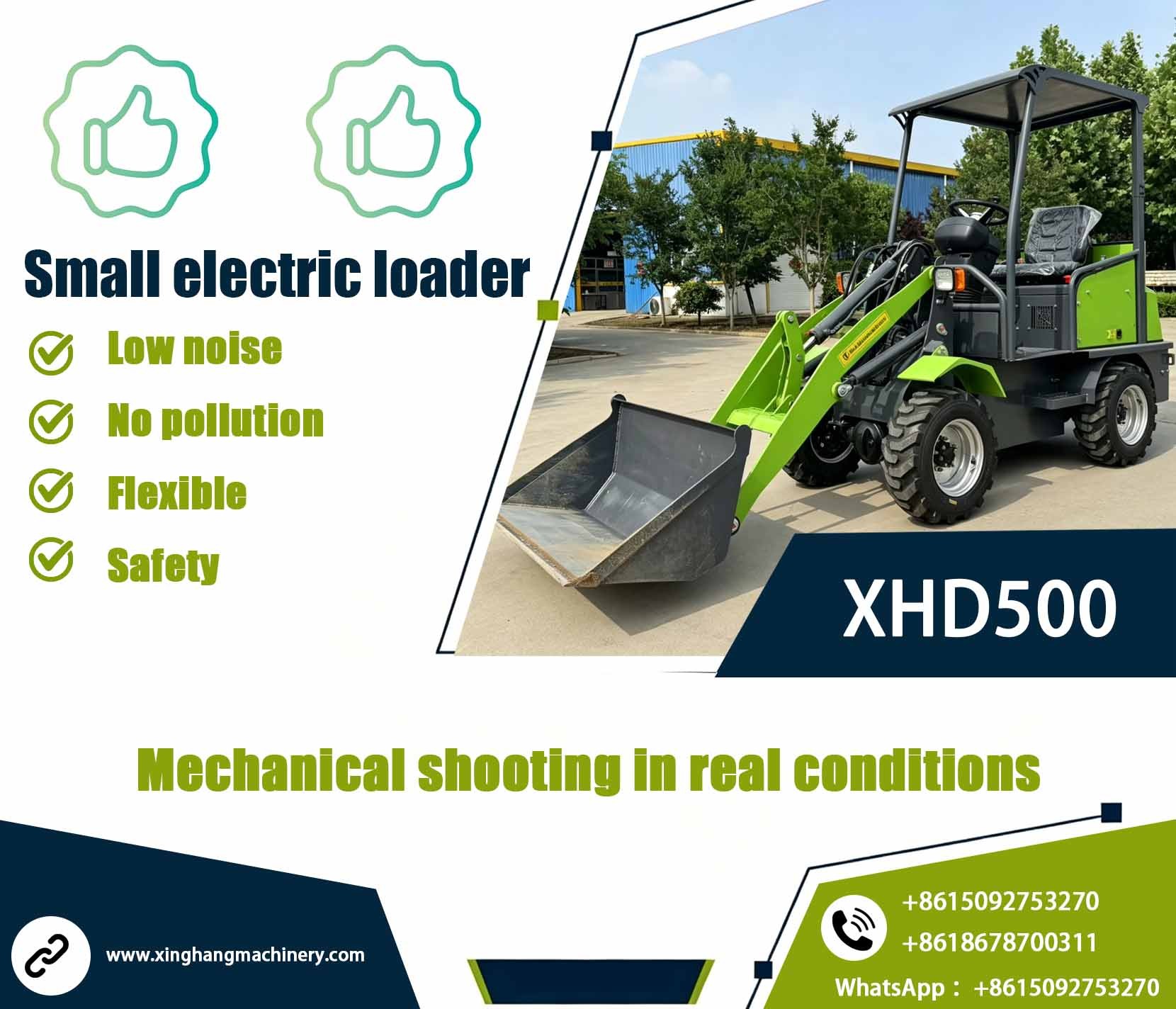
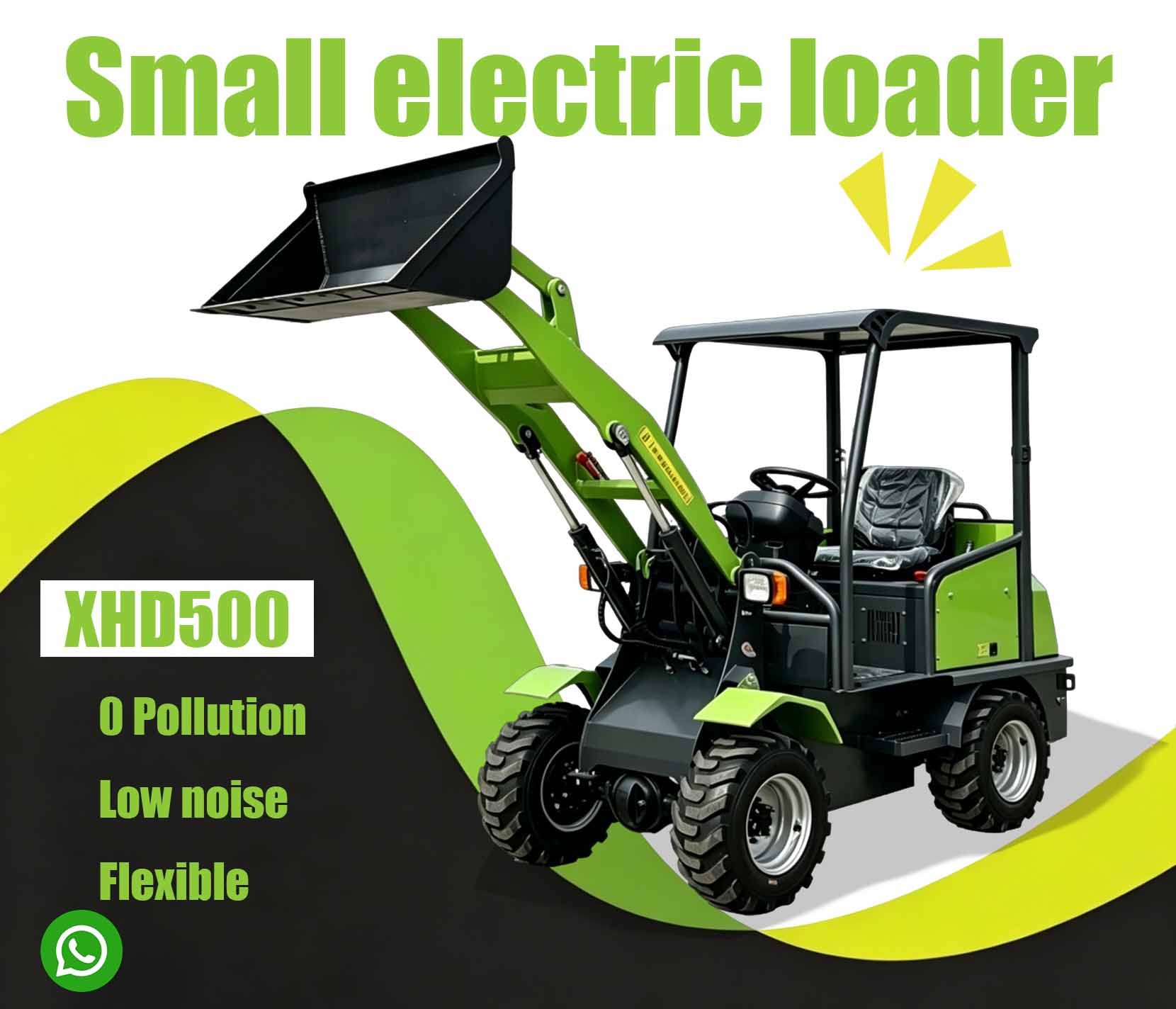
Electric compact loaders such as the Xinghang XHD400 and XHD500 operate on pure battery electric powertrains, eliminating tailpipe emissions entirely. This characteristic alone redefines what is possible in indoor operations. In facilities like food processing plants, pharmaceutical laboratories, and grain storage warehouses, even low-level fume exposure can contaminate sensitive products or trigger safety protocols. Diesel machines in such environments often require expensive forced-air ventilation systems and mandatory breaks to clear the air. In contrast, Xinghang electric loaders equipped with 60V or 64V lithium iron phosphate (LiFePO4) battery systems produce no exhaust, allowing continuous operation without compromising indoor air quality.
Beyond air purity, operator health is enhanced by the absence of engine vibration and heat radiation. The XHD series utilizes flat-wire motor technology—specifically 4KW drive motors and 3KW hydraulic motors in the XHD400 and XHD500 models—which not only improves slot fill rate and thermal management but also operates with significantly lower acoustic output compared to internal combustion engines. This reduction in noise and vibration decreases operator fatigue during long shifts and minimizes the risk of occupational hearing damage, a crucial consideration for contractors working in noise-sensitive indoor environments such like libraries, museums, and residential complexes during remodeling.
Maneuverability in Confined Indoor Spaces: Size, Steering, and Stability
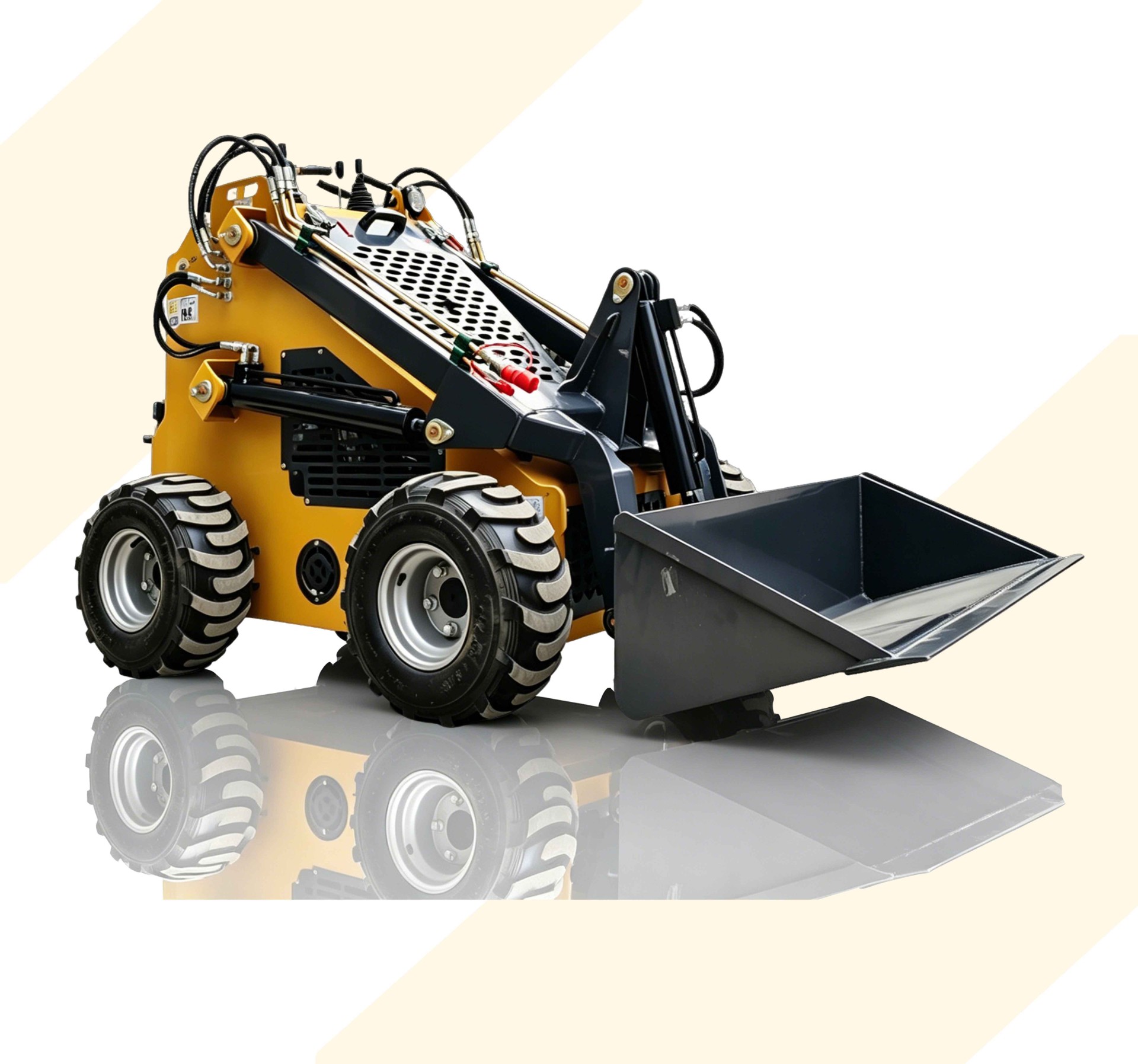
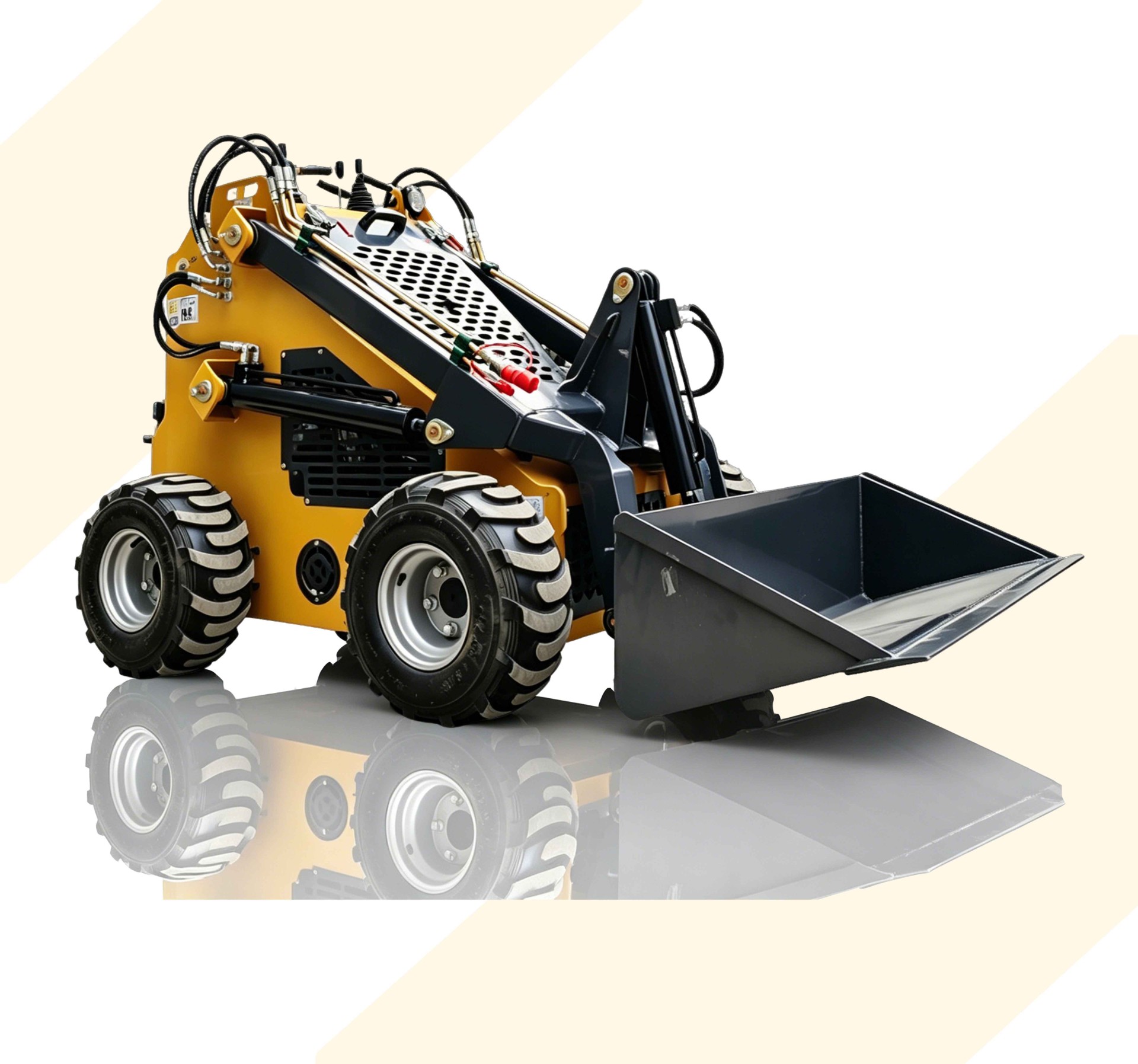
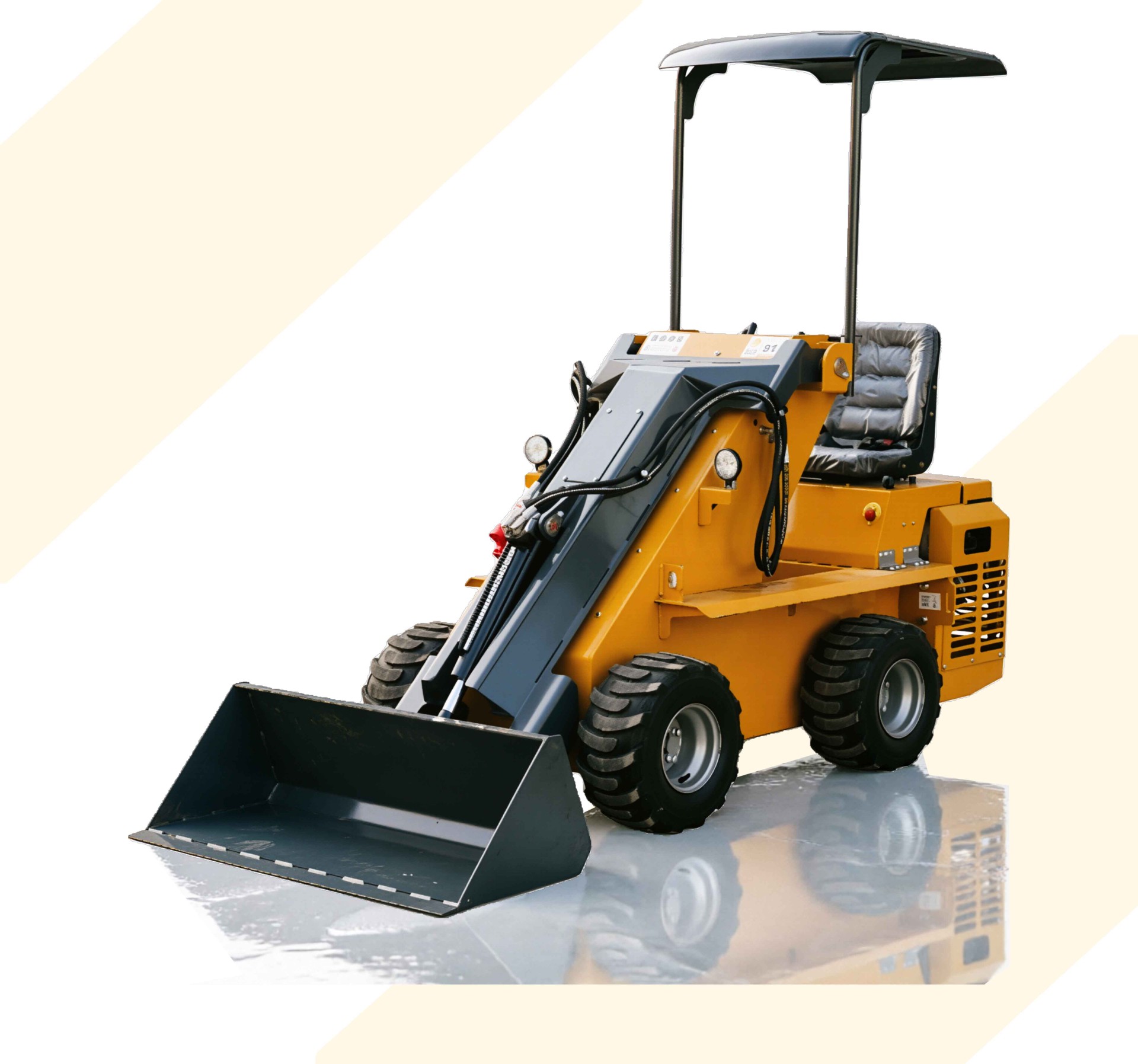
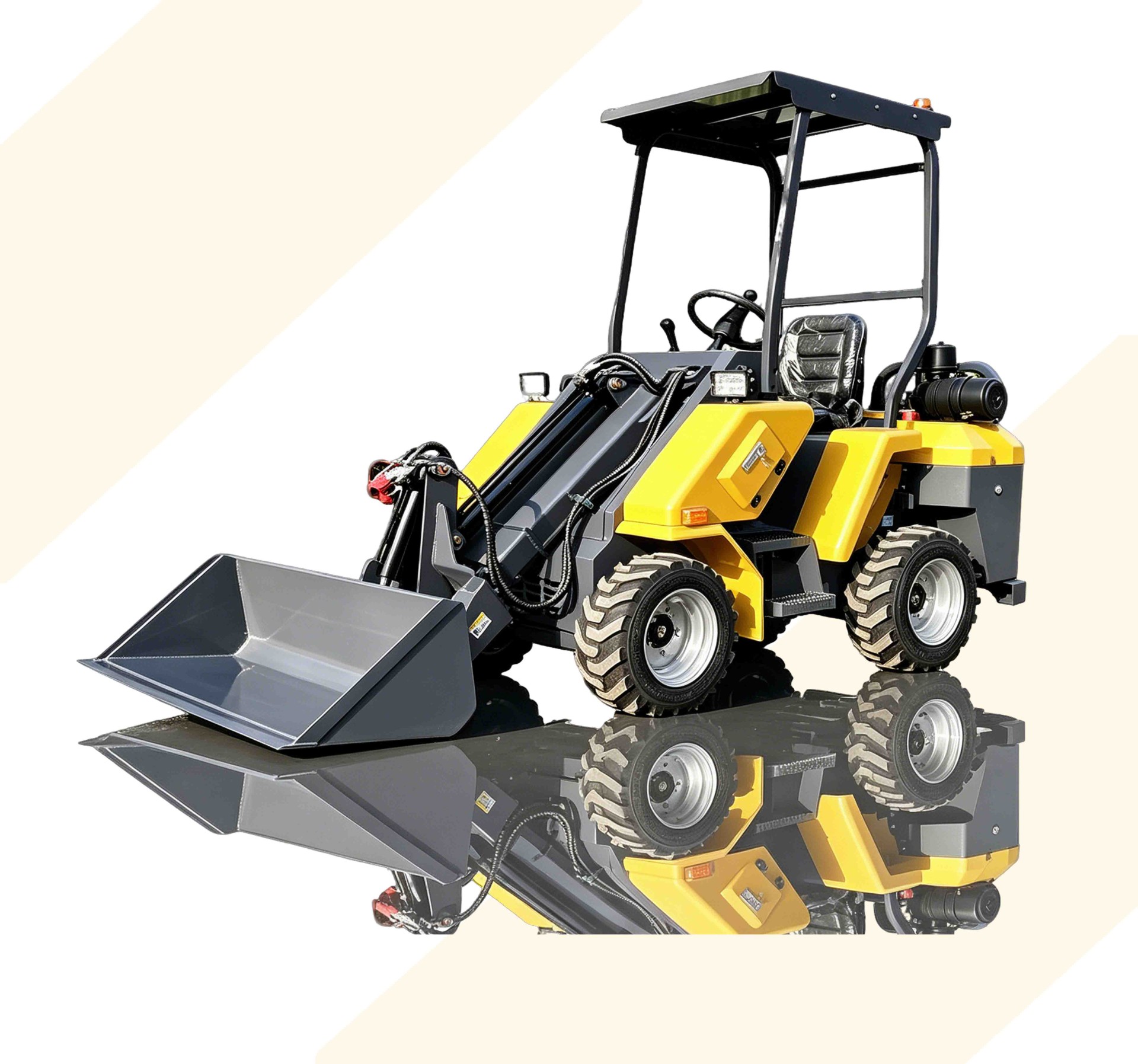
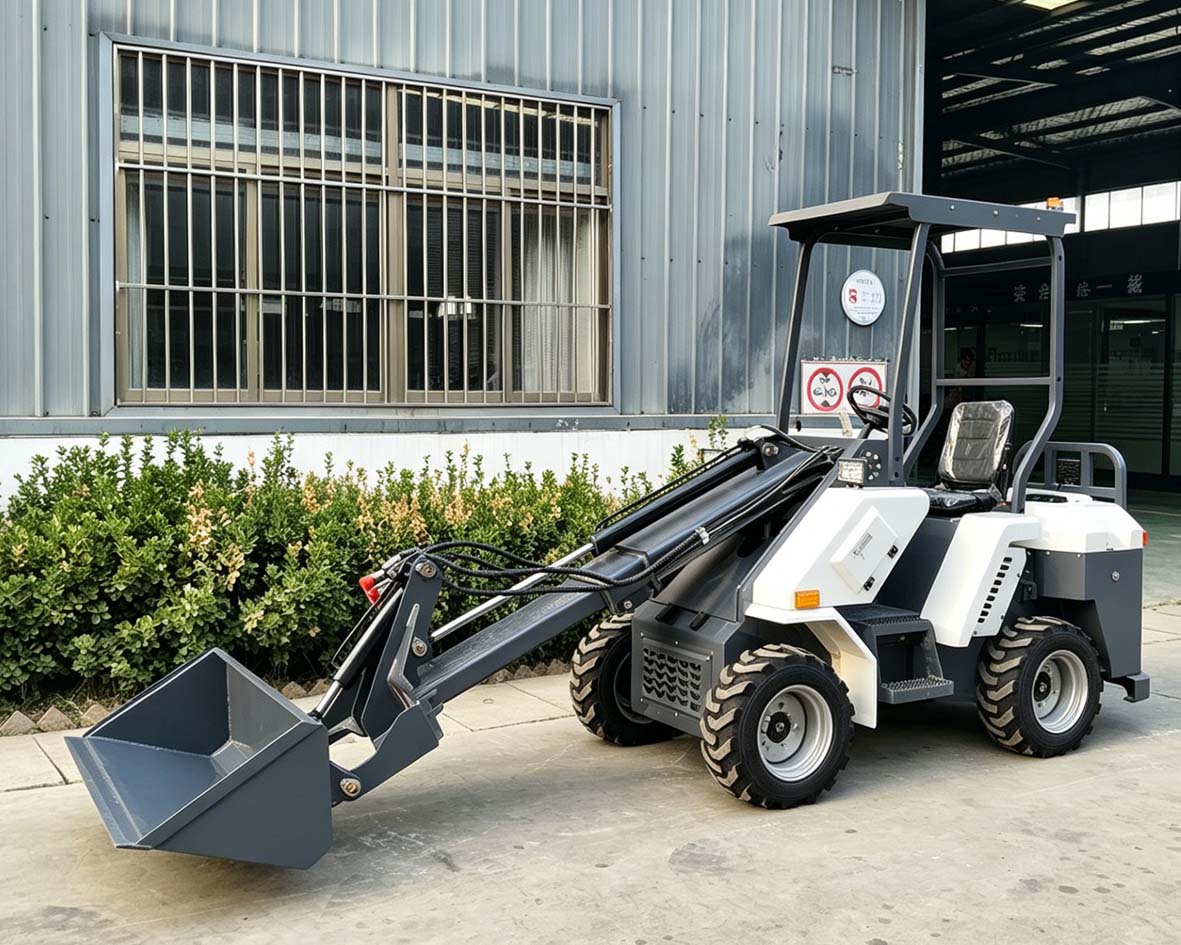
Indoor job sites are frequently characterized by narrow corridors, tight doorways, low overhead clearances, and congested layouts with fixed infrastructure such as racking systems and pillars. A major advantage of Xinghang electric wheel loaders is their ultra-narrow body design. The XHD400, for instance, measures only 1050mm in width and 3260mm in length, with a height of 2130mm, enabling it to pass through standard industrial doorways and navigate between warehouse aisles with ease. Despite its compact footprint, the machine maintains a robust 1240kg operating weight and a rated load capacity of 400kg, supported by a full-time four-wheel drive system that ensures traction on smooth concrete, epoxy-coated floors, and slightly uneven basement surfaces.
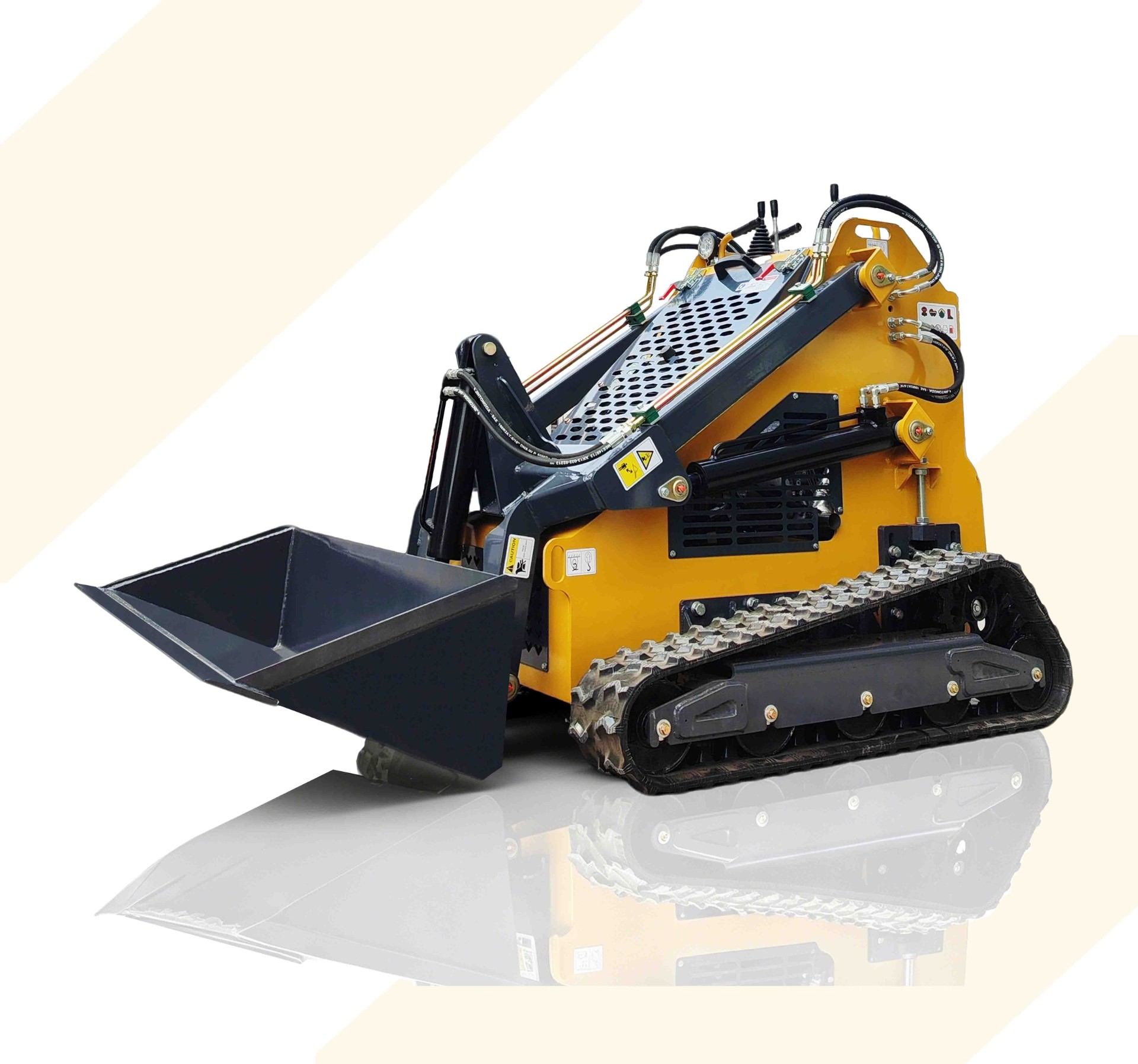
Steering in confined indoor areas is handled via a responsive hydraulic steering system rather than the differential skid-steer method, which helps protect finished flooring from tire scuffing. The XHD500A and XHDL500A variants employ dual 2.5KW drive motors to distribute torque evenly across all four wheels, enhancing controlled maneuvering in tight turns. With a traveling speed adjustable between 0–8 km/h (low gear) and 0–14.5 km/h (high gear), operators can prioritize precision during indoor material placement or switch to efficiency when moving across larger factory floors.
The chassis is constructed from high-strength manganese steel, providing durability without unnecessary bulk. This material choice, combined with a fully suspended heavy-duty axle design, improves ride comfort and load stability when transporting materials such as pallets, demolition debris, or construction aggregates indoors. The 1600mm dump height and 2600mm lift height on the XHD500 series are optimized for loading into indoor containers, high-sided bins, and small dumpsters commonly used in interior renovation projects.
Energy Efficiency, Battery Technology, and Operational Cost Analysis
One of the most compelling arguments for adopting electric loaders indoors is the dramatic reduction in operating costs. Diesel machinery incurs ongoing expenses for fuel, engine oil, fuel filters, cooling system maintenance, and exhaust after-treatment. In contrast, the Xinghang XHD series simplifies the powertrain to a battery pack, electric motor, controller, and hydraulic pump. Maintenance intervals are extended, and consumable costs are virtually eliminated. The onboard controllers feature automatic temperature-controlled cooling, enhancing system reliability under sustained indoor workloads.
Battery configuration flexibility is another strength. Xinghang offers 60V 160Ah lead-acid batteries for cost-conscious buyers and 64V 150Ah or 180Ah LiFePO4 batteries for clients requiring longer cycle life, faster charging, and deeper discharge tolerance. A full charge takes approximately eight hours, aligning with overnight charging habits, while actual continuous runtime ranges from four to eight hours depending on load intensity and terrain. For indoor operations that typically involve intermittent cycling—such as loading for 15 minutes, repositioning, and waiting during material staging—the effective working window often covers an entire shift without midday charging.
The integration of CAN bus digital LCD instrumentation allows operators to monitor voltage, battery state of charge, travel speed, and pump RPM in real time. Error prompts and fault code displays streamline diagnostics, reducing downtime caused by unexplained electrical or hydraulic issues. From a lifecycle cost perspective, the elimination of diesel fuel purchases—especially in regions with volatile fuel prices—combined with lower maintenance overhead, positions electric loaders as a high-ROI investment for contractors specializing in indoor and urban projects.
Multi-Functionality Through Quick-Attach Interfaces
Indoor operations rarely consist of single-task workflows. A typical interior demolition or fit-out project may require debris removal, floor sweeping, pallet fork lifting, hole drilling, and light breaking—all within the same room. Xinghang electric loaders are designed with multifunctional adaptability in mind. The hydraulic system supports quick-coupling of various attachments including standard manganese steel buckets, forks, clamps, sweepers, augers, and breakers. This versatility transforms a single XHD400 or XHD500 unit into a multi-role indoor workhorse, reducing the need to mobilize multiple specialized machines into constrained spaces.
The 3KW hydraulic motor delivers consistent flow and pressure to run these attachments efficiently. Because electric motors provide instant torque from zero RPM, auxiliary hydraulic functions respond predictably without the lag associated with diesel engine throttle modulation. This precision is particularly valuable when using sweepers in cleanroom-adjacent areas or augers for controlled drilling into indoor slabs where over-penetration must be avoided.
Can electric loaders really replace diesel machines in indoor settings?
Yes. For tasks involving material handling, light excavation, demolition cleanup, and attachment-driven work within enclosed or semi-enclosed spaces, electric loaders provide equal or superior torque response, better air quality compliance, and lower noise levels. High-capacity models like the XHD08 (0.8T) and XHD10 (1T) extend this capability to heavier indoor loads.
How long does it take to charge Xinghang electric loaders?
Standard charging takes about eight hours using the onboard system, suitable for overnight charging. Lithium battery versions support more consistent cycle performance and can be managed with scheduled charging routines. Runtime varies from four to eight hours of continuous use depending on battery type and workload.
Are electric loaders safe on smooth indoor floors?
Yes. Models like the XHD400 and XHD500 use industrial rubber tires and hydraulic steering to minimize ground marking. The manganese steel chassis distributes weight effectively, and four-wheel drive ensures controlled movement without aggressive tire scrubbing common in skid-steer units.
What kind of maintenance is required?
Maintenance is primarily focused on the hydraulic system, battery health checks, tire condition, and controller diagnostics. There are no oil changes, fuel filters, injectors, or exhaust components to service, which reduces annual maintenance costs by a substantial margin compared to diesel equivalents.