 Chinese
 English
 Russian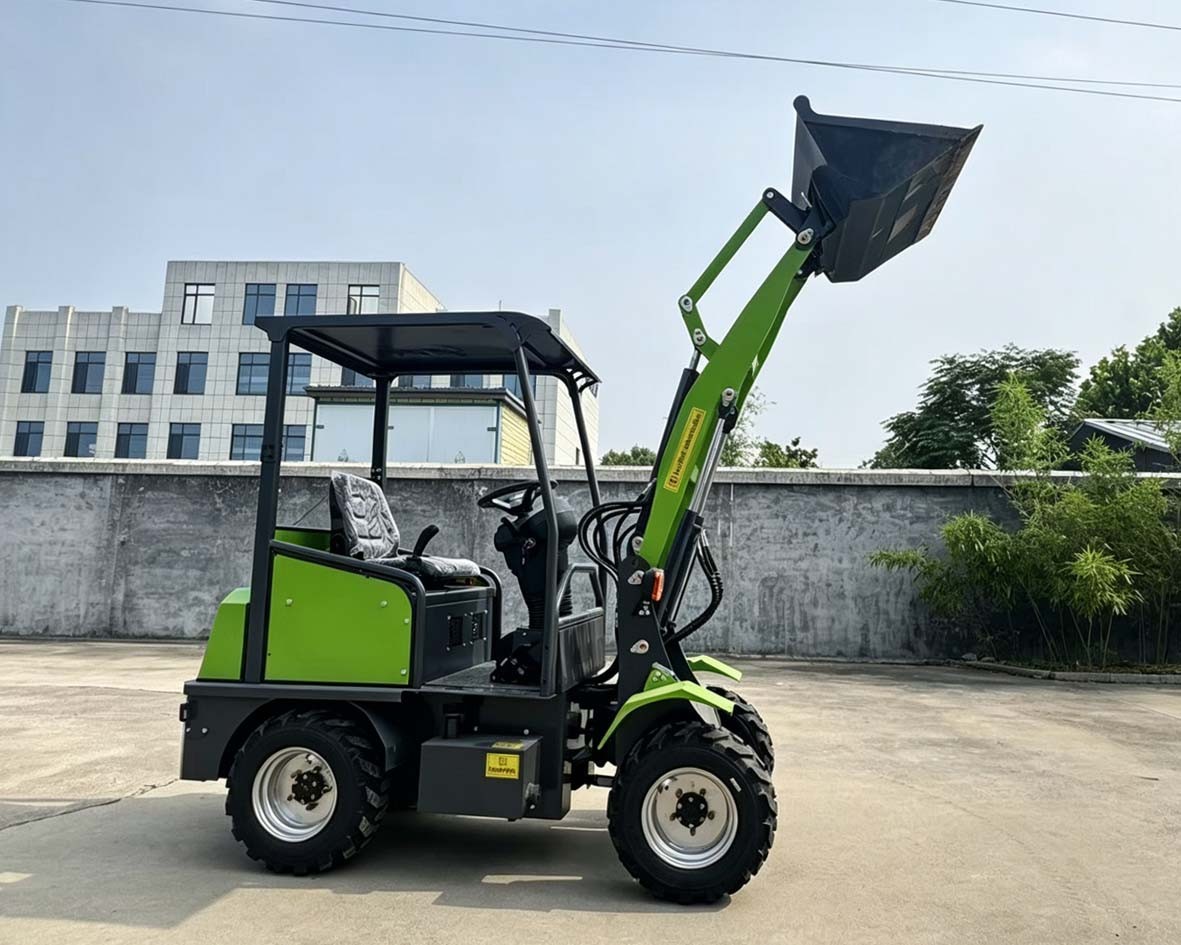
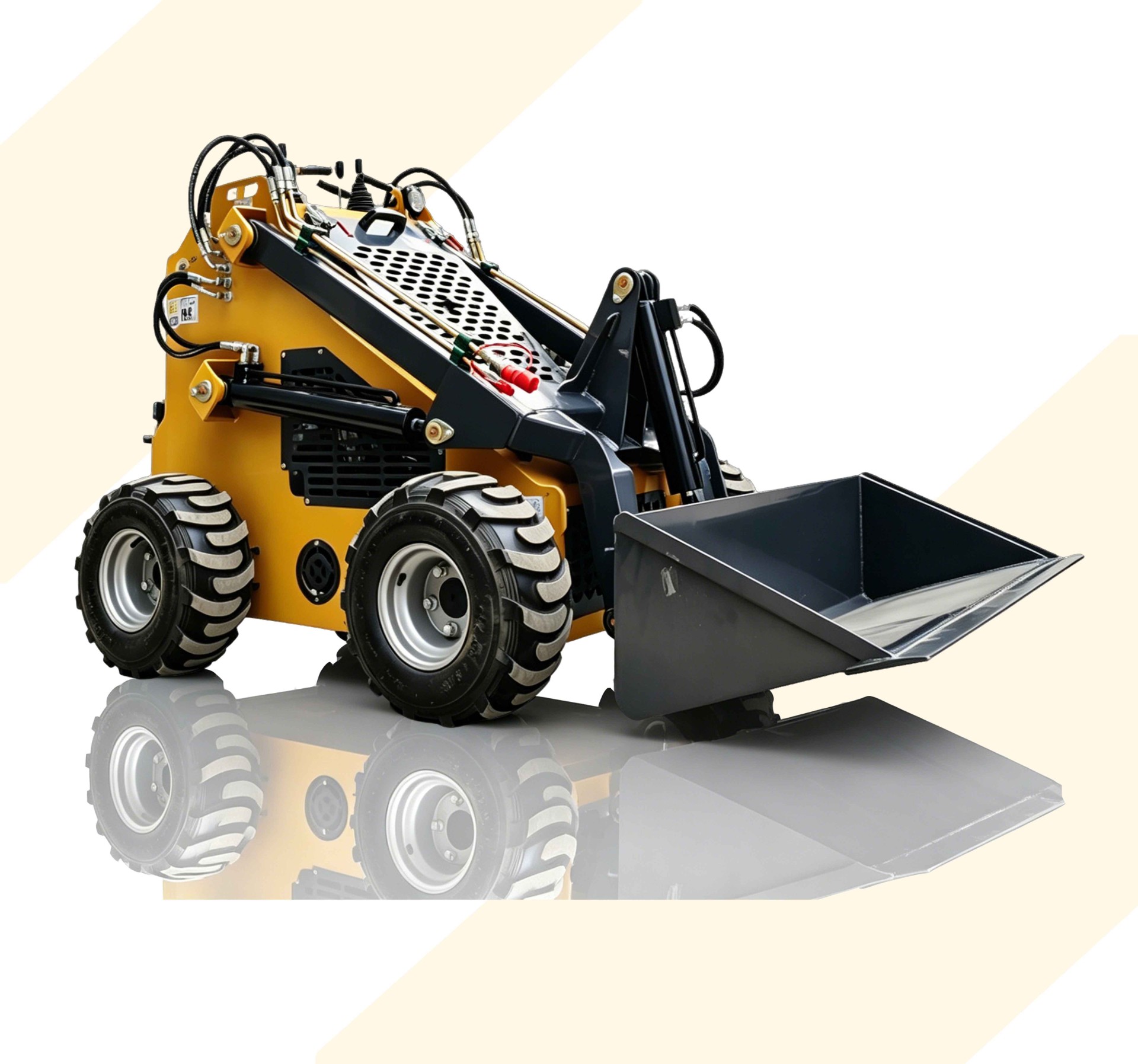
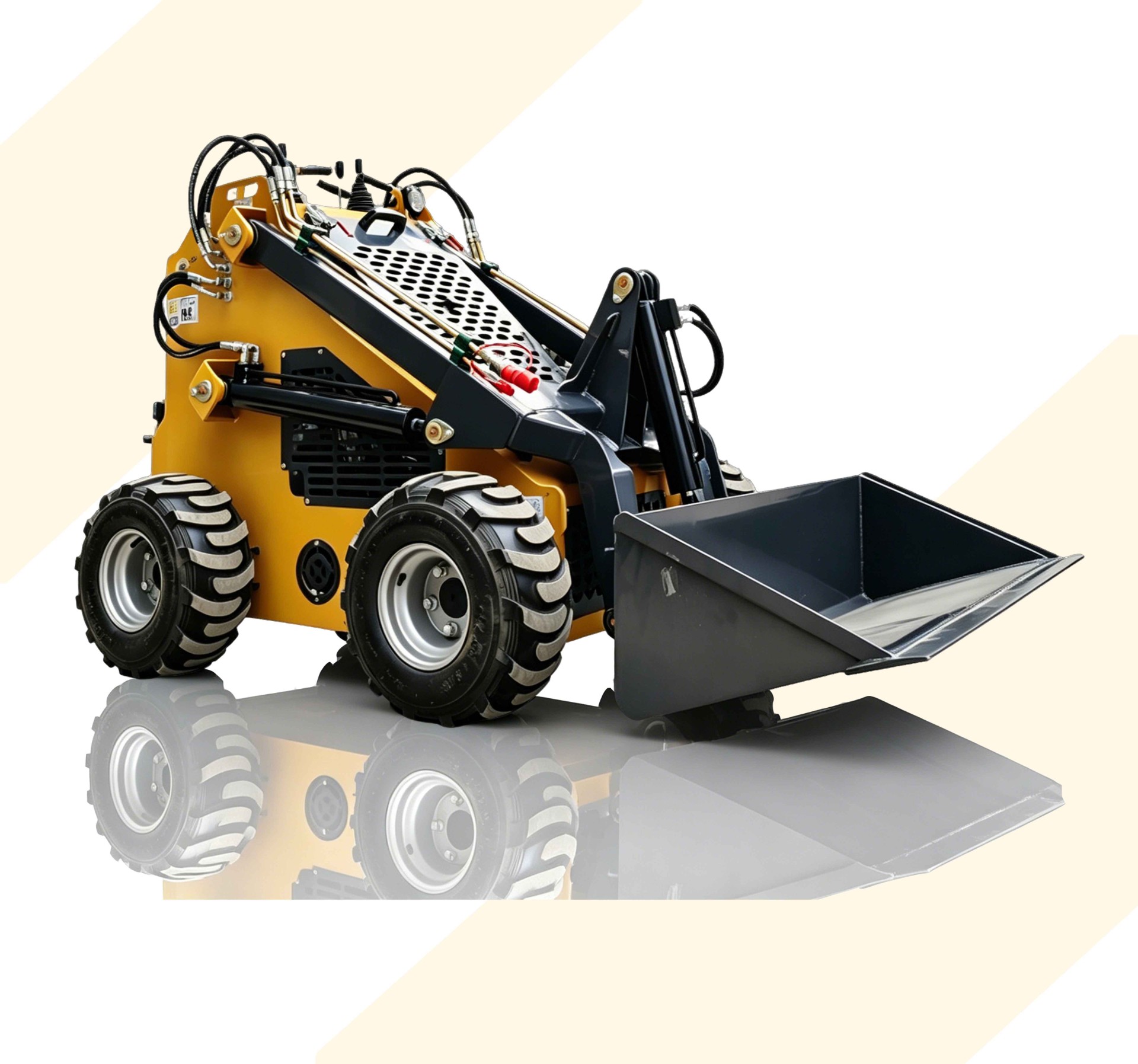
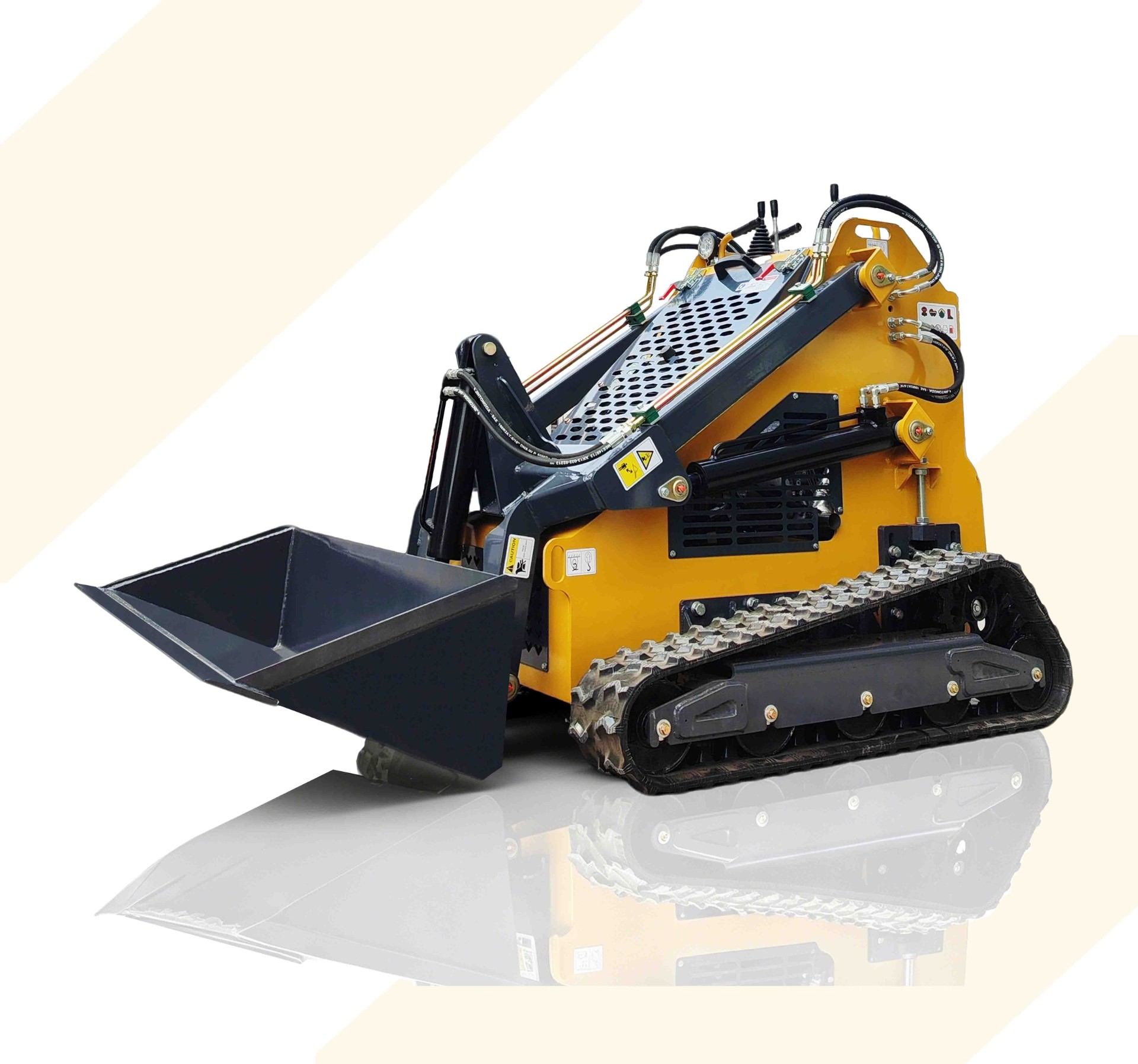
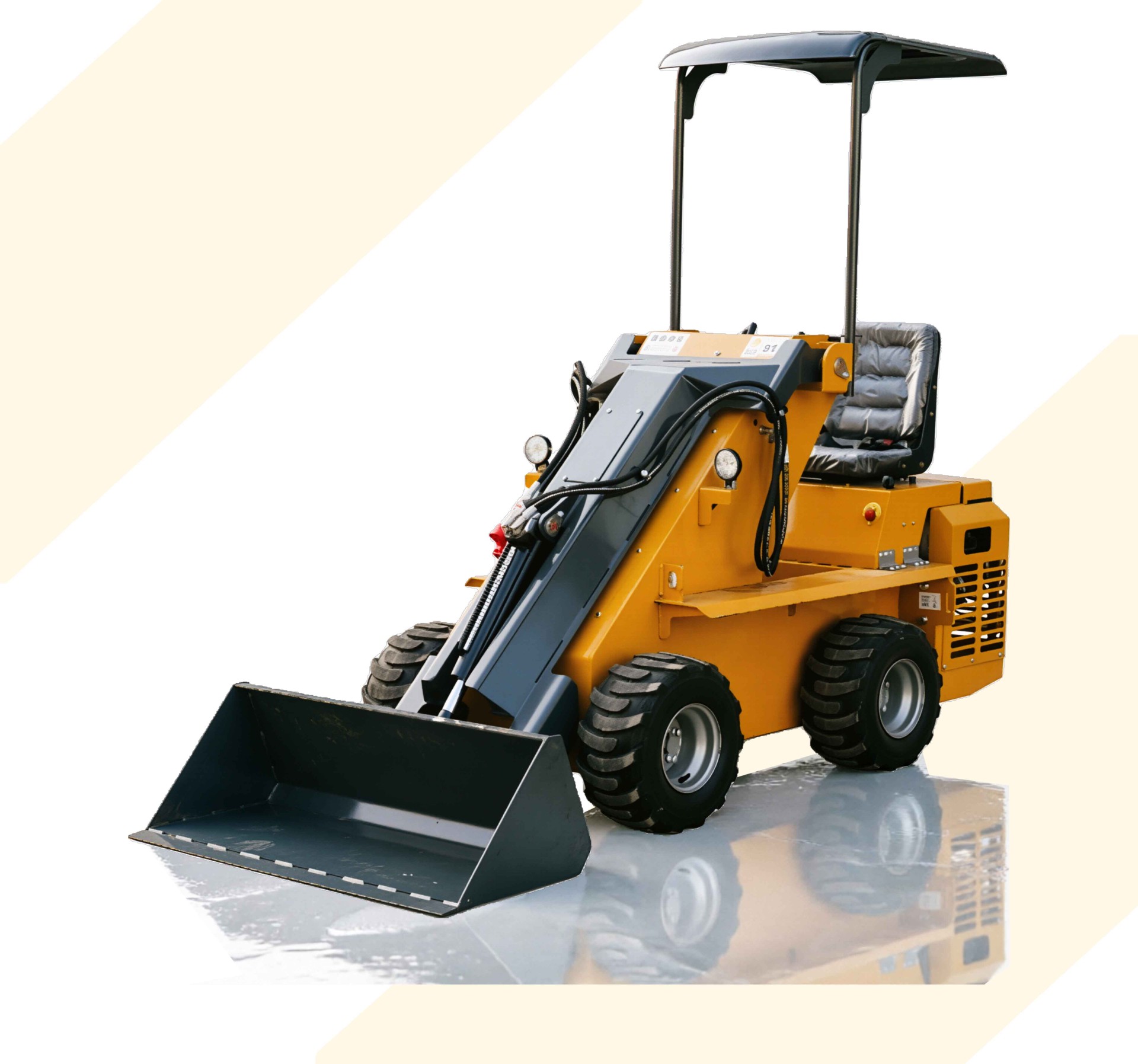
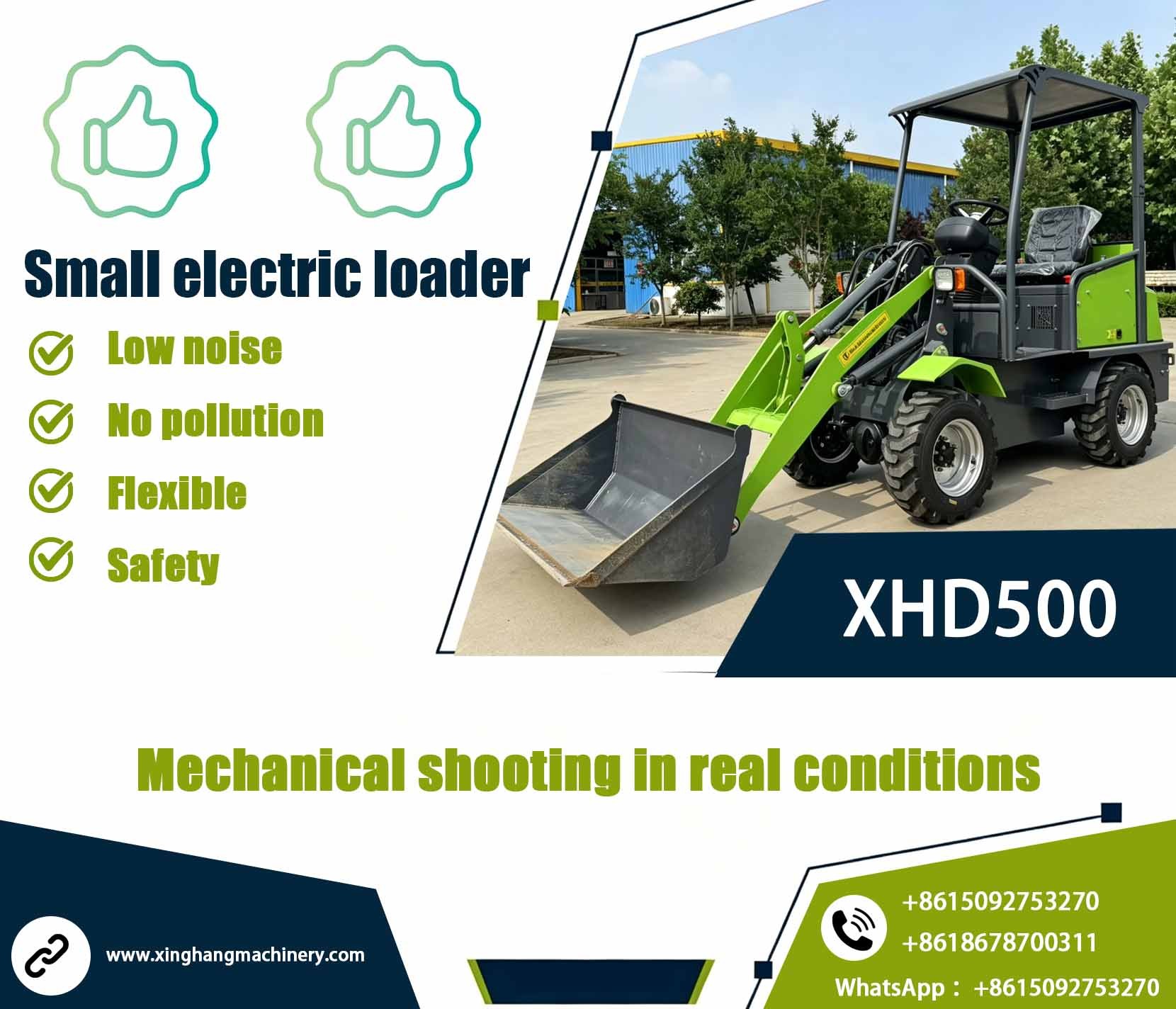
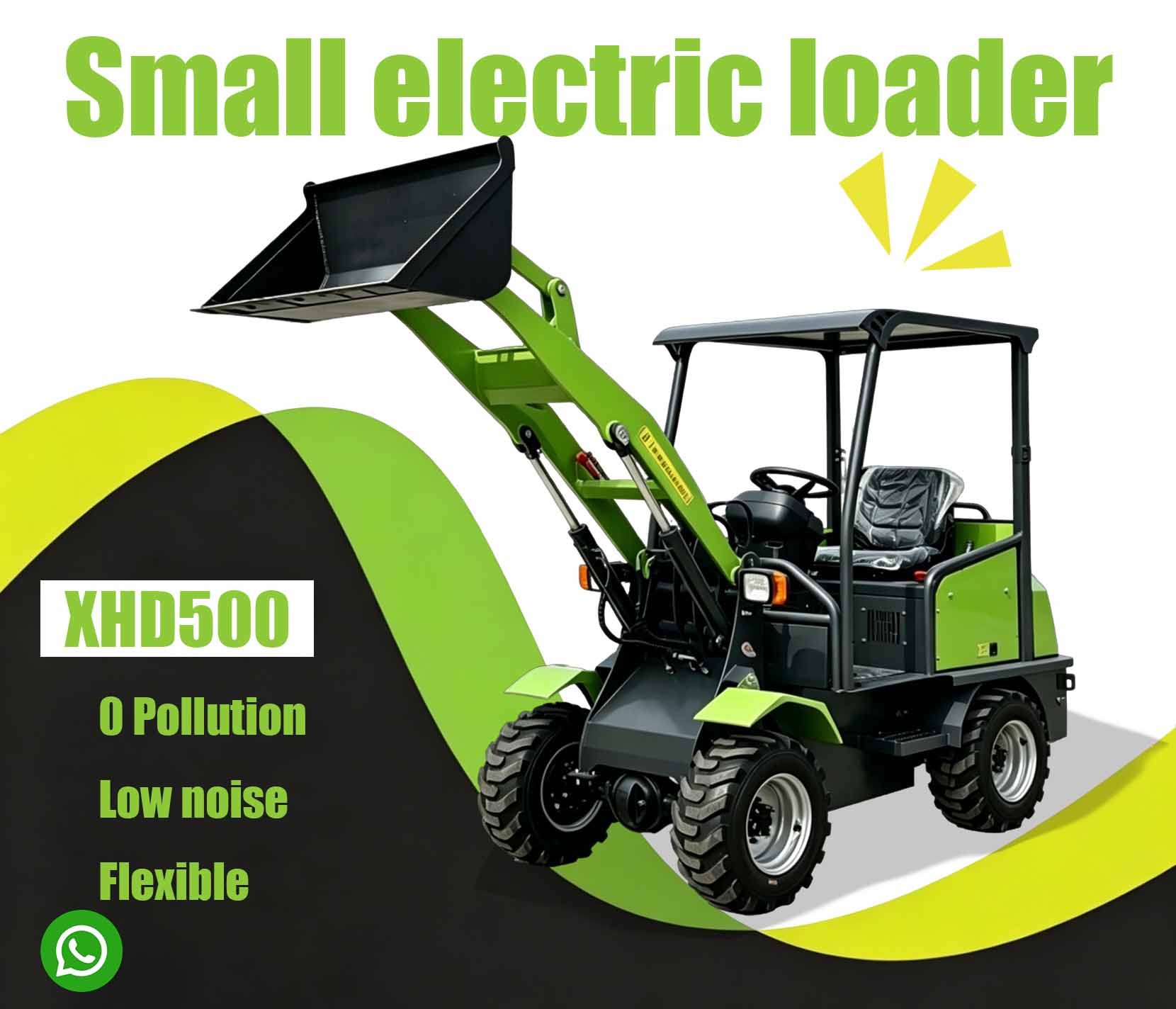
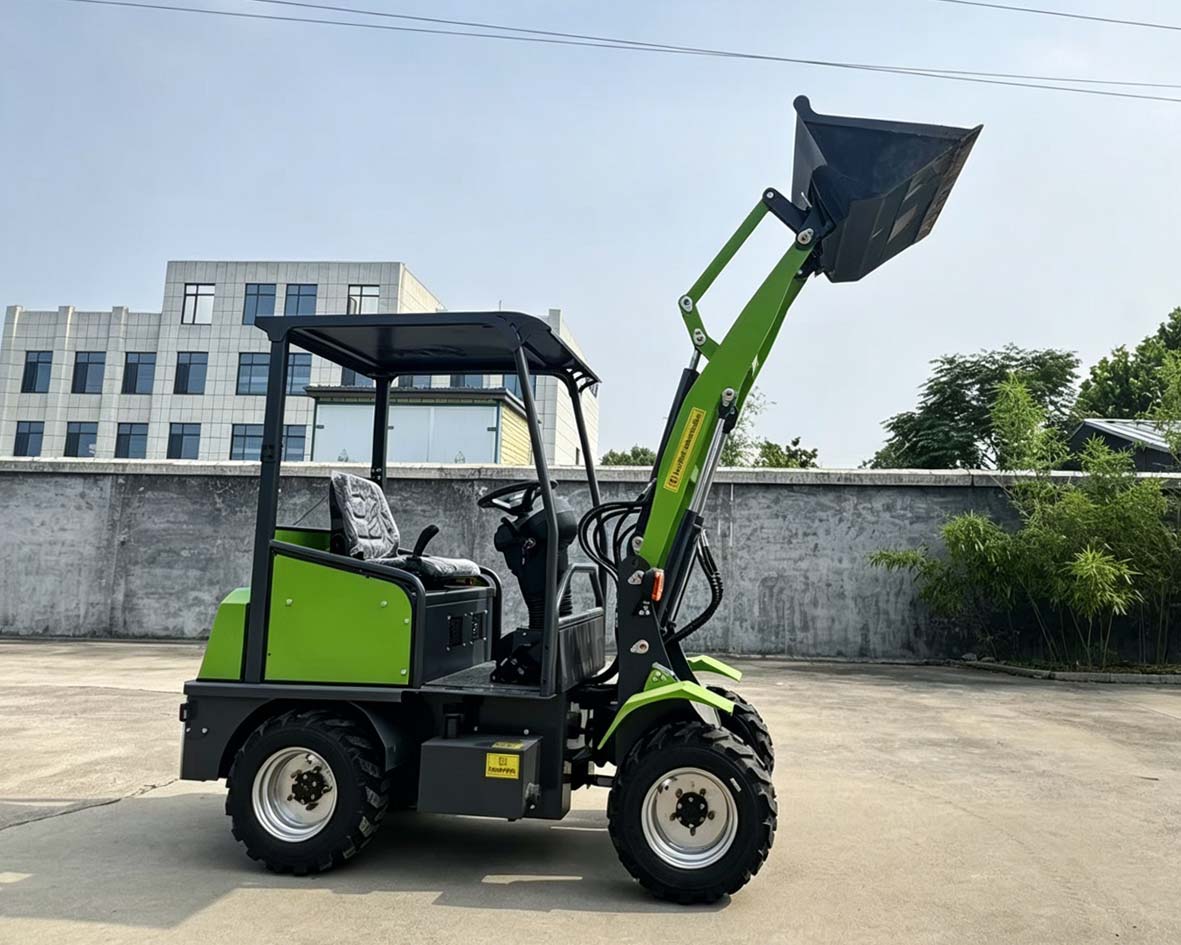
In international trade, especially when dealing with professional buyers in mature markets like Europe and North America, flashy marketing copy often falls flat compared to a clear schematic. They aren't just asking "What can it do?" but "How does it do it?" The XHD500A from Jining Xinghang Machinery stands out in the crowded micro-loader market not through brute-force spec sheets, but through the synergy of its powertrain design. This article strips away the sales talk to perform a thorough "engineering dissection" of the XHD500A, focusing on its electro-hydraulic logic, motor technology, and battery management.
I. Power Distribution Logic: Why "Dual 2.5KW" Instead of "Single 4KW"?
A review of Xinghang’s catalog reveals a critical distinction: while the XHD500 uses a single 4KW drive motor, the premium XHD500A utilizes a 2.5KW x 2 dual-motor configuration. This isn't a simple "1+1=2" scenario; it represents two fundamentally different drive philosophies.
Mechanical vs. Electronic Differential:
A single motor (XHD500) relies on mechanical differentials, half-shafts, and axles to split power. When turning, the differential forces the inside wheel to spin slower and the outside faster, creating "parasitic loss" and tire scrub. On slick surfaces, if one wheel loses traction, power bleeds away to the spinning wheel, causing the machine to stall.
The XHD500A implements "Electronic Differential." Independent 2.5KW AC motors drive the left and right wheels. The controller algorithms monitor steering angle and wheel speed in real-time:
Turning: Automatically reduces inner wheel RPM and increases outer wheel RPM, enabling pivot turns or extremely tight radii.
Slippage: Detects abnormal wheel spin instantly, throttling the spinning wheel and diverting torque to the wheel with traction.
The result is superior traction and extended tire life—a godsend for operators working on turf, sand, or muddy sites.
Thermal Management Advantage:
A single large motor concentrates heat, demanding robust cooling. Splitting the load between two smaller motors, combined with the low-temperature rise characteristics of flat-wire motors (see below), drastically improves reliability during prolonged high-temperature operation.
II. The Motor Revolution: Hardcore Advantages of Flat-Wire Winding
Both the drive and hydraulic motors in the XHD500A utilize Flat-Wire Winding Technology. This is the dividing line between "toy-grade" EVs and "industrial-grade" machinery. Imagine filling a square box: round wires leave significant gaps, while flat copper strips pack tightly, achieving an exceptionally high Slot Fill Factor.
1. Efficiency Boost (Efficiency ≥ 90%):
Higher slot fill means more copper cross-section and lower electrical resistance. Per Joule’s Law, lower resistance equals lower resistive losses (I2R losses). The XHD500A motors operate at over 90% efficiency, converting more battery energy into mechanical work rather than waste heat. In battery-dependent equipment, every watt-hour counts.
2. Thermal Performance & Continuous Power:
Construction machinery often faces "stall" conditions (e.g., holding a load at full lift). Round-wire motors trap heat internally, triggering thermal shutdown. Flat-wire designs conduct heat efficiently along the tightly packed copper and through the finned motor housing. This explains the XHD500A’s ability to sustain 6-8 hours of high-intensity work without faltering.
3. Power Density & Lightweighting:
Flat-wire allows more copper in the same volume, yielding higher power output. This enables the XHD500A to maintain a compact footprint while delivering robust torque. Reduced heat generation also permits smaller cooling systems, further shrinking the machine's size and weight.
4. NVH Control (Noise, Vibration, Harshness):
The shorter end-turns and rigid structure of flat-wire windings produce significantly less electromagnetic noise and vibration than round-wire motors at high RPMs. This hardware advantage perfectly complements the "silent operation" theme discussed in previous articles.
III. Hydraulic Independence: The Value of a Dedicated 3KW Hydraulic Motor
A critical flaw in many cheap electric loaders is "Power Cannibalization." They use a single motor for both propulsion and hydraulics, or complex PTO systems. When an operator tries to move and lift simultaneously, the motor overloads, the controller cuts power, or the drive speed drops to a crawl.
The XHD500A employs a "Dual-Circuit System":
Propulsion Circuit: Dual 2.5KW motors drive the wheels independently.
Working Circuit: A dedicated 3KW flat-wire motor drives the hydraulic gear pump.
The advantage is "Non-Interference."
Smooth Compound Movements: Operators can creep forward while simultaneously raising the boom. This fluid motion dramatically boosts productivity (e.g., "ramping" the pile while loading).
Consistent Lift Force: The hydraulic system receives a steady 3KW input regardless of vehicle speed. This guarantees the advertised 7-second lift time and 3-second dump time.
System Safety: Independent cooling for the hydraulic circuit prevents the drive motors from overheating during extended lifting operations.
IV. The Power Heart: Deep Dive into the 64V LiFePO4 System
The battery is the heart; the BMS (Battery Management System) is the brain. The XHD500A’s 64V Li-ion option is a complete energy ecosystem, not just a swap for lead-acid.
1. Chemistry Choice: Why LiFePO4 (LFP)?
Between NMC (Nickel Manganese Cobalt) and LFP, Xinghang chose the latter for three reasons:
Safety: LFP has a thermal runaway threshold above 500°C, far exceeding NMC's ~200°C. On rough job sites with risks of metal strikes or punctures, LFP’s stability is unmatched.
Cycle Life: Machinery lasts 5-10 years. LFP offers 2000-3000+ cycles, compared to ~500 for lead-acid. At one cycle per day, lithium covers the machine's entire operational life.
Power Delivery: LFP supports high-discharge C-rates, delivering surge currents needed for startup and heavy loads without the voltage sag that triggers low-voltage controller cutoffs.
2. BMS Intelligence:
The LiFePO4 system features a sophisticated BMS.
Passive Balancing: During charging, the BMS equalizes cell voltages to prevent overcharging and extend pack life.
Active Protection: Millisecond-level monitoring and cutoff for over-current, short-circuit, over/under-voltage, and high-temperature scenarios.
Data Communication: Communicates via CAN-bus to the dashboard, providing real-time SoC (State of Charge), cell voltages, and fault codes—eliminating "range anxiety" and guesswork.
3. Charging Logic:
Designed for construction workflows:
Shift Matching: The 180Ah version provides 6-8 hours of runtime, covering a standard shift.
Convenience: Charges via standard industrial outlets (Single-phase 220V / Three-phase 380V options), requiring no specialized charging infrastructure. The 8-hour charge time aligns perfectly with operator breaks, ensuring the machine is ready for the next day.
V. The Control Brain: Integrated Electronics & CAN-Bus Architecture
If motors and batteries are the muscles and heart, the controllers and wiring are the nervous system. The XHD500A utilizes highly integrated electronics.
1. Integrated Electro-Hydraulic Joystick:
Combining travel, steering, lift, and tilt into one joystick involves complex signal processing. Hall sensors inside the grip convert physical movement into electronic signals sent to the controller, which modulates motor phase current and frequency for stepless speed control. This "Drive-by-Wire" technology is lighter, faster, and more precise than mechanical linkages.
2. CAN-Bus Architecture:
Moving away from point-to-point hardwiring, the XHD500A adopts automotive-grade CAN-Bus (Controller Area Network) technology. All sensors (oil temp, voltage, current) and controllers share a single data bus.
EMI Immunity: Construction sites are electrically noisy. CAN-bus offers robust error-checking, ensuring stable signal transmission.
Diagnostics: Technicians can plug into the bus to instantly read Diagnostic Trouble Codes (DTCs), slashing troubleshooting time and downtime.
VI. Conclusion: The Value of Industrial-Grade Standards
This teardown reveals that the XHD500A is no "toy" cobbled together from recycled EV batteries. Dual-motor drive, flat-wire motor tech, independent hydraulics, and high-safety LFP chemistry represent a commitment to reliability and efficiency.
For the overseas buyer, choosing the XHD500A means investing in a validated engineering package. It may not boast the gaudiest specs on paper, but in the dust, mud, and long hours of a real job site, this solid engineering logic translates directly into uptime and Return on Investment (ROI). In the race to electrify compact equipment, the XHD500A proves itself not just a participant, but a pragmatic innovator.