 Chinese
 English
 Russian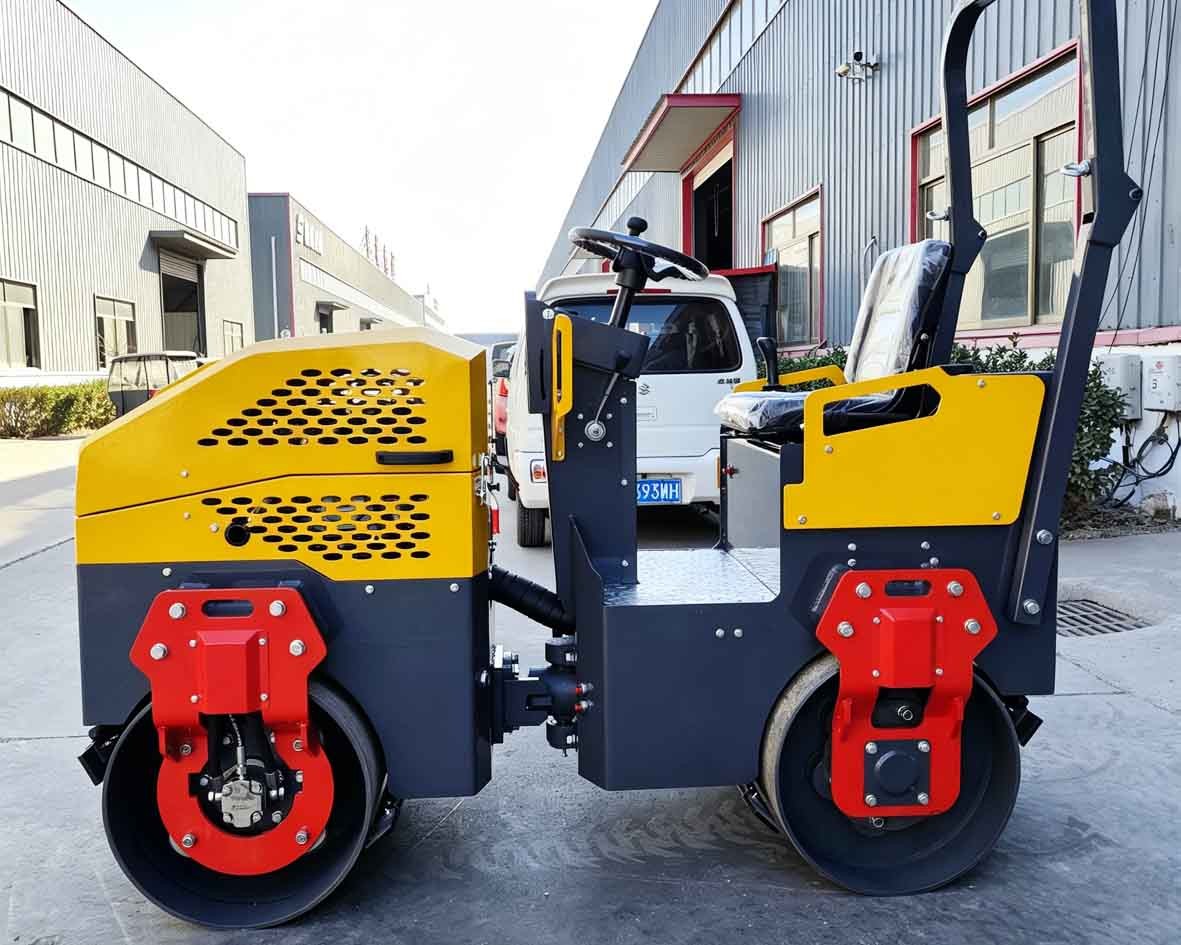
Introduction: Not All Rollers Are Created Equal
If you have ever stood on a job site staring at three different rollers—one with two steel drums, one with rubber tires, and one with a big front drum and rear wheels—you already know this: choosing the wrong type of compactor can ruin your asphalt finish, leave your subgrade under-compacted, or cause you to fail a municipal inspection.
A road roller is not a "generic" piece of equipment. Its design dictates whether it is meant for asphalt surface sealing, granular soil densification, or finish rolling on sensitive pavements. Using a single drum soil compactor on a thin asphalt overlay can shatter the mat. Using a light walk-behind double drum roller on a thick fill lift will leave air voids deep in the base—leading to premature settlement and potholes.
In this guide, we will walk you through the three main families of road rollers, explain what they do best, and introduce Xinghang Machinery's full range—from the XHRS700 1-ton walk-behind double drum roller all the way up to the XHR6000 6-ton single drum soil compactor—so you can specify exactly the right machine for your application.
The Three Core Roller Types You Need to Know
Double Drum Vibratory Rollers (For Asphalt & Granular Lifts)
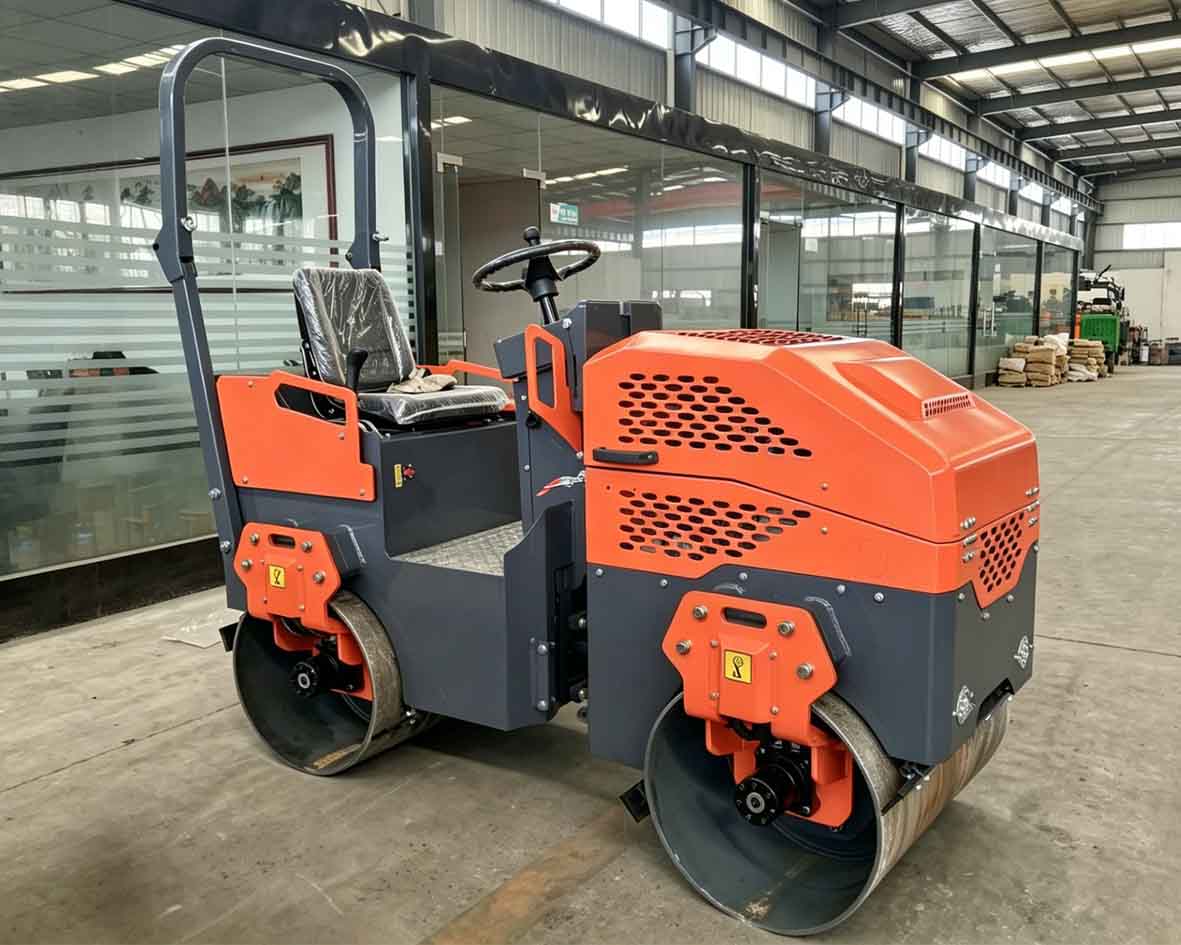
These are the iconic yellow (or in our case, orange/blue) machines with a steel drum at the front and a steel drum at the back. Both drums typically vibrate, though some smaller models vibrate only the front drum.
Their primary job is to apply dynamic force—measured in kilonewtons (kN)—to the material. The vibration shakes the aggregate particles, causing them to nestle closer together, reducing air voids. On asphalt, this also helps "knit" the mat together for a smooth, durable surface.
Xinghang's double drum series starts with the XHRS700 (1-ton, walk-behind/ride-on style) and scales up through the XHRS800 (1.5T), XHRS1000 (2T), XHRS1100 (2.5T), XHRS1200 (3T), and XHRS1400 (4T). They are full hydraulic, feature brand-name hydraulic pumps and NSK bearings, and are available with single or dual drum vibration depending on model.
These rollers are the workhorses of parking lot overlays, path paving, and secondary road resurfacing.
Pneumatic (Rubber Tire) Rollers (For Asphalt Finish / Sealing)
Instead of steel drums, these machines use multiple closely spaced rubber tires—usually four in the front row and five in the back, or vice versa.
The tires do not vibrate. Instead, they provide a kneading or massaging action. As the rubber conforms to the asphalt surface, it closes micro-cracks and pushes the fine aggregate into the voids. This is called "finish rolling" or "sealing the surface." It prevents water ingress and gives the pavement its final texture (macrotexture).
Xinghang produces the XHRST1200, a 3-ton dual pneumatic roller specifically for this purpose. It is often used in tandem with a double drum roller: the double drum breaks down and初步 compacts the mat; the pneumatic roller follows to seal it.
Single Drum Soil Compactors (For Subgrade, Embankment & Granular Fill)
These have one large steel drum at the front and four pneumatic tires at the rear. They are heavier (3.5T–6T in Xinghang's range: XHR3500, XHR4000, XHR6000) and designed to compact soil, gravel, and crushed stone—not finished asphalt.
The front drum vibrates with high exciting force (55kN–75kN), while the rear tires provide traction and some additional static compaction. They are used on the base and subbase layers before the asphalt courses are placed.
Using a single drum compactor on thin asphalt overlays is generally discouraged unless the drum is fitted with a very smooth, polished finish and operated at low amplitude—most contractors prefer the double drum for that final asphalt layer.
Matching Roller to Material & Project Phase
Think of pavement structure as a layer cake. Each layer needs a different tool.
The bottom layer—subgrade and subbase—is best handled by a single drum soil compactor (XHR3500 / XHR4000 / XHR6000). The high vibration amplitude and heavy static weight push air out of the soil and lock the particles together.
The intermediate asphalt binder course and surface course benefit from a double drum vibratory roller (XHRS series). The vibration settles the hot mix, while the steel drums provide a smooth finish.
The very top, final pass on an asphalt mat is ideally done—or at least finished—by a pneumatic tire roller (XHRST1200). Its kneading action closes the surface pores that even a smooth steel drum might leave behind.
For small-scale jobs—such as trench backfill, driveway patches, or bike path repairs—Xinghang's smaller walk-behind double drums (XHRS700B/C, XHFS series) are purpose-built. They fit in narrow trenches, are easy to transport in a pickup, and still deliver professional compaction quality.
Key Specifications You Should Compare
When evaluating rollers, experienced buyers look beyond just "weight." Pay attention to:
Static Line Load (N/cm): The static pressure exerted by the drum per centimeter of width. Higher line load = deeper penetration into the material.
Vibration Frequency (Hz / Hz converted to vpm): Most asphalt work is done at 50–70 Hz (3,000–4,200 vpm). Higher frequency is used for thinner lifts.
Amplitude (mm): The peak-to-peak displacement of the drum during vibration. Thick lifts need high amplitude (1.6–2.0mm); thin overlays need low amplitude (0.3–0.5mm) to avoid shoving the mat.
Drum Width: Determines coverage per pass. Common widths are 700mm (small), 1000–1200mm (mid), 1400mm (large).
Drive System: Full hydraulic drive (as on all Xinghang ride-on models) provides smoother starts/stops and better gradeability than mechanical clutch systems.
Why Contractors Choose Xinghang Rollers
Xinghang Machinery has focused on the full hydraulic concept since day one. Unlike many economy rollers that use belt-driven or clutch-based travel systems, our XHRS and XHR series use hydraulic piston motors and variable displacement pumps (brand-name: Sauer-Danfoss type / Permco / Eaton equivalents). This means:
Smoother acceleration/deceleration → less risk of shoving hot asphalt
Better hill-hold on grades (up to 30%–35%)
Longer service life under continuous jobsite vibration
Additionally, our rollers are equipped with:
Japanese NSK bearings in drum hubs for extended life
Large capacity polyethylene water tanks (up to 180L on 3T+ models) with pressurized spray and individual nozzle shut-off
Foldable ROPS / canopy for easy container loading
Optional emergency stop, seat switch, and anti-spin valve
All Xinghang rollers are CE marked, with English operation manuals and parts books provided.
Conclusion: The Right Roller Saves Money
Buying the wrong roller doesn't just affect compaction quality—it can cost you in rework, rejected inspections, and damaged reputation. Whether you need a nimble 700kg walk-behind for trench backfill, a 3-ton double drum for city street resurfacing, or a 6-ton single drum for rural road base, Xinghang has a purpose-built solution.
If you are unsure which model fits your typical projects, our sales team can recommend based on your usual lift thickness, material type, and jobsite access constraints.
Contact Xinghang Machinery today for a model recommendation, specification sheet, or container load quotation for the XHRS / XHR / XHRST series.
Small Machine, Giant Power — Compacting What Matters.