 Chinese
 English
 Russian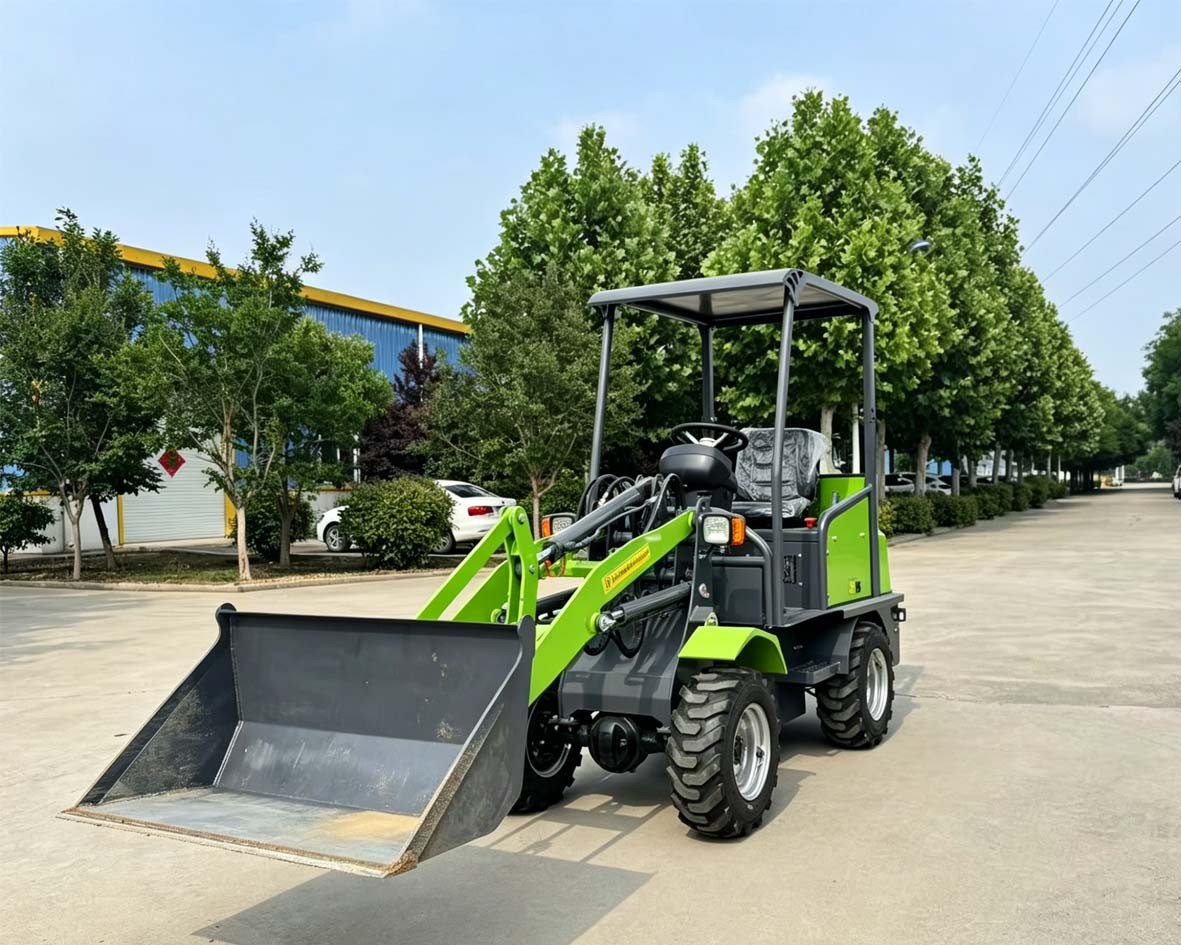
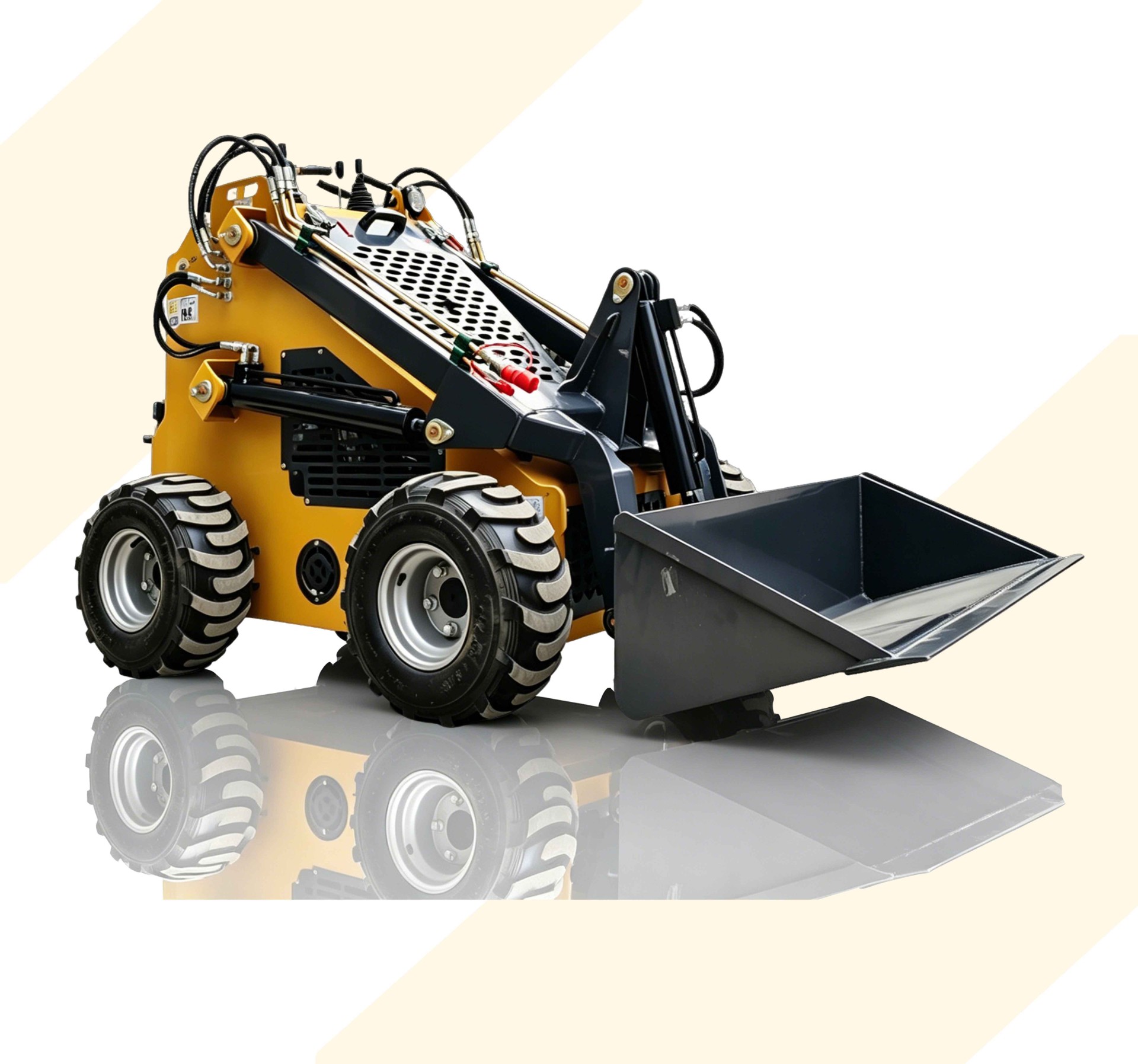
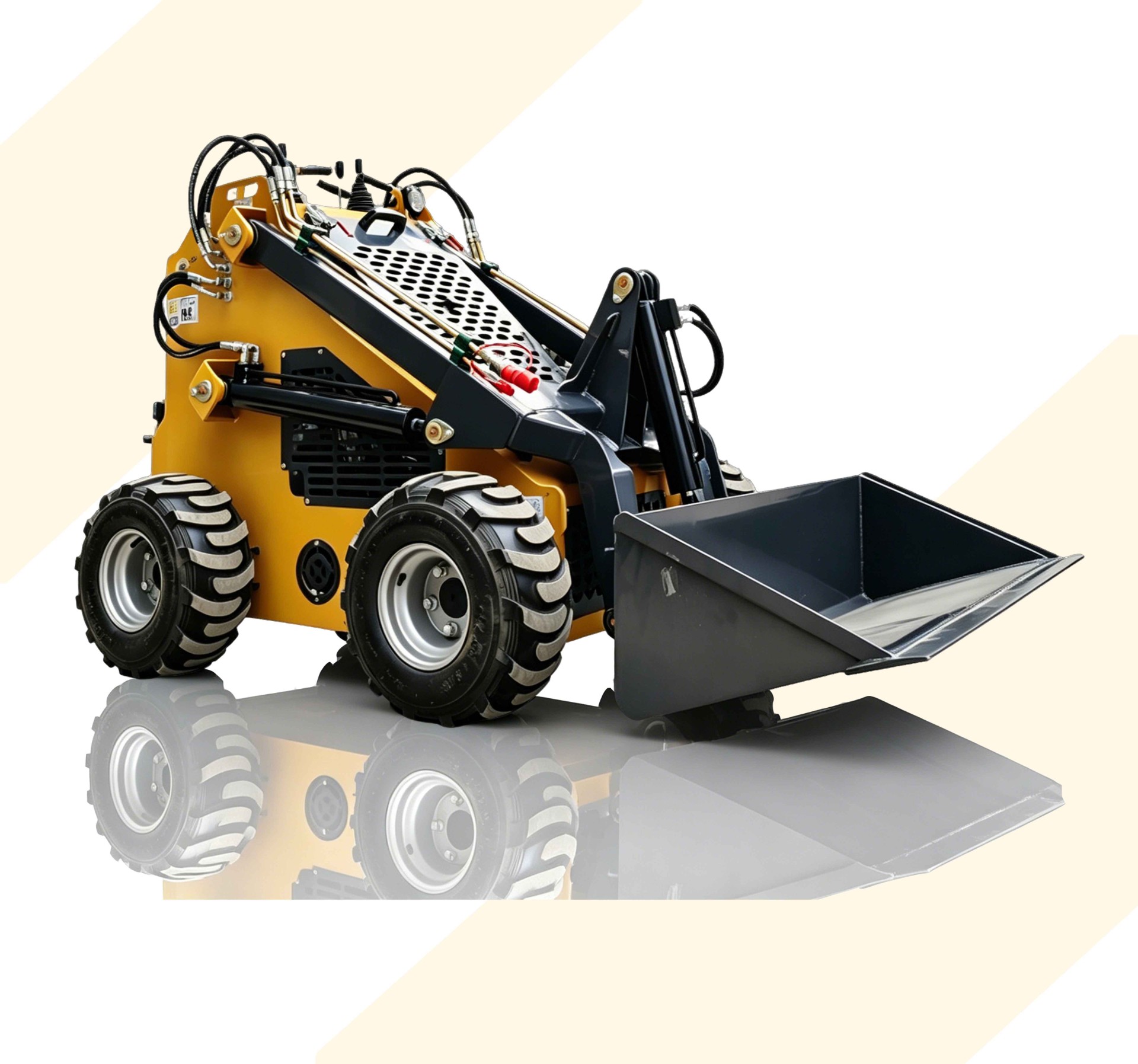
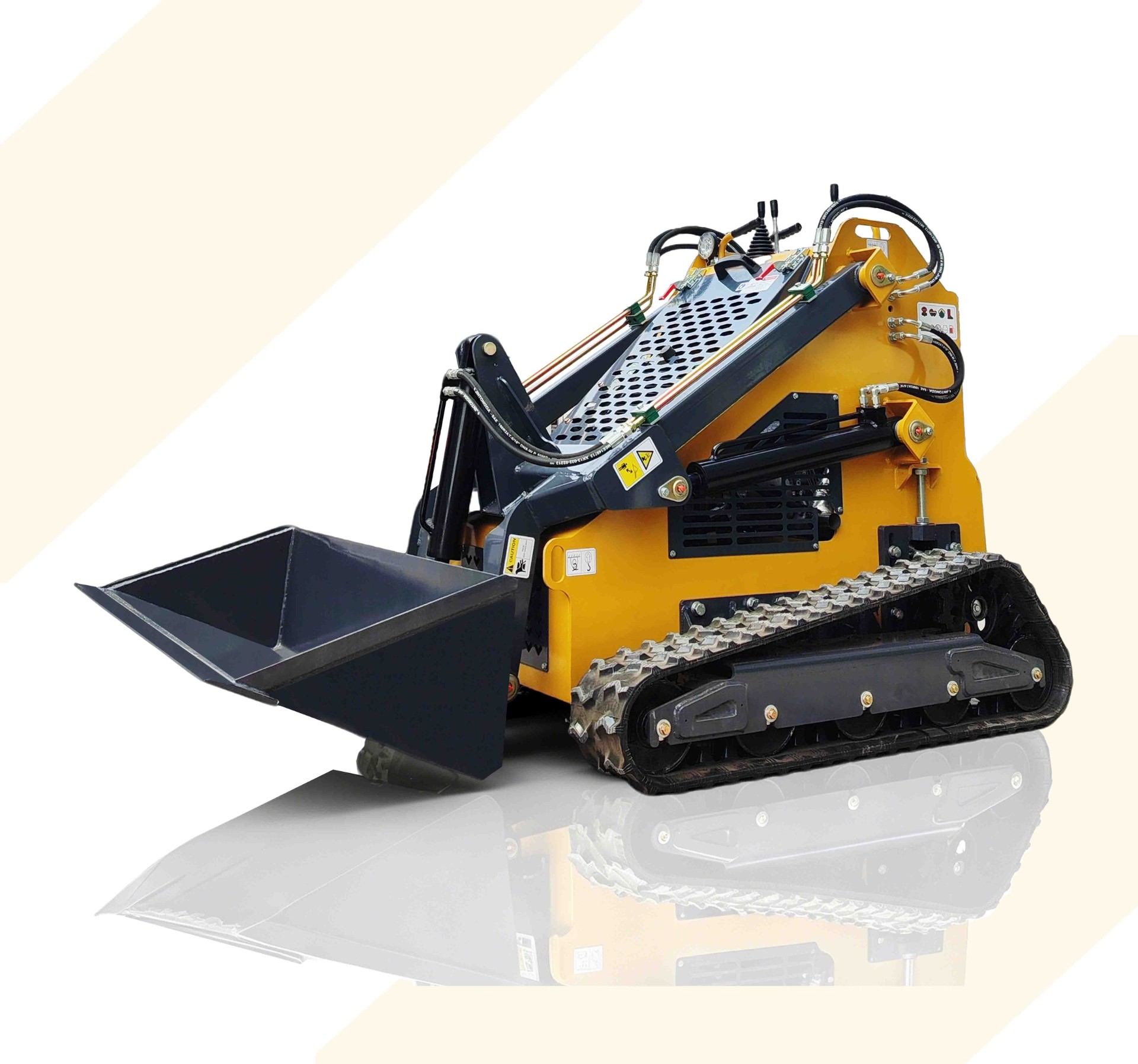
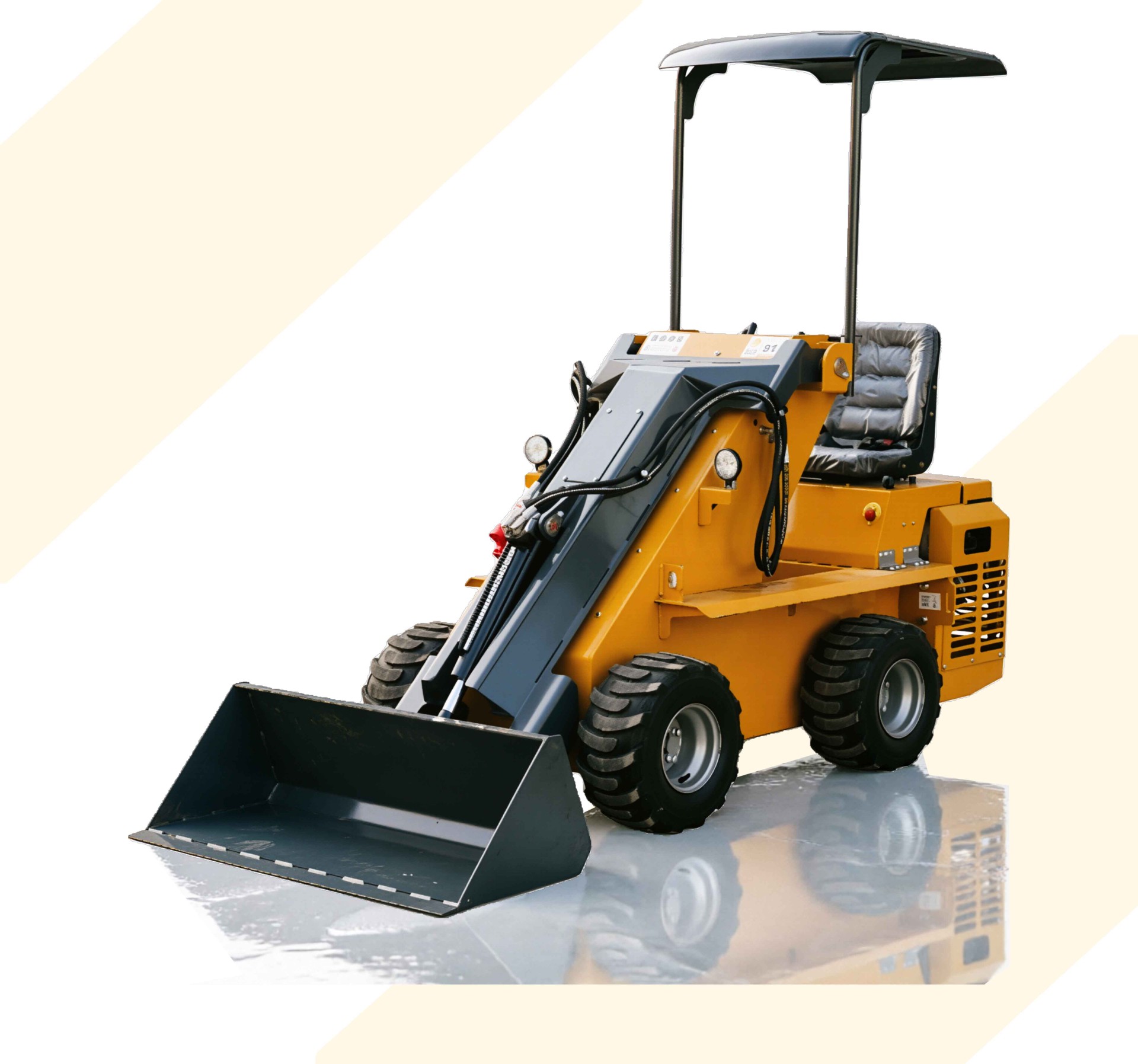
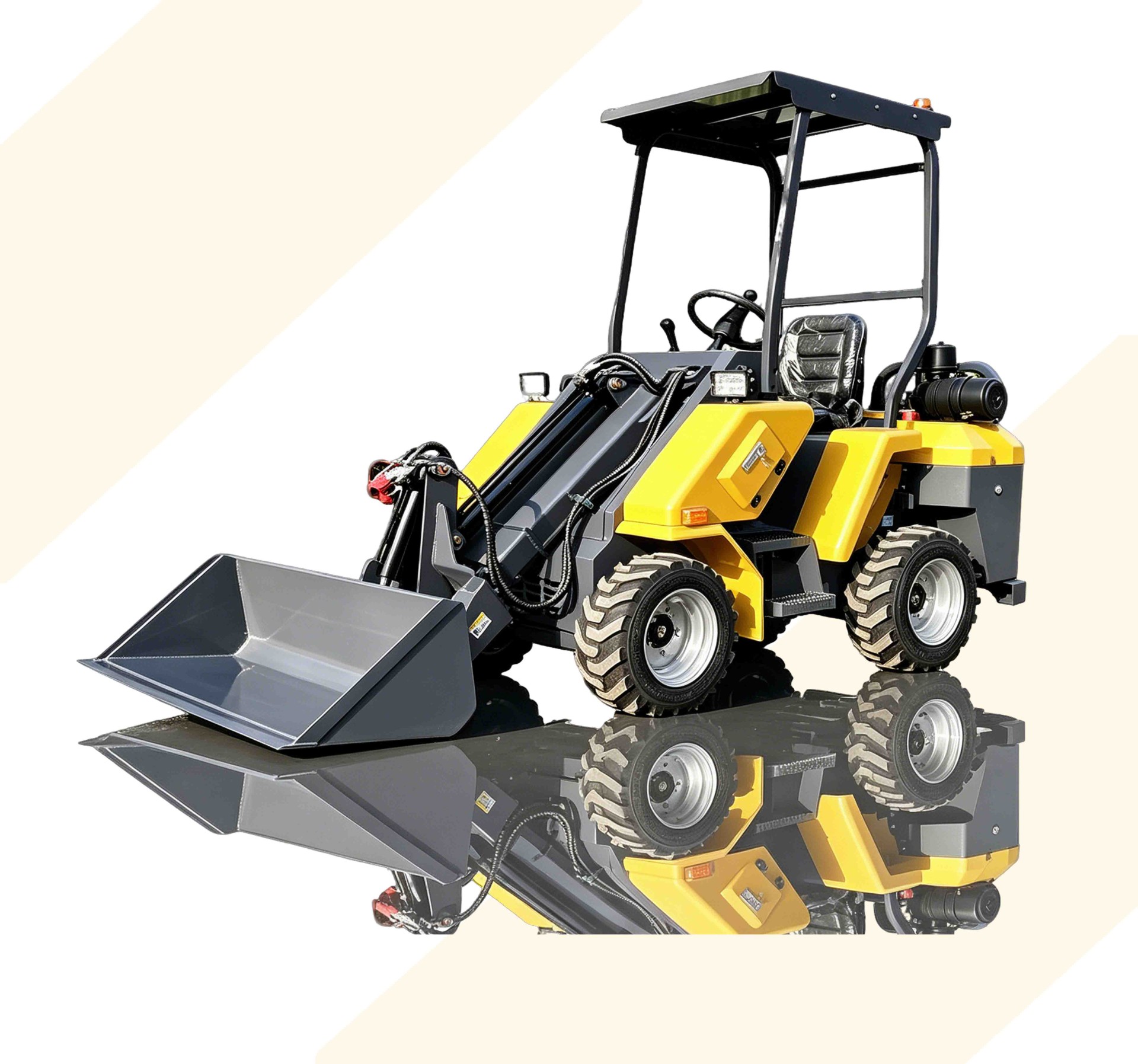
The global construction and agricultural machinery industry is undergoing a profound transformation driven by volatile fossil fuel prices, geopolitical instability in energy markets, and increasing pressure on small contractors to control operating costs. For decades, compact loaders—whether skid steers, wheel loaders, or garden tractors—have relied almost exclusively on diesel or gasoline internal combustion engines. While these machines offer power and familiarity, they also expose operators and business owners to fluctuating fuel prices, complex emission compliance requirements, and higher long-term maintenance costs. In this context, the XHD500 and XHDL500 Mini Electric Loader from Jining Xinghang Machinery Manufacturing Co., Ltd. emerges as a forward-looking alternative that allows businesses to decouple their daily operations from oil price volatility while gaining a technologically advanced, low-emission, highly maneuverable machine suited for both indoor and outdoor work.
The Impact of Energy Price Volatility on Small Equipment Owners
In many regions around the world, small construction firms, livestock farm operators, landscaping companies, and municipal maintenance teams rely on compact loading equipment for material handling, feed distribution, site cleanup, and light earthmoving. These businesses typically operate on thin margins where fuel cost spikes can quickly erode profitability. A diesel-powered compact loader may consume several liters of fuel per hour under load. When global crude oil prices rise due to supply chain disruptions or regional conflicts, the daily operating expense of a single machine can increase noticeably, and across a fleet of two or three units the impact becomes significant.
Beyond the direct cost of diesel or gasoline, fuel-powered machines require regular engine maintenance: oil changes, filter replacements, cooling system checks, and periodic repairs related to injection systems or exhaust after-treatment. Each of these adds downtime and labor cost. In contrast, an electric compact loader such as the XHD500 replaces the internal combustion engine with high-efficiency electric drive motors and a sophisticated battery system, dramatically reducing daily energy cost per operating hour and simplifying routine maintenance.
Why the XHD500 Is Designed for the Electric Era
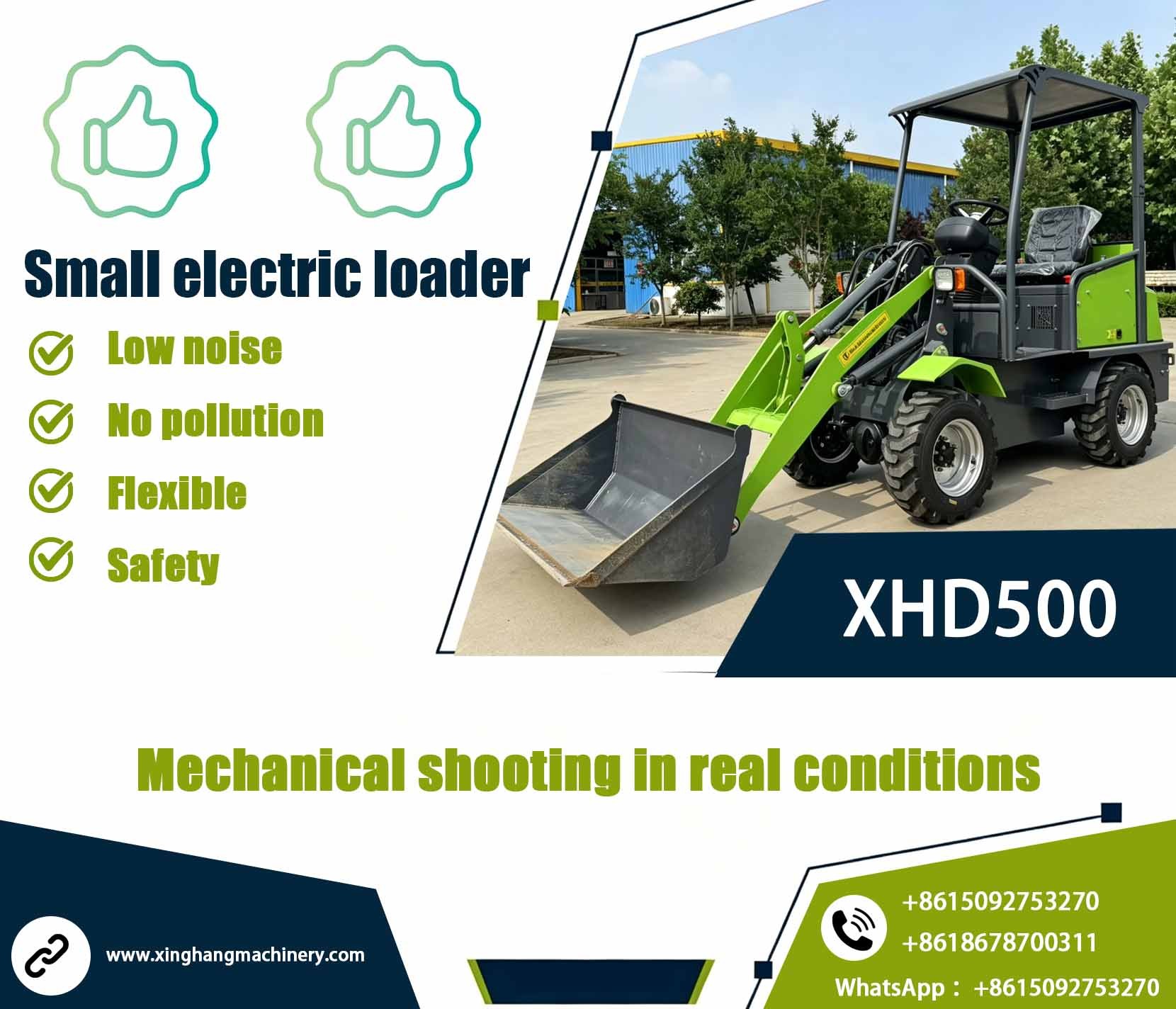
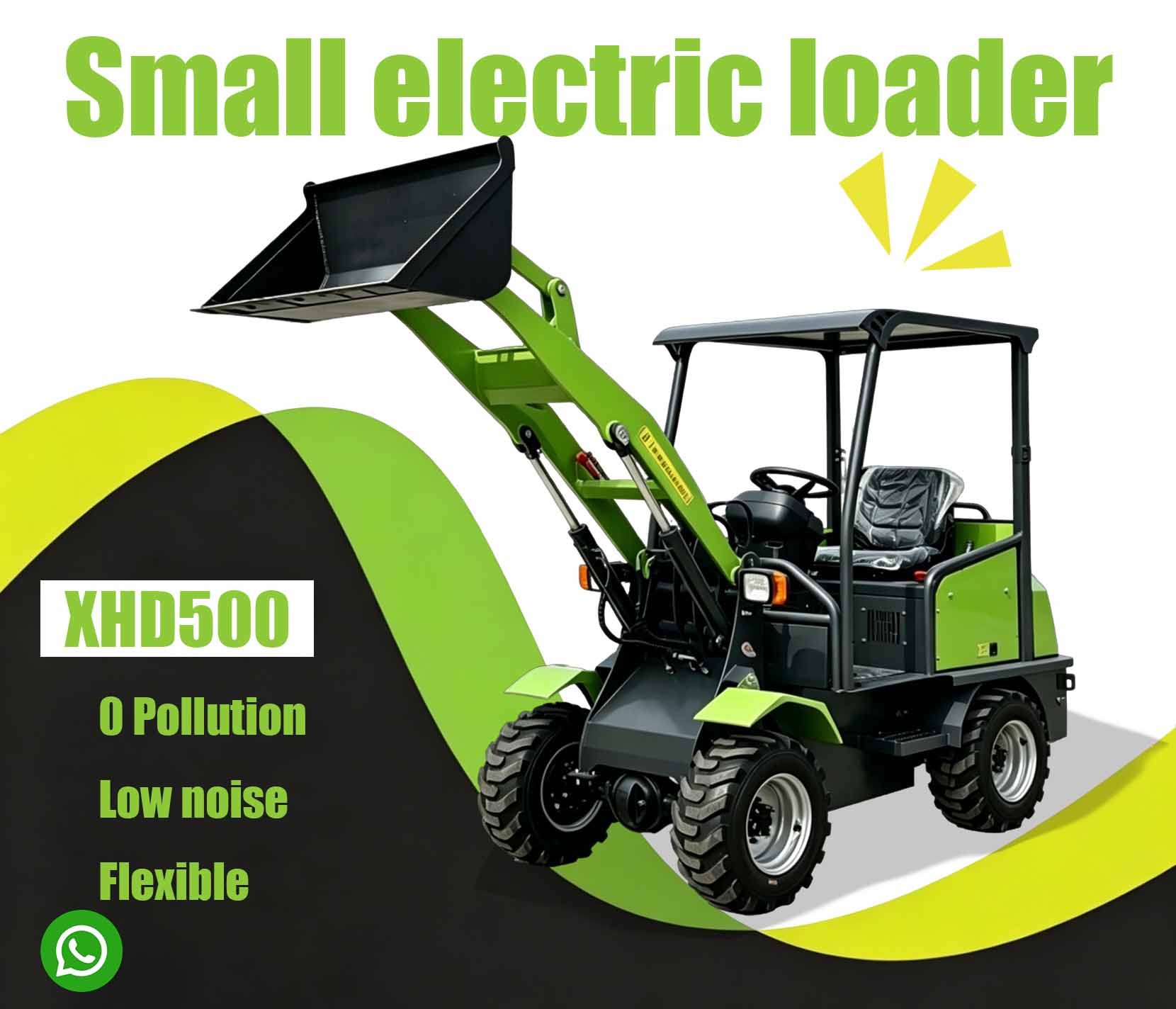
The XHD500 mini electric loader is purpose-built around an all-electric drivetrain rather than being a retrofitted version of a diesel machine. Its key powertrain features include a dual-bridge single-motor design connected via drive shaft, which provides strong low-speed torque and better overload capacity while keeping the mechanical layout simple and service-friendly. The driving motor and hydraulic pump are both flat-wire wound motors—also known as hairpin winding motors—a technology rarely seen in this class of equipment but widely recognized for its superior slot fill factor, excellent heat dissipation, compact size, and longer service life compared with conventional round-wire motors.
Flat-wire motor technology enables the XHD500 to maintain high efficiency even under continuous heavy-load conditions. Lower temperature rise means the motor can sustain demanding work such as repeated lifting of materials or extended travel on slopes without performance fade. The reduced noise level of the motor and the low-noise gear pump further contributes to a quieter working environment, an advantage we will explore in more detail in later articles focusing on livestock and indoor applications.
The standard configuration includes a CAN-bus electronic control system with digital LCD instrument panel that displays real-time voltage, state of charge, traveling speed, and hydraulic pump rpm. The system also provides misuse alerts and diagnostic trouble codes, allowing operators and service personnel to identify issues quickly. An integrated electro-hydraulic joystick puts forward-reverse direction control, high-low speed switching, boom lift, and bucket dump into a single intuitive lever, reducing operator fatigue and improving cycle times.
Battery Flexibility to Match Different Budgets and Duty Cycles
One of the practical concerns when switching from diesel to electric is whether the battery capacity matches the actual daily workload and whether the upfront investment fits the customer’s budget. The XHD500 addresses this by offering multiple battery options: 60V 160Ah lead-acid battery for cost-sensitive entry-level users, and 64V 150Ah, 180Ah, or 280Ah LiFePO? (lithium iron phosphate) battery packs for customers who require longer runtime, faster charging, and a significantly longer cycle life. Lithium versions are especially suitable for professional users who run the machine multiple hours per day and want to opportunity-charge during breaks.
Because electricity prices are generally far more stable than diesel prices, and because the energy conversion efficiency of an electric powertrain is substantially higher than that of a small diesel engine, the XHD500 typically delivers a much lower cost per operating hour. Over a multi-year ownership period, the savings on fuel and engine-related maintenance can offset a meaningful portion of the initial price premium for the electric model.
Zero On-Site Emissions and Indoor Operation Capability
Unlike diesel loaders that emit exhaust gases and particulate matter, the XHD500 produces zero tailpipe emissions. This makes it permissible in enclosed spaces such as warehouses, greenhouses, food processing plants, and animal barns where combustion engine exhaust would be hazardous or prohibited. Even in well-ventilated outdoor sites, eliminating exhaust improves air quality for the operator and nearby workers—an increasingly important consideration as occupational health regulations tighten worldwide.
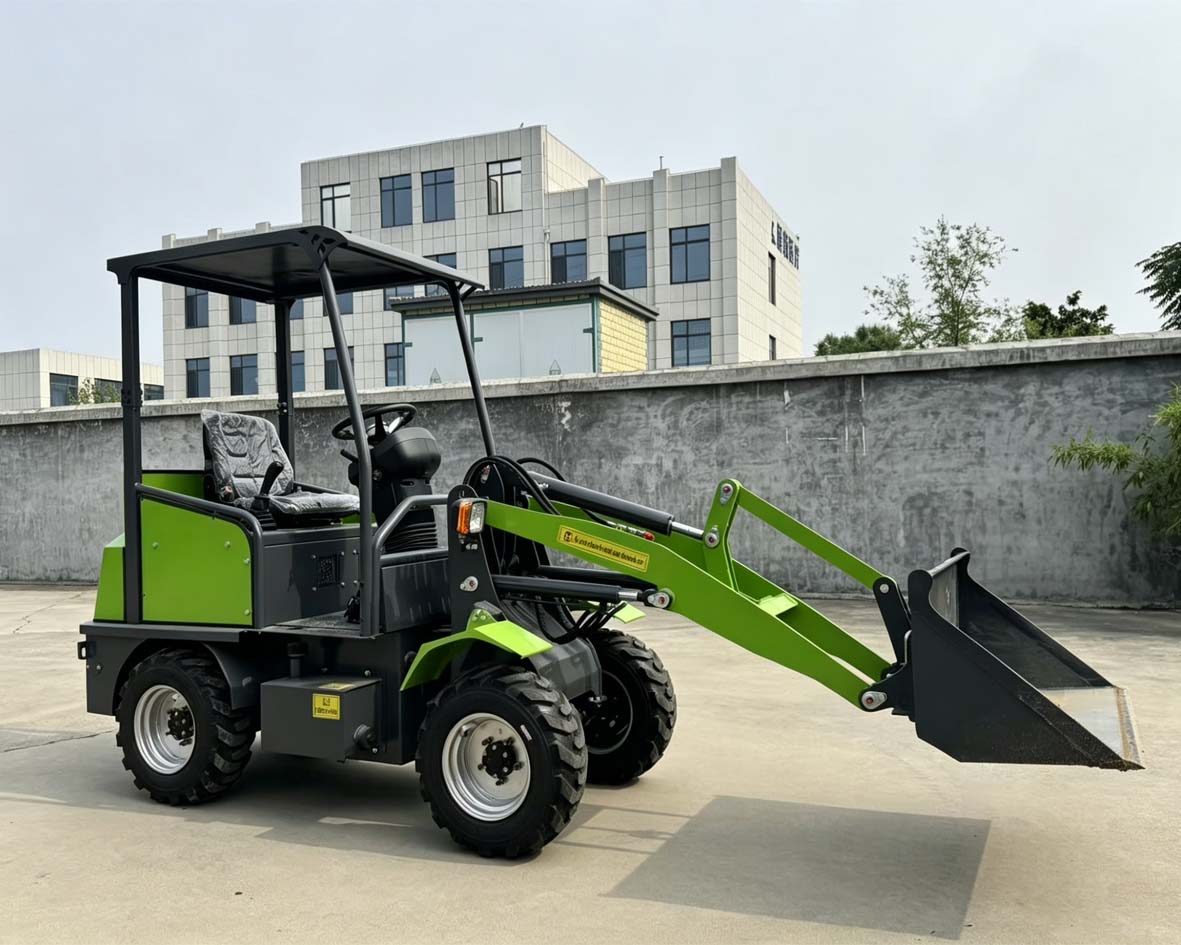
The articulated steering design with a low center of gravity gives the XHD500 excellent stability and a tight turning radius, allowing it to navigate narrow aisles, barn passages, and confined urban job sites. The whole frame is constructed from high-strength manganese steel for improved impact resistance and load-bearing capability, while the axles are fully floating heavy-duty units that enhance ride comfort and durability under load.
Attachment Versatility for Multi-Purpose Use
To maximize return on investment, the XHD500 supports quick coupling of multiple attachments including standard buckets, hay forks, grabbers, and other task-specific tools. A single machine can therefore be used for moving soil or gravel in the morning, transporting feed pallets in the afternoon, and cleaning out stalls or sweeping indoor floors—all without the noise, fumes, or high fuel consumption of a diesel counterpart. This flexibility is particularly valuable for small farms, equestrian centers, and independent contractors who need one compact machine to handle diverse seasonal tasks.
Future-Proofing Your Business Against Energy Market Shifts
As governments introduce stricter emission standards for non-road mobile machinery—ranging from EPA Tier 4 to EU Stage V requirements for diesel engines—the compliance cost of combustion-engine equipment continues to rise. Some urban zones already restrict the use of diesel machinery indoors or during certain hours. By adopting an electric loader now, equipment owners insulate themselves from future regulatory constraints related to exhaust emissions and noise. The XHD500 positions your business to bid on projects in environmentally sensitive areas, work inside occupied buildings, and serve customers who explicitly prefer green-certified or low-impact equipment suppliers.
Conclusion
The XHD500 and XHDL500 Mini Electric Loaders represent a practical, well-engineered response to the challenges posed by energy price uncertainty and the gradual shift toward electrification in the construction and agriculture sectors. With flat-wire drive and hydraulic motors, articulated full-hydraulic steering, CAN-bus diagnostics, attachment compatibility, and flexible battery options including LiFePO?, the machine combines operational economy with modern technology. For contractors, farmers, and rental fleets looking to reduce dependence on fossil fuels while maintaining—or even improving—jobsite productivity, the XHD500 offers a compelling alternative to traditional small diesel loaders.