 Chinese
 English
 Russian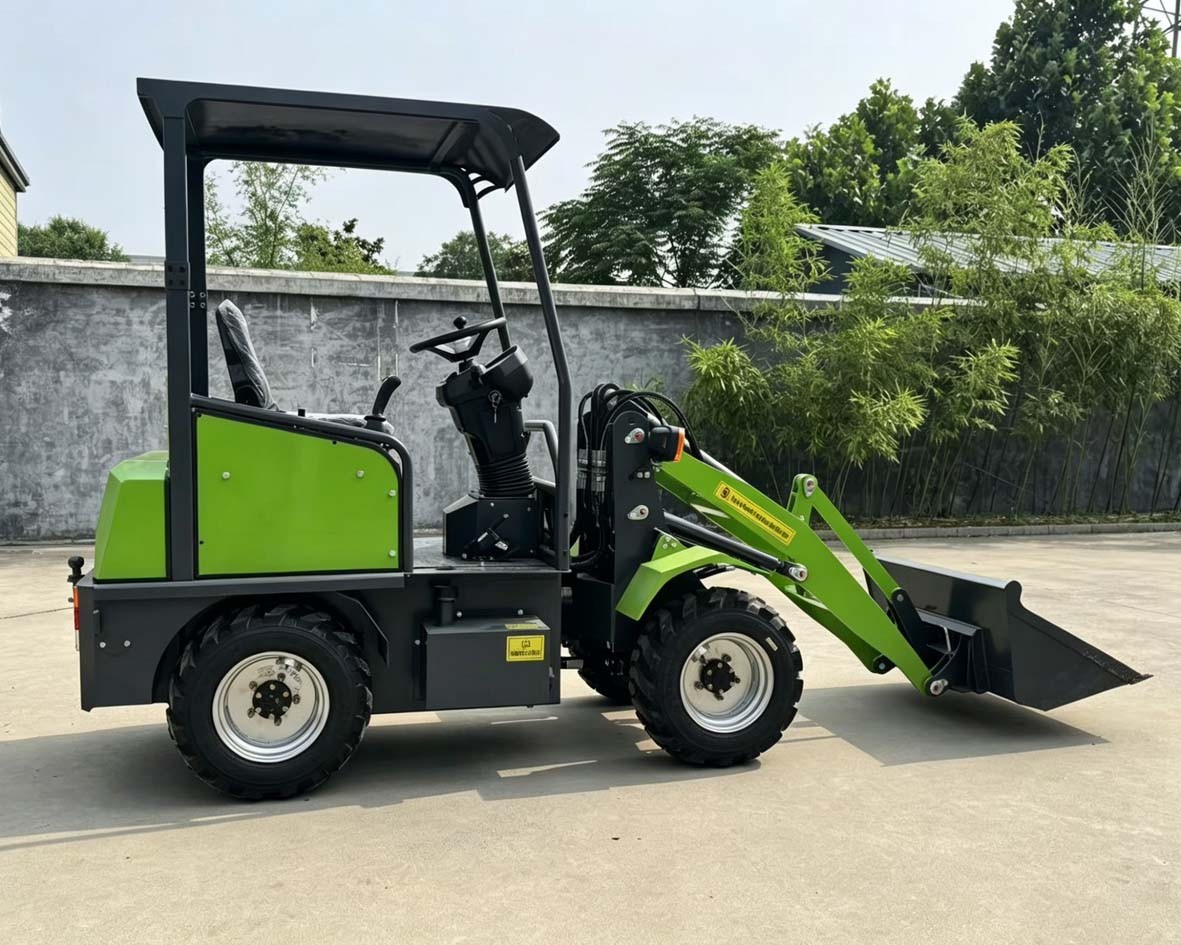
Walk into any modern dairy, swine, or poultry barn at 5:00 a.m. during feeding time. You will see the familiar rhythm: cows lining up at the feed bunk, pigs nuzzling troughs, and layers moving calmly. Then, a diesel-powered mini loader rumbles in. Within seconds, the 85 to 95 dB roar of the engine and the acrid blue haze of unburned diesel exhaust flood the enclosed space.
Most farm owners notice the animals flinch or stop eating, but write it off as just the machine. Scientific studies confirm otherwise. Noise above 75 to 85 dB triggers acute stress responses in livestock, elevating cortisol and suppressing feed intake. Diesel exhaust, containing NOx, PM2.5, and CO, degrades air quality already compromised by ammonia, aggravating respiratory diseases. Repeated stress lowers immune function, increasing susceptibility to mastitis and pneumonia.
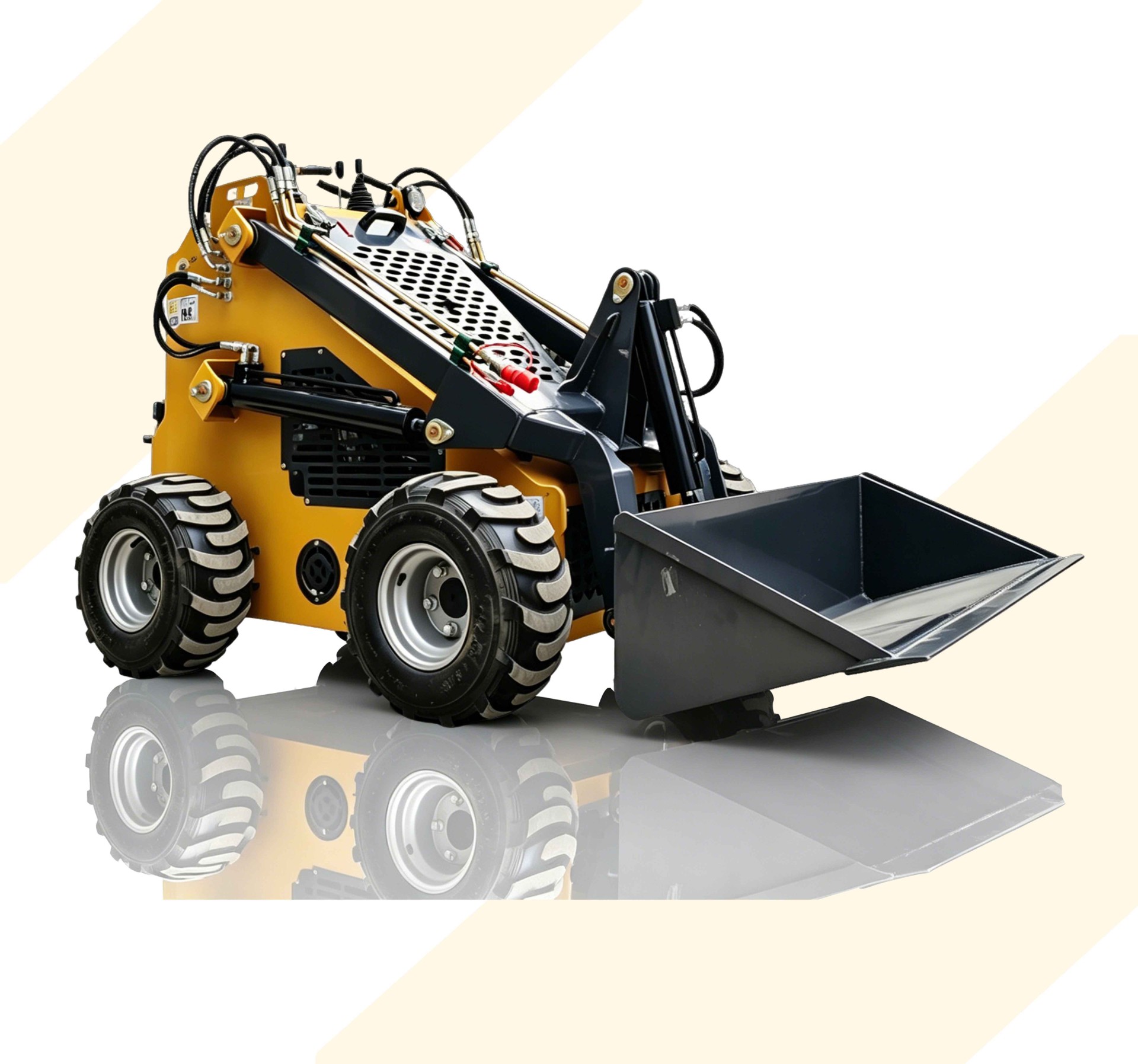
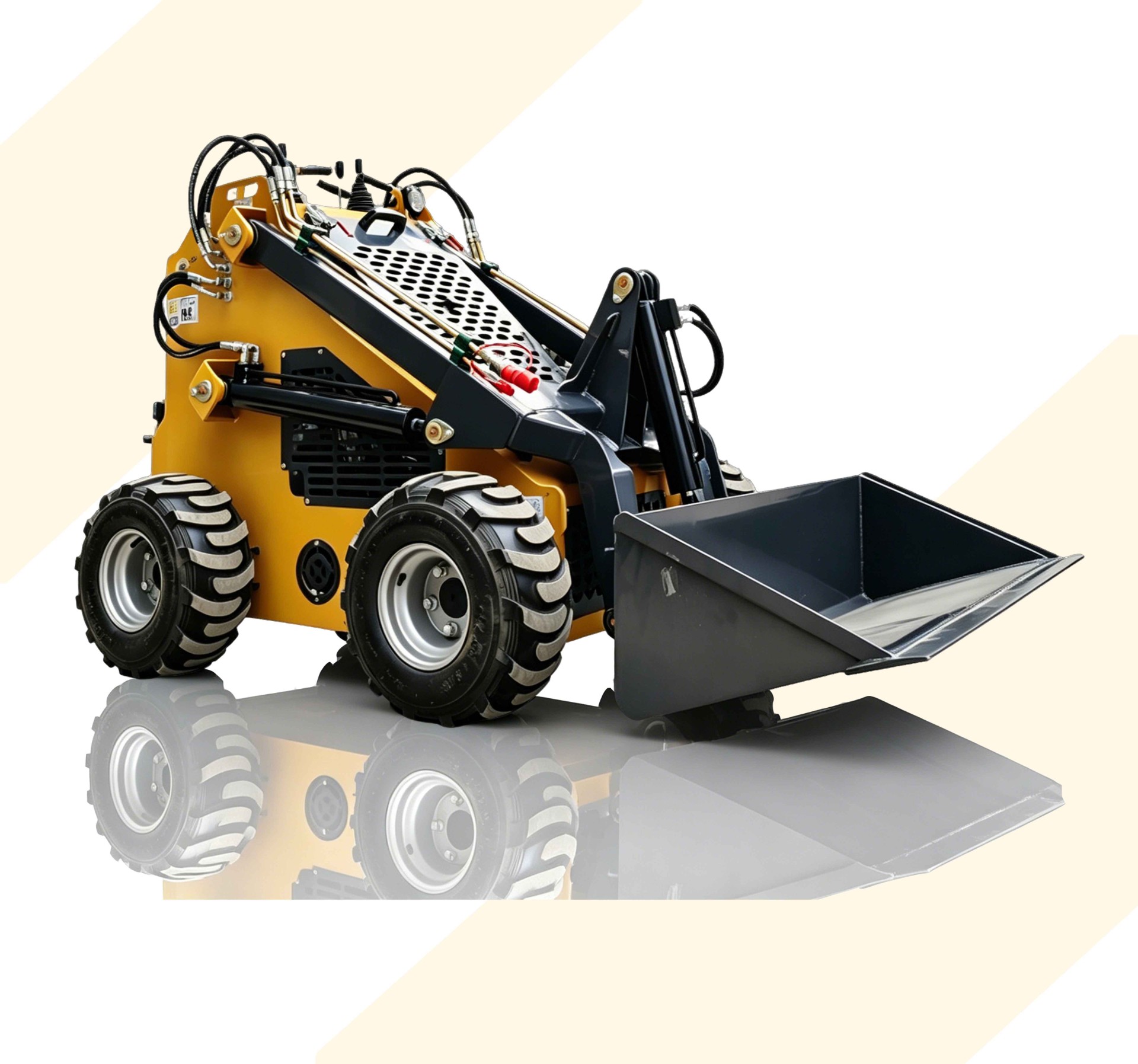
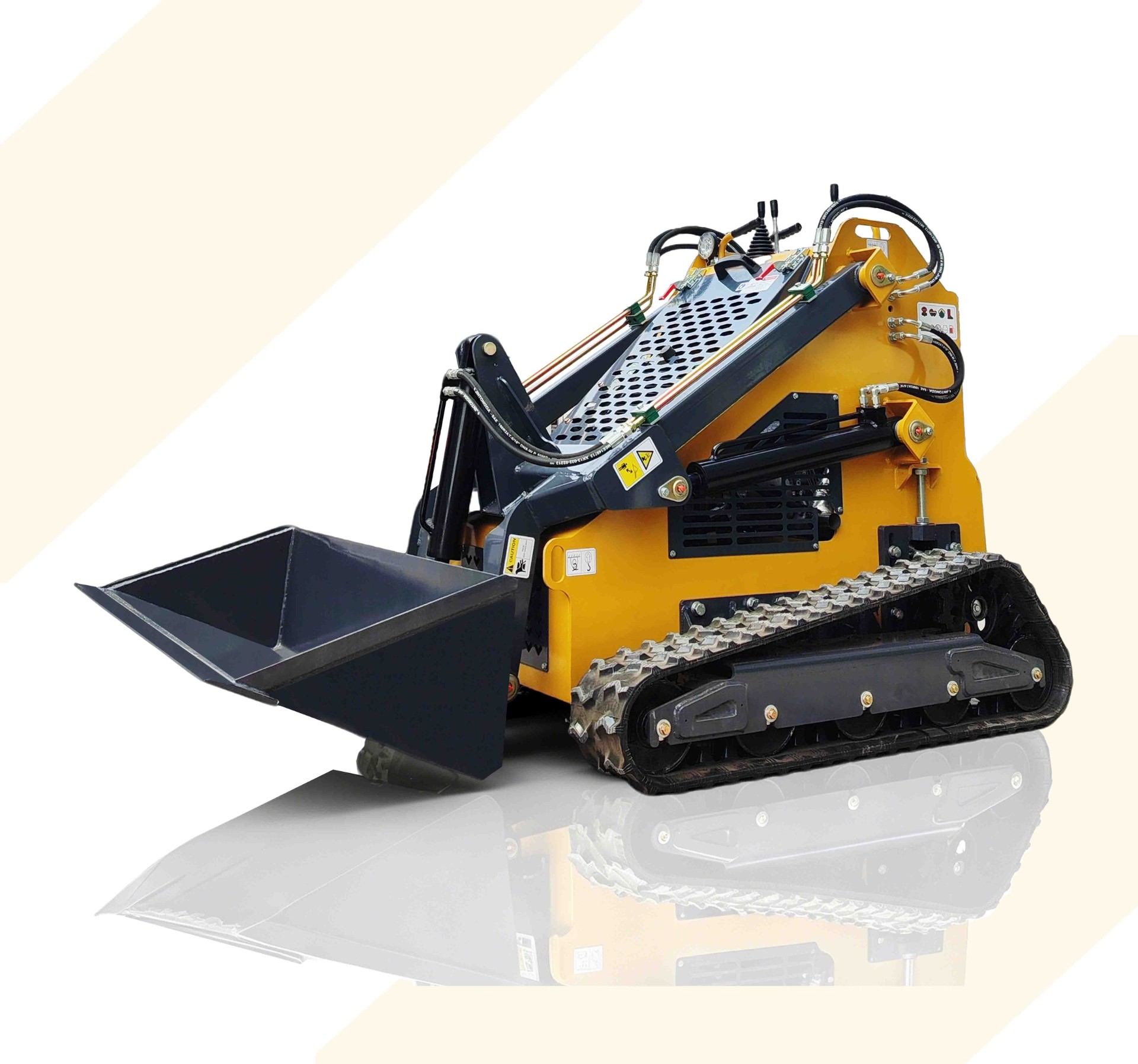
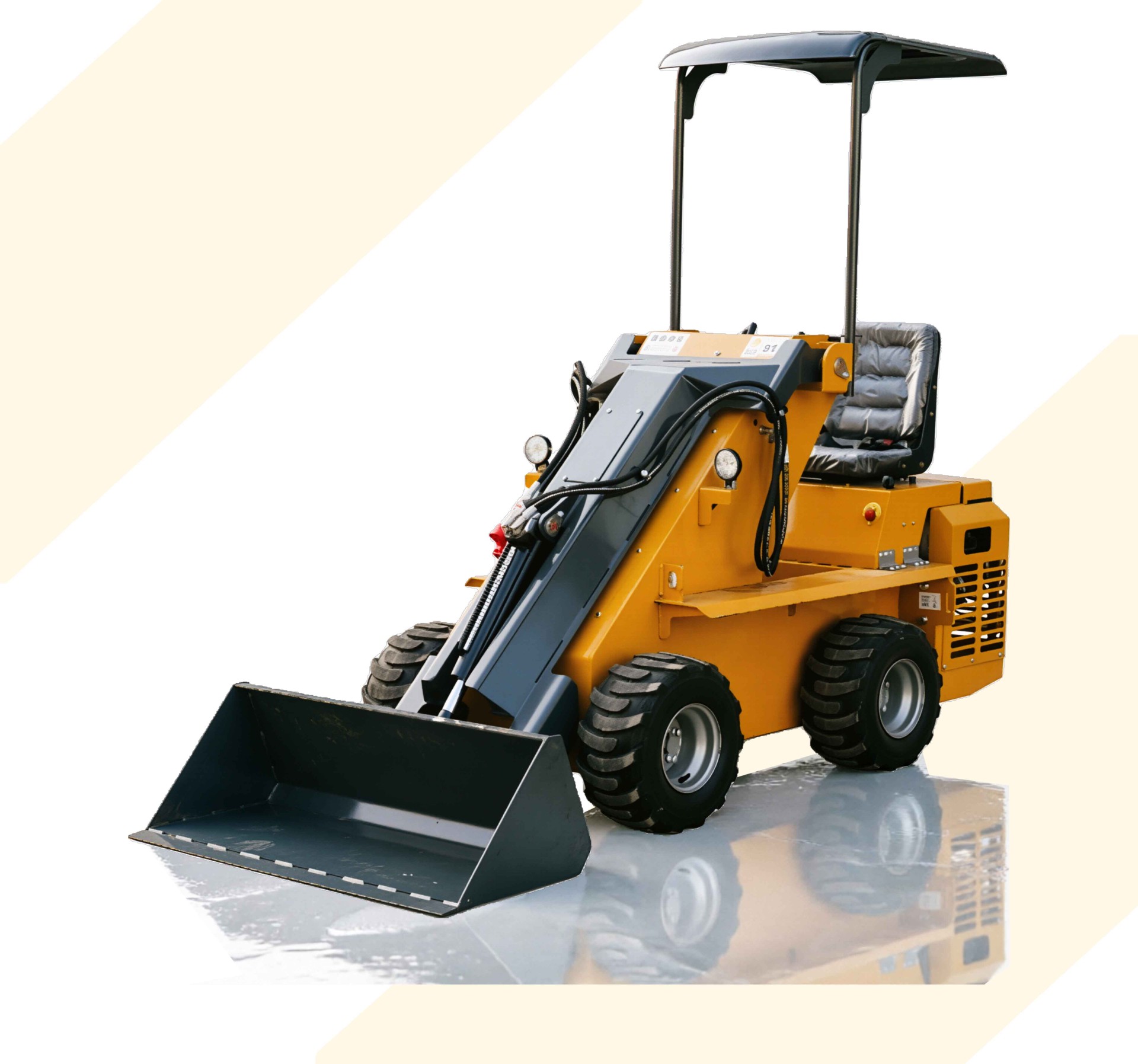
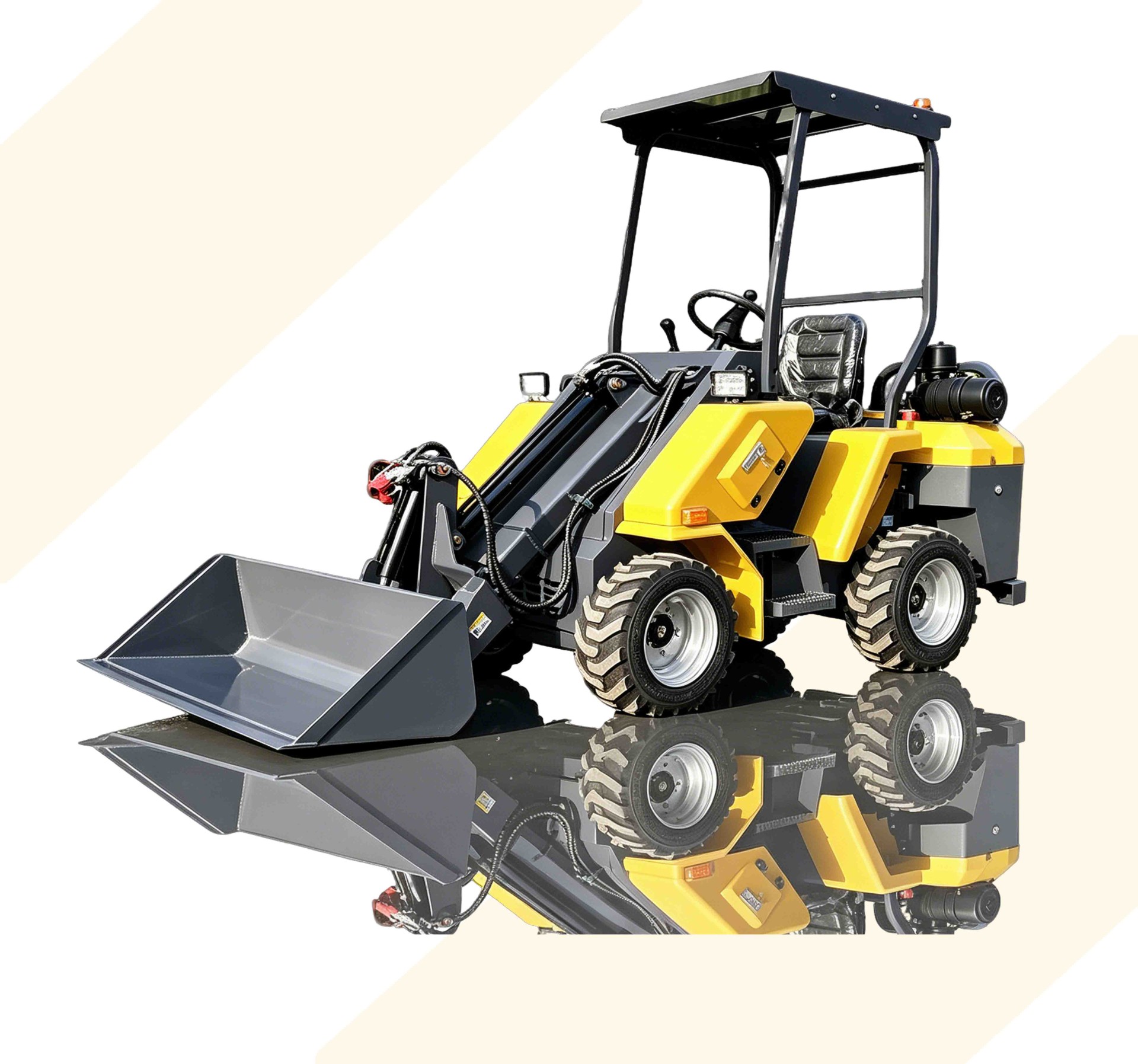
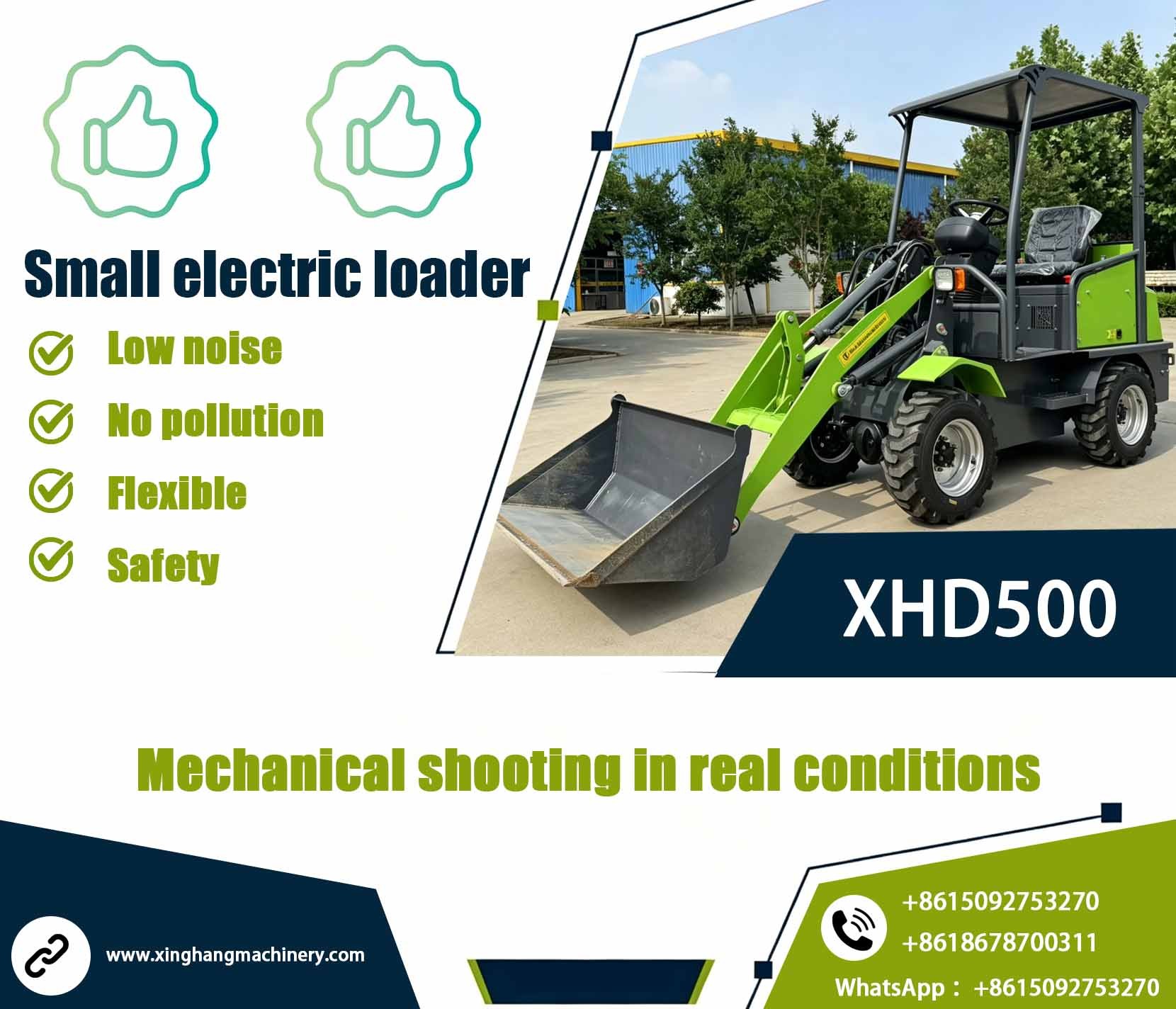
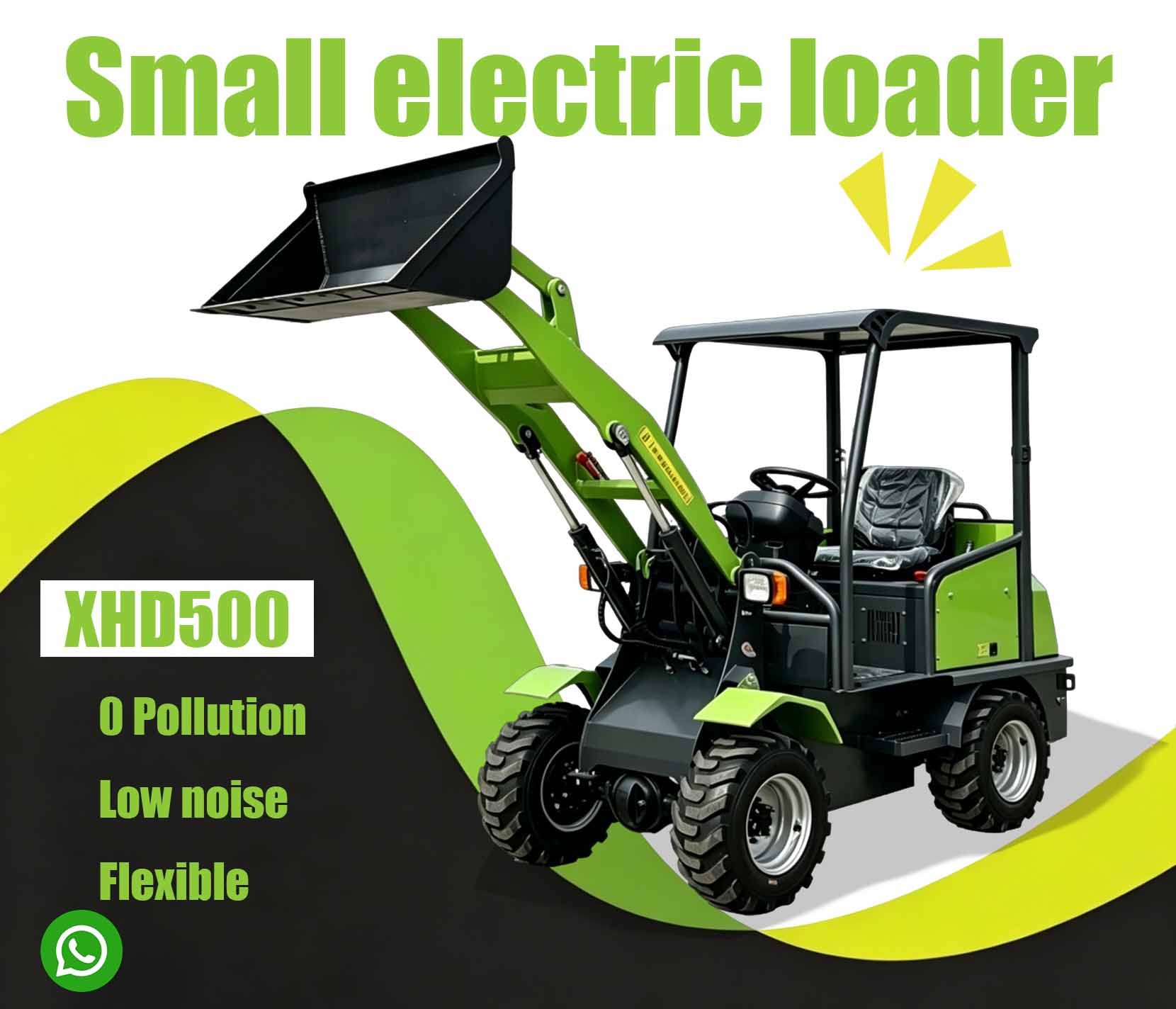
These losses are largely preventable. The problem is not the need to move feed or manure; it is the choice of machinery. Jining Xinghang Machinery designed its XHD500 and XHDL500 Mini Electric Wheel Loaders specifically for this challenge. With zero tailpipe emissions, whisper-quiet operation at 65 dB, a narrow 1.06 m chassis, and a 500 kg rated load capacity, it is the livestock-friendly alternative for modern farms.
Chapter 1: The Mechanical Pain Points of Livestock Farming
1.1 Noise Pollution: The Invisible Production Killer
A typical diesel loader idles at 78 to 82 dB and reaches 88 to 95 dB under load. Inside a barn, hard walls reflect sound, amplifying the perceived loudness.
Research shows clear negative impacts across species:
Dairy Cows: Sudden loud noise spikes cortisol, reducing rumination and feed intake. Prolonged exposure can reduce milk yield by 8 to 12 percent.
Swine: Noise above 85 dB causes restlessness and fighting. Pregnant sows exposed to chronic noise show increased stillbirths and early farrowing.
Poultry: Birds detect sound up to 4 kHz. Noise above 70 to 75 dB causes panic and feather pecking, leading to fewer eggs and higher mortality.
Beef Cattle: The flight response leads to bruising and injuries, lowering carcass value.
Unlike a passing tractor, a loader working inside a barn exposes animals to this stress repeatedly and at close range. This forces farms to schedule work during specific quiet windows, limiting operational flexibility. Workers also suffer hearing fatigue, and neighbors often complain about the noise.
1.2 Diesel Exhaust: A Toxic Indoor Pollutant
Barns ventilate to remove moisture and ammonia, but diesel exhaust adds harmful layers:
Nitrogen Oxides (NOx): Irritate the mucous membranes of eyes and respiratory tracts.
Particulate Matter (PM2.5): Penetrates deep into lung tissue, linked to higher pneumonia incidence in calves and piglets.
Carbon Monoxide (CO): Especially hazardous in winter when barns are closed for warmth.
Even with good ventilation, exhaust concentration near the machine exceeds safe thresholds. Regulatory bodies in Europe and North America now recommend or mandate zero-emission equipment in livestock housing. Forward-thinking farms adopt electric equipment early to stay ahead of regulations and qualify for green-premium supply chains.
1.3 The Diesel Paradox
Diesel loaders are familiar and easy to refuel, but they are biologically incompatible with a calm, healthy barn environment. They are increasingly restricted by insurance protocols due to fuel spill risks. Maintenance is expensive, with oil, filters, and injectors constantly vulnerable to dusty barn air. Most importantly, they cause hidden economic losses through reduced animal performance that farms rarely calculate.
Chapter 2: Xinghang XHD500/XHDL500 Engineered for the Barn
2.1 Zero Tailpipe Emissions
The Xinghang electric loaders produce zero CO2, NOx, PM, or CO at the point of use. There is no diesel smell, no soot, and no exhaust plume. This makes them safe to operate inside dairy freestall barns, sow gestation rooms, and feed mixing areas. Workers and animals breathe clean air. When charged from the grid, the well-to-wheel environmental footprint is 60 to 80 percent lower than diesel.
2.2 Whisper-Quiet Operation
Equipped with a 4 kW flat-wire permanent magnet synchronous motor and a 3 kW hydraulic pump motor, these loaders operate at approximately 60 to 65 dB at one meter. This is comparable to normal conversation.
Animal behavior improves dramatically. Cows typically do not startle and continue eating when the loader enters the feed alley. Sows show reduced flight responses, and poultry experience no panic spikes. This calm directly supports milk let-down and feed conversion. The quiet operation also allows for early-morning or late-evening work without disturbing animals or neighbors.
2.3 Compact Design for Barn Aisles
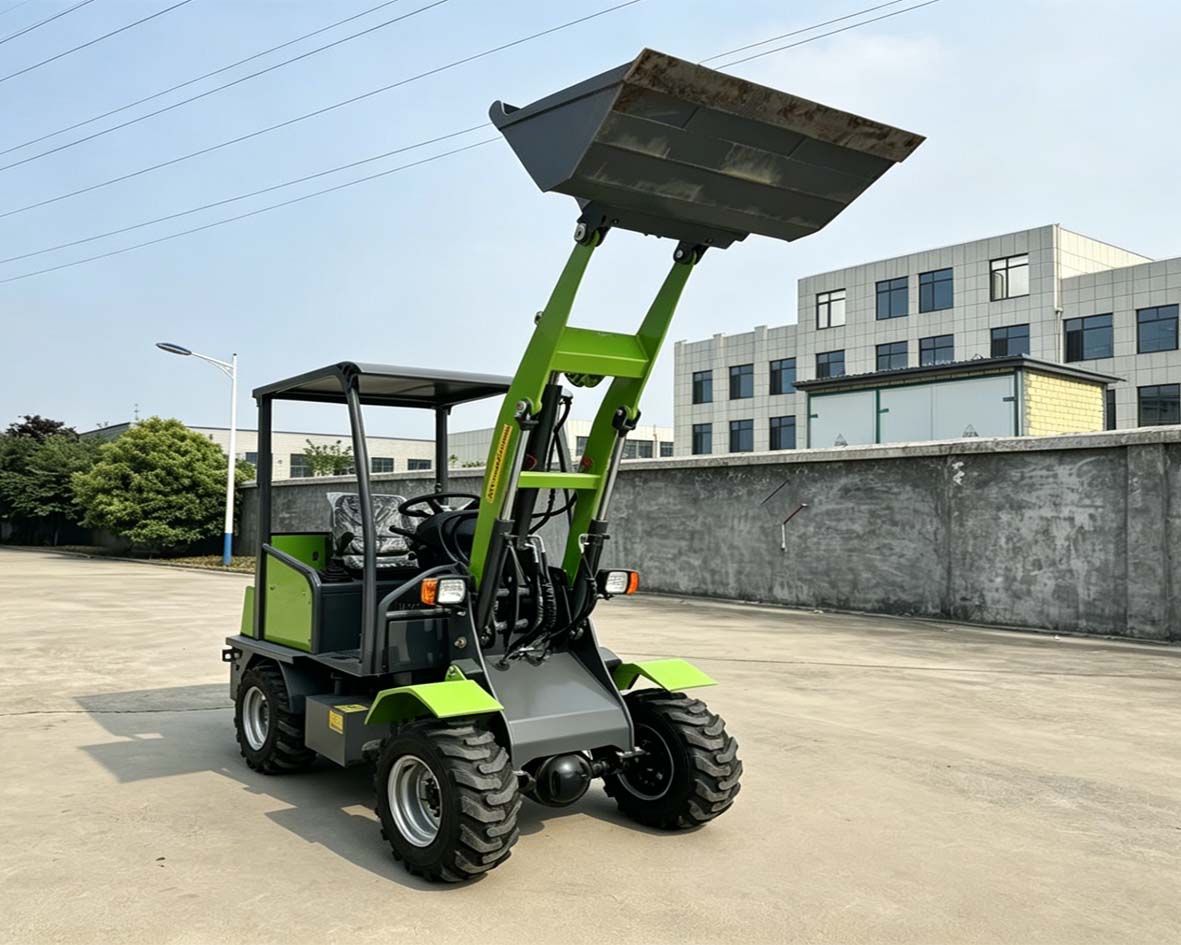
With overall dimensions of 3500 x 1060 x 1500 mm, the loader fits through standard barn doorways as narrow as 1.1 meters. The articulated frame steering provides a tight turning radius for navigating around pens and through manure alleys. Large wheel loaders cannot enter many barn layouts, forcing manual labor with wheelbarrows. The Xinghang mini loader eliminates this inefficiency.
2.4 Heavy-Duty Construction
The entire frame, lift arms, and bucket are fabricated from high-tensile manganese steel. This resists impact against barn fixtures and frozen manure piles. The loaders feature a full-floating heavy-duty axle, where the axle shaft carries only torque and all vehicle weight is supported by the axle housing. This design resists fatigue from potholed barn yards. Industrial pneumatic tires provide good flotation on soft pack with minimal damage to flooring.
2.5 Flexible Battery Options
Xinghang offers configurations for different operational needs:
60V/160Ah Lead-Acid (XHD500): An economy option with a 4 to 5 hour runtime, suitable for seasonal or light-use farms.
64V/150Ah LiFePO4: Balanced performance with a 4 to 5 hour runtime for small to mid-size daily use.
64V/280Ah LiFePO4 (XHDL500 Premium): Long-cycle life with 6 to 8 plus hours of typical cyclic use, designed for full single-shift daily operations.
The LiFePO4 packs include a Battery Management System with over/under-voltage and over-temperature protection, crucial for unheated barn equipment rooms in winter.
2.6 Operator-Friendly Controls
A single multifunction electro-proportional joystick controls direction, speed, boom, and bucket functions. Operators can be trained in under 30 minutes. The digital LCD dashboard displays real-time battery status, voltage, speed, and fault codes. Two-speed travel allows for precise low-speed work or faster transport between locations.
2.7 Multi-Function Implements
With a quick-coupler, one machine handles many jobs. Standard with a manganese steel bucket, optional attachments include manure grapple buckets, industrial forks for pallets, 4-in-1 multi-buckets, sweeper brooms, and snow blades. With less than a minute for changeover, one XHDL500 replaces a tractor-loader, a forklift, and a manure scraper.
Chapter 3: Total Cost of Ownership (TCO) Analysis
Cost Element | Diesel Mini Loader | Xinghang Electric (LiFePO4) |
|---|---|---|
Fuel/Energy per 8h shift | 10 to 15 L diesel (volatile) | 15 to 22 kWh (1/3 to 1/4 fuel cost) |
Routine Maintenance | Oil/filter every 100 to 250 hours | Grease only; no oil changes |
Downtime Risk | High (engine failures in dust) | Low (fewer wear parts) |
Animal Performance Impact | Negative (stress-related loss) | Neutral or Positive |
Permitted Work Window | Limited (noise/fumes) | Any hour (quiet/fume-free) |
Payback Period | N/A | 18 to 30 months for daily use |
Most farms recover the electric premium within two production cycles through fuel savings, avoided maintenance, and marginal gains in animal calm.
Chapter 4: Real-World Livestock Applications
Dairy Farms: Pushing feed along bunks, scraping manure alleys, transporting bedding, and loading mixer wagons.
Swine Operations: Removing soiled bedding from gestation crates, delivering bagged feed, and managing slurry pits.
Poultry Houses: Removing spent litter and delivering feed pallets (when birds are not present).
Sheep/Goat Farms: Bedding distribution and hay bale handling.
Equestrian Centers: Stall bedding, arena dragging, and manure cart loading.
Chapter 5: Export-Ready Support
Jining Xinghang Machinery serves global markets with CE certification, ISO9001 quality systems, multi-language manuals, spare parts kits, and anti-corrosion painting. We offer OEM customization and a 1-year limited warranty.
Chapter 6: Frequently Asked Questions
Q: Is the electric loader powerful enough for wet manure?
A: Yes. The 4 kW flat-wire motor delivers full torque from 0 RPM, equivalent to an 18 to 20 hp diesel in low-speed effort. It handles typical barn pack and bedding.
Q: Can it run all day on one charge?
A: With the 280Ah LiFePO4 pack, 6 to 8 hours of cyclic work is standard. Overnight charging is typical. For longer shifts, a second battery or mid-day top-up is planned.
Q: Is it safe around methane gas?
A: Yes. The motor, controller, and battery system are sealed and brushless, producing no sparks. LiFePO4 is the most thermally stable lithium chemistry.
Q: How cold can it work?
A: It operates to approximately -20°C. Charging below 0°C requires low-temperature protection or indoor charging.
Conclusion: Protect Your Animals and Your Bottom Line
The diesel loader in your barn may be silently stealing milk, eggs, and weight gain through noise and exhaust. Modern animal welfare standards and tightening margins demand better. The Xinghang XHD500/XHDL500 Mini Electric Wheel Loader is the practical, economically sound solution. It is zero-emission, whisper-quiet, compact, durable, and cost-effective.
Choose the loader that works with your animals, not against them.