 Chinese
 English
 Russian
Electric Loader Operation and Maintenance Precautions: A Must-Read Guide for Overseas Users
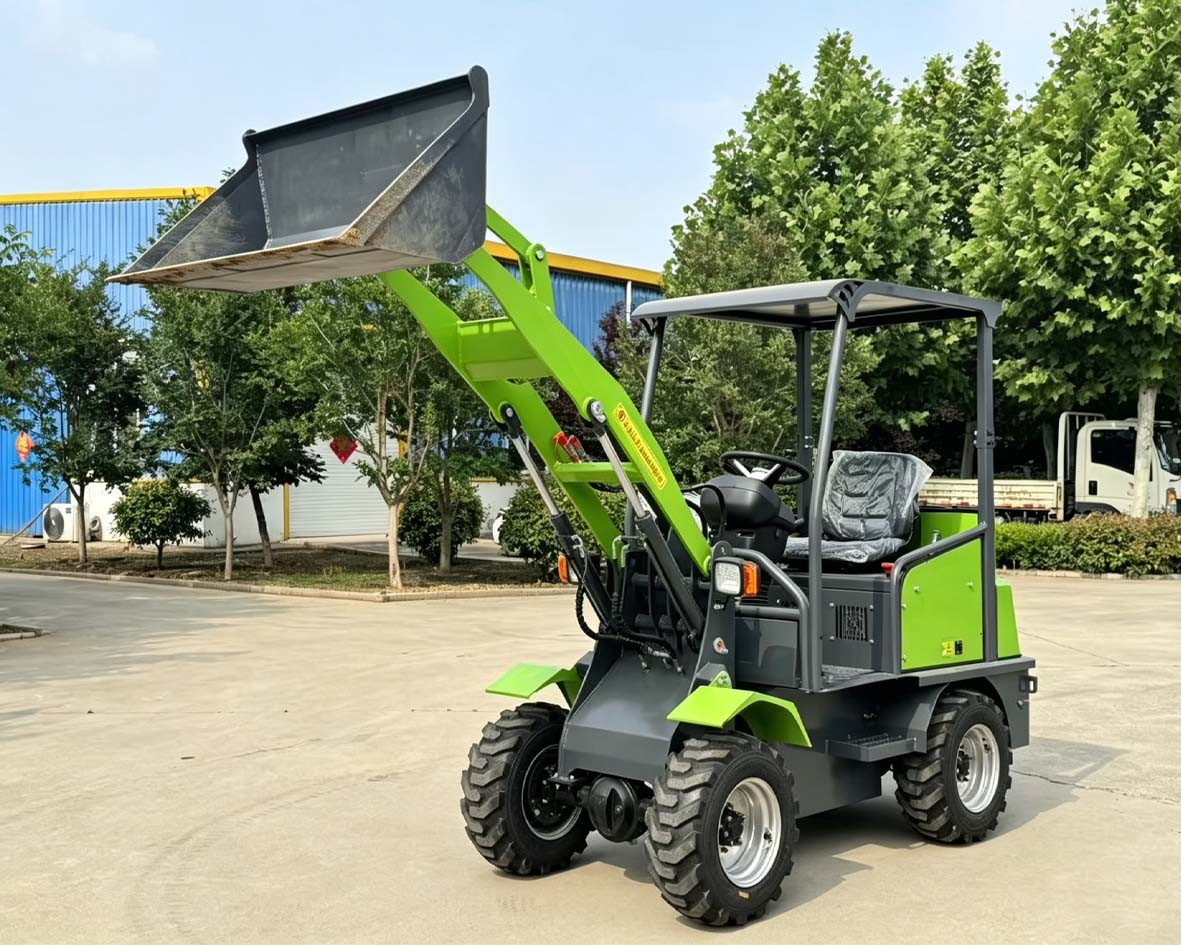
As electric loaders gain popularity in global municipal, agricultural, warehousing, and rental markets, overseas buyers are increasingly concerned about proper operation and daily maintenance. Unlike traditional diesel machines, electric loaders rely on batteries, motors, and electronic controls as their core. Improper use can not only reduce work efficiency but also shorten the lifespan of critical components. From a manufacturer’s perspective, this article provides a systematic guide to daily precautions, helping you maximize equipment value.
1. Charging and Battery Management: The First Line of Defense
The battery is the "heart" of an electric loader and requires the most attention during daily use.
Use Original Chargers: Always use the supplied original charger. Avoid non-standard or voltage-mismatched devices to prevent overcharging or controller damage.
Avoid Deep Discharge: When the dashboard shows a remaining State of Charge (SOC) below 20%, charge immediately. Long-term deep discharge severely damages the cycle life of LFP batteries.
Charging Environment: Charge in a dry, ventilated area away from flammable materials. While most units have IP54+ protection, keep the charger and plugs dry.
Cold Weather Preheating: In environments below -10°C, it is recommended to use an optional battery heating system. Allow the machine to warm up before charging to improve efficiency and protect cells.
Periodic Balancing: Every 30 charge-discharge cycles, perform a full charge-discharge balancing cycle to maintain battery pack consistency.
2. Pre-Operation Daily Inspection
Although electric loaders are mechanically simple, a daily "walk-around" inspection is still essential.
Visual Check: Inspect tire pressure, bolt tightness, and confirm no hydraulic oil leaks or hose damage.
Fluid Levels: Check hydraulic oil tank level and brake fluid. Top up to standard marks if needed.
Dashboard Self-Test: After powering on, observe the CAN-bus LCD for fault codes. Confirm voltage, current, and temperature parameters are normal.
Brake Test: At low speed, lightly apply brakes to confirm responsive stopping. Never operate with faulty brakes.
3. Safe and Efficient Operation Practices
Proper operating habits ensure safety and significantly reduce energy consumption and wear.
Avoid Sudden Acceleration: Electric motors deliver instant torque. Stomping on the accelerator causes current spikes, stressing the motor and controller. Accelerate smoothly and linearly.
Heavy-Duty Hill Climbing: On steep slopes, use low gear and avoid frequent forward/reverse switching. If stuck, do not spin wheels continuously. Reverse and retry to prevent motor overheating.
Hydraulic System Protection: If you hear abnormal pump noise or experience slow movement during lifting, stop immediately. Check for low hydraulic fluid or a clogged filter.
Water Crossing Limits: Although motors and batteries have high IP ratings, do not exceed a fording depth of half the tire height (approx. 40-50cm). Never immerse the machine in deep water to avoid damaging wheel motors or electrical connectors.
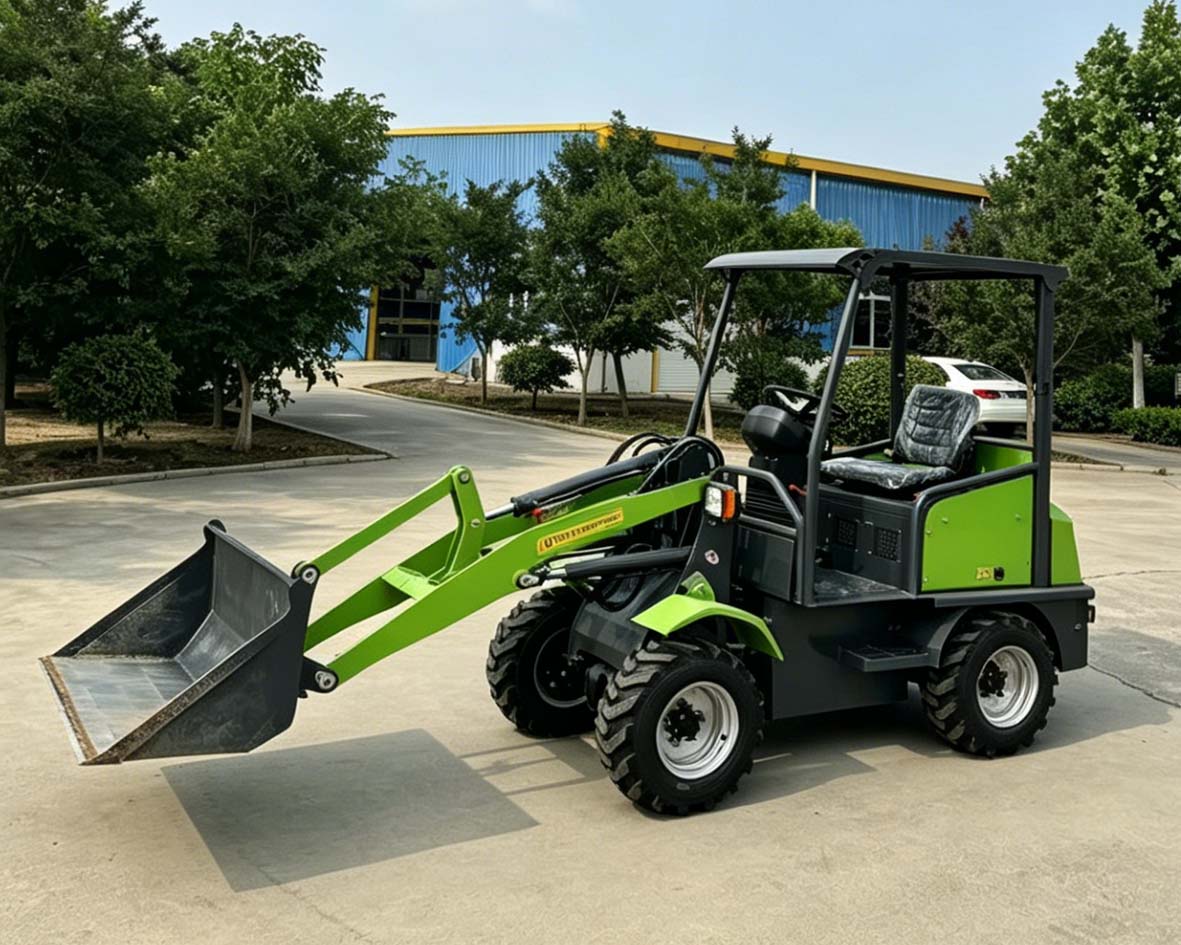
4. Attachment Use and Quick-Coupler Precautions
The versatility of electric loaders depends on attachments, but incorrect handling poses safety risks.
Confirm Flow Matching: Different attachments (e.g., hydraulic breakers, augers) require specific flow and pressure. Before swapping, verify that the machine’s output matches the attachment to avoid burning out hydraulic motors.
Lock the Coupler: After installing an attachment, ensure the quick-coupler pins are fully locked. Test movements under no-load conditions before heavy operation.
Avoid Lateral Overload: When using forks or grapples, keep the load as close to the machine’s centerline as possible. Excessive side load can cause frame deformation or rollover.
5. Cleaning, Storage, and Long-Term Parking
Daily Cleaning: When washing the machine with a pressure washer, avoid spraying directly at the dashboard, motor vents, and charging ports to prevent water intrusion and short circuits.
Storage Environment: For long-term storage, park in a dry, covered garage. Store the battery at 50%-80% charge.
Regular Recharging: If the machine is idle for more than 15 days, start it every two weeks or connect the charger to top up the battery, preventing it from discharging below the protection threshold.
Anti-Rust Care: Regularly apply grease to exposed pivot pins and articulation points to prevent corrosion from seawater or fertilizers.
6. Troubleshooting and After-Sales Communication
Understand Fault Codes: Smart models like the XHDL500A display fault codes (e.g., E01, E02) on the CAN-bus screen. Record the code, take a photo, and send it to your supplier’s service engineer immediately.
No Unauthorized High-Voltage Disassembly: Battery packs and motor controllers are high-voltage components. Untrained personnel must never disassemble them. Contact the manufacturer for remote diagnosis first.
Keep Operation Logs: Operators should keep a simple daily log (hours worked, battery consumption, anomalies). This helps after-sales teams pinpoint issues faster.
Conclusion
Electric loaders are not "maintenance-free" but rather "low-maintenance, high-discipline" smart machines. Following these precautions not only extends the life of the battery and motor but also ensures operational safety and reduces downtime. As a manufacturer, we are committed to providing global users with high-quality electric loaders, complete with English manuals and 7×24h remote technical support. Operate correctly, and maximize your return on investment.