 Chinese
 English
 Russian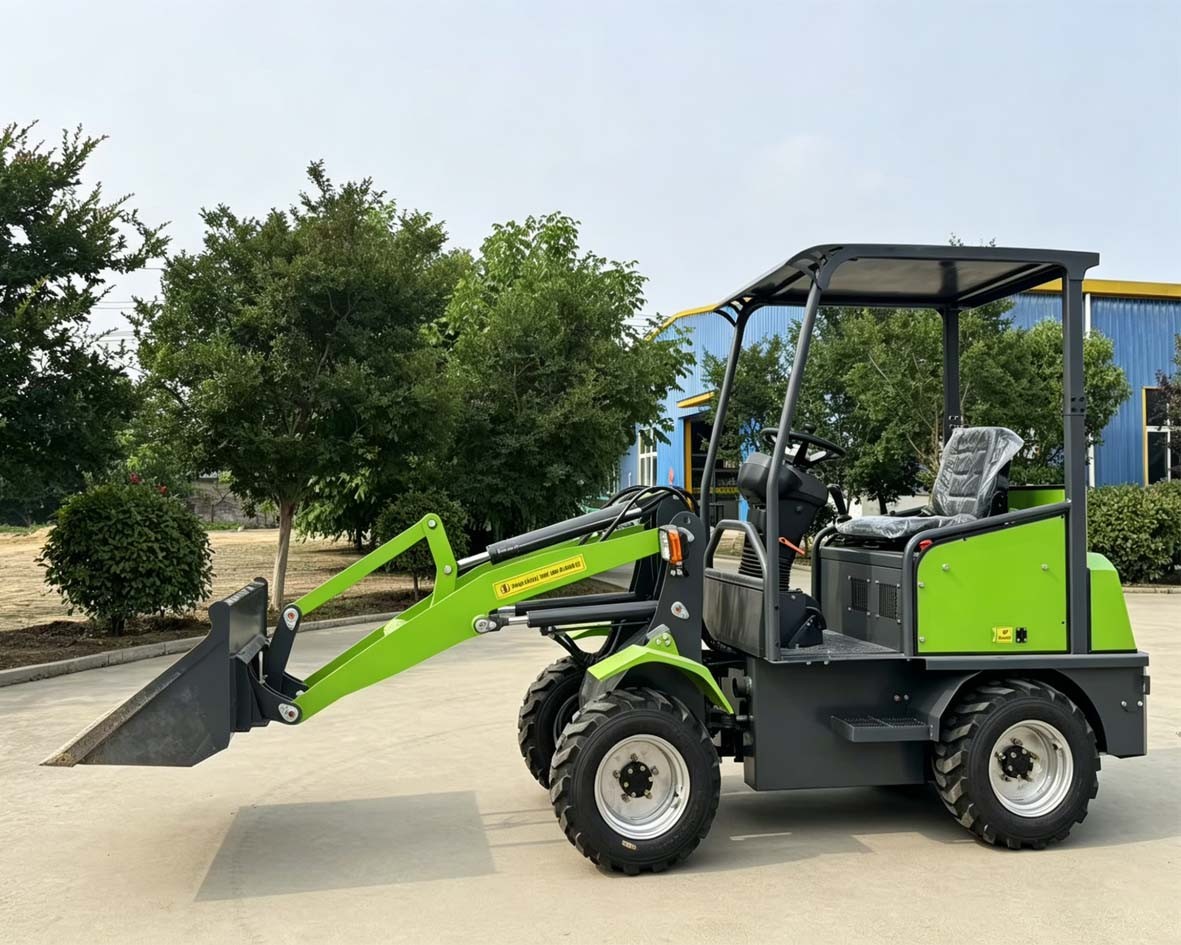
The construction machinery industry is undergoing a profound shift. For decades, innovation focused almost exclusively on engine power, hydraulic pressure, and structural durability. Today, the most significant advancements come not from bigger engines but from smarter electronics. Artificial Intelligence, or AI, is moving from science fiction to the job site, embedded in telematics systems, predictive maintenance algorithms, and assisted operation features.
For compact equipment such as mini electric wheel loaders, AI is not just an add-on luxury. It is the key to unlocking the full potential of electrification. Electric machines generate vast amounts of digital data through battery management systems, motor controllers, and CAN bus networks. This data becomes the foundation for AI applications that improve safety, extend battery life, reduce downtime, and simplify operation for less experienced users.
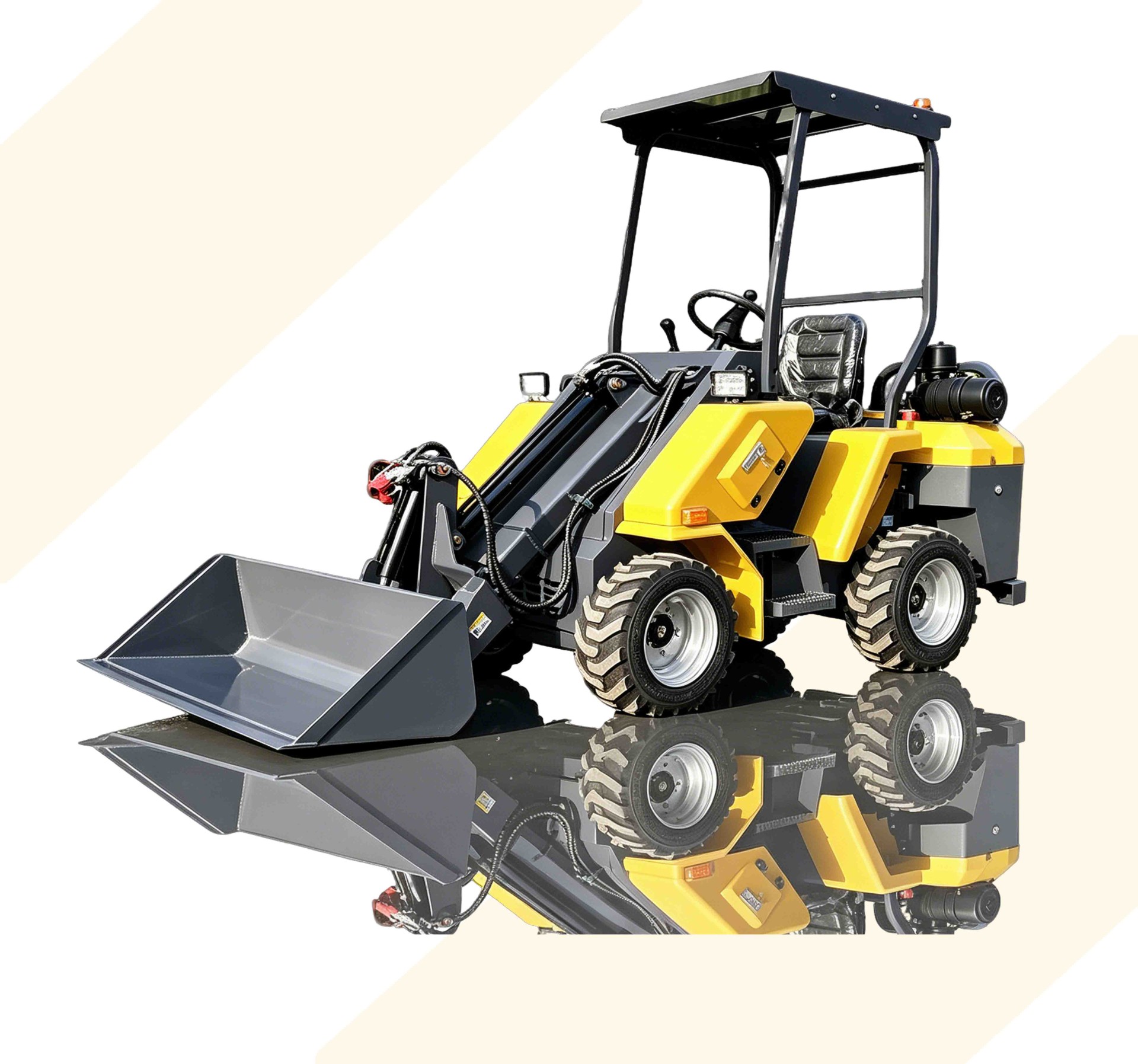
Jining Xinghang Machinery Manufacturing Co., Ltd. recognizes this trajectory. While our current XHD500 and XHDL500 series mini electric loaders already feature advanced CAN bus communication, digital LCD dashboards, intelligent thermal management, and flat wire motors, we are actively developing the next generation of smart, connected machines. This article explores how AI is being applied in modern construction equipment today and outlines Xinghang's roadmap for integrating intelligent systems into our electric loader product line.
Current Applications of AI in Construction Machinery
Telematics and Fleet Intelligence
Most modern construction equipment now includes basic telematics, the wireless transmission of machine data to a cloud or local server. AI enhances this by analyzing patterns across thousands of operating hours. Fleet management software can identify which machines are underutilized, predict when a site will need additional equipment, and alert owners to unusual energy consumption that may indicate a failing component. For mini loaders operating in municipal yards, farms, or rental fleets, this visibility transforms how owners schedule maintenance and allocate assets.
Predictive Maintenance Through Machine Learning
Traditional maintenance follows a calendar or hour meter. Replace the hydraulic fluid every 500 hours. Grease the pins daily. This approach often results in throwing away good parts or, worse, experiencing a catastrophic failure because a hidden issue was not detected in time.
AI-driven predictive maintenance uses sensors to monitor temperature, vibration, current draw, and pressure in real time. Machine learning algorithms establish a baseline for normal operation. When the system detects a deviation, such as a gradual rise in hydraulic pump temperature paired with increased current draw, it flags the anomaly before a breakdown occurs. For an electric loader, the battery management system already tracks cell voltage and temperature. Adding AI allows the machine to predict battery degradation, suggest optimal charging patterns, and warn of motor bearing wear based on electrical signature analysis.
Operator Assistance and Skill Augmentation
Skilled equipment operators are in short supply globally. AI helps bridge this gap through operator assistance features. Grade control systems on excavators and dozers use sensors and GNSS to guide the blade or bucket to the correct depth automatically. On compact loaders, AI can assist with load weighing, tipping angle warnings, and automatic return-to-dig functions. Voice-assisted interfaces are emerging that allow operators to query machine status or adjust settings without removing hands from the controls. For rental fleets and farms where different people operate the machine each day, these aids reduce training time and prevent accidental damage.
Safety Enhancement with Computer Vision
Compact machines often work in tight spaces such as barns, warehouses, and urban alleys where pedestrians, animals, or obstacles are present. AI-powered cameras and proximity sensors can detect people or objects in the machine's path and trigger visual or audible alarms. In advanced implementations, the system can automatically slow or stop the machine if the operator does not respond. This is particularly valuable in livestock barns where animals may enter the work zone unexpectedly.
Energy Optimization for Electric Machines
Electric construction equipment depends on careful energy management. AI algorithms can learn a site's duty cycle and optimize regenerative braking, idle shutdown timing, and power limit settings to extend runtime. Some systems balance battery cell loads dynamically to prolong pack life. As battery swapping and fast charging become more common, AI can also recommend the optimal charging window based on forecasted usage and grid electricity rates.
Xinghang Machinery Present Capabilities as the AI Foundation
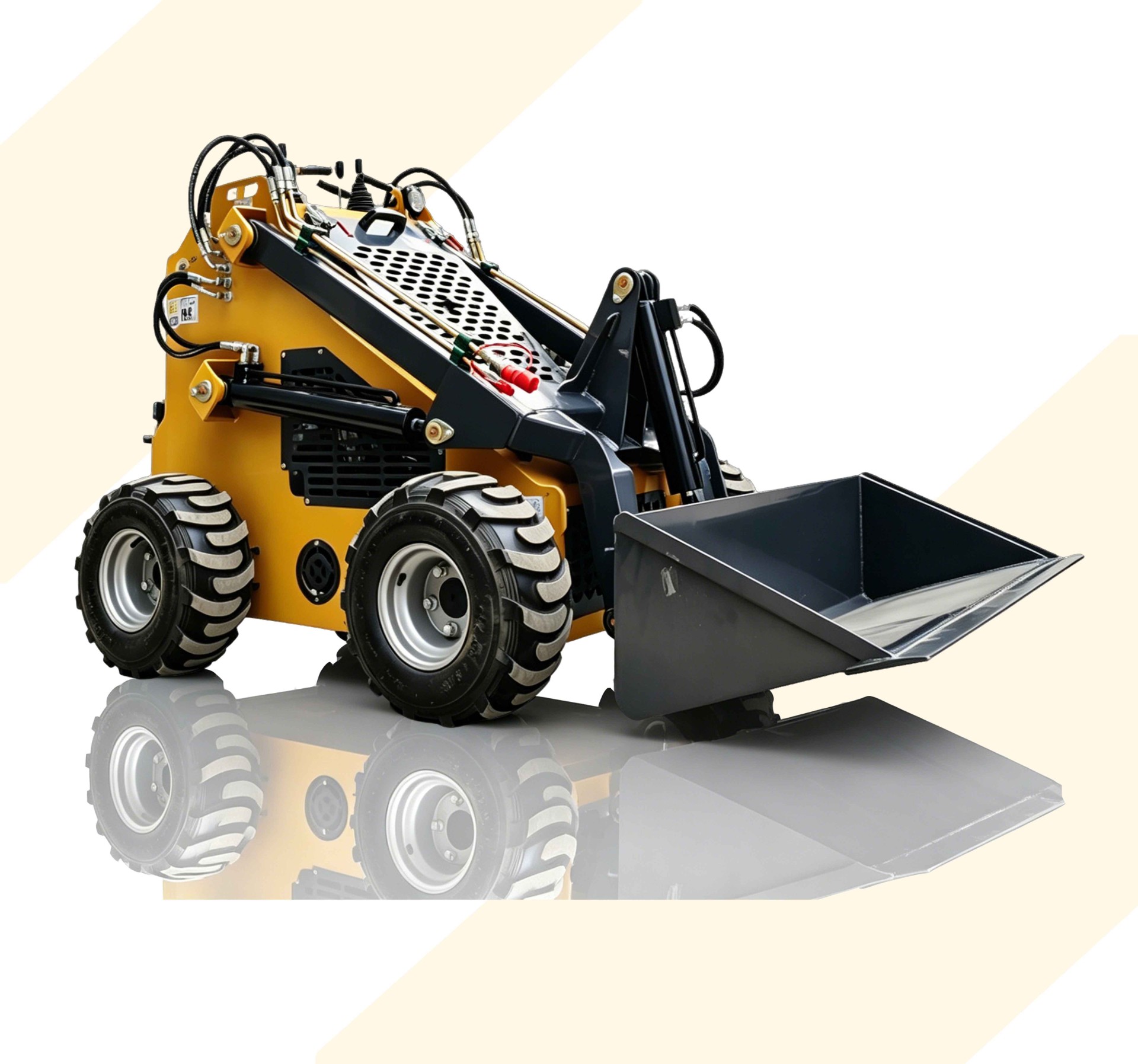
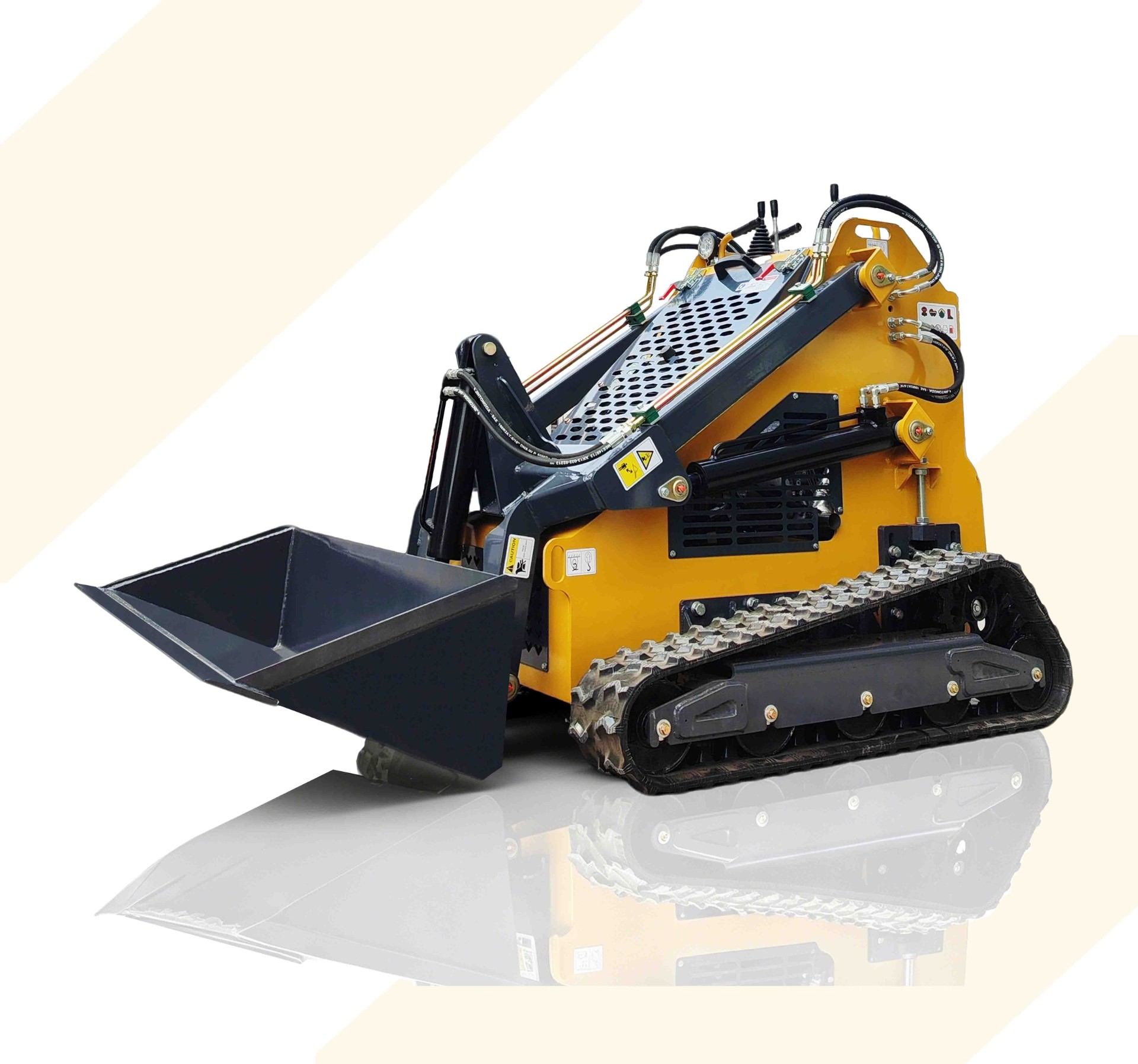
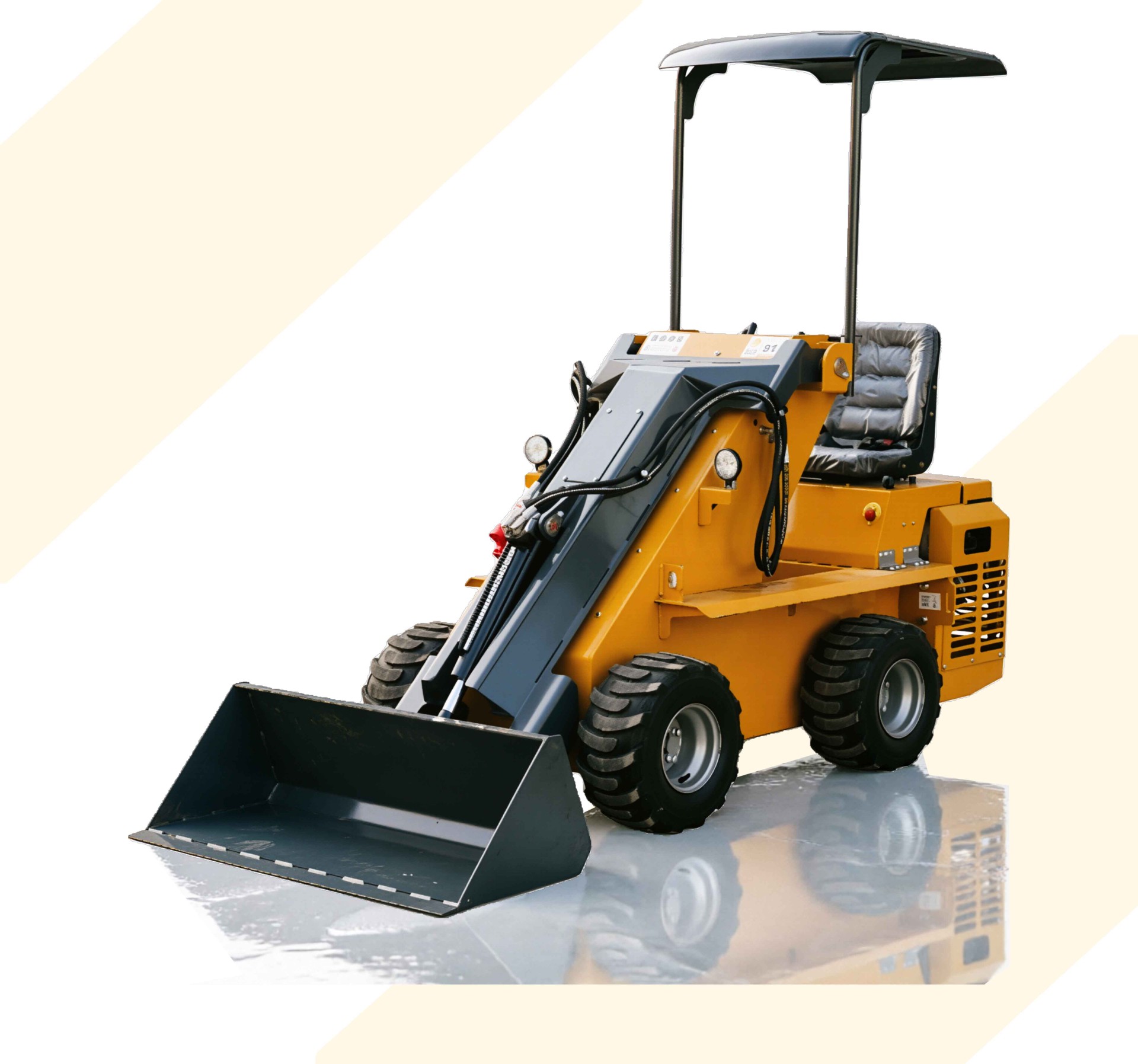
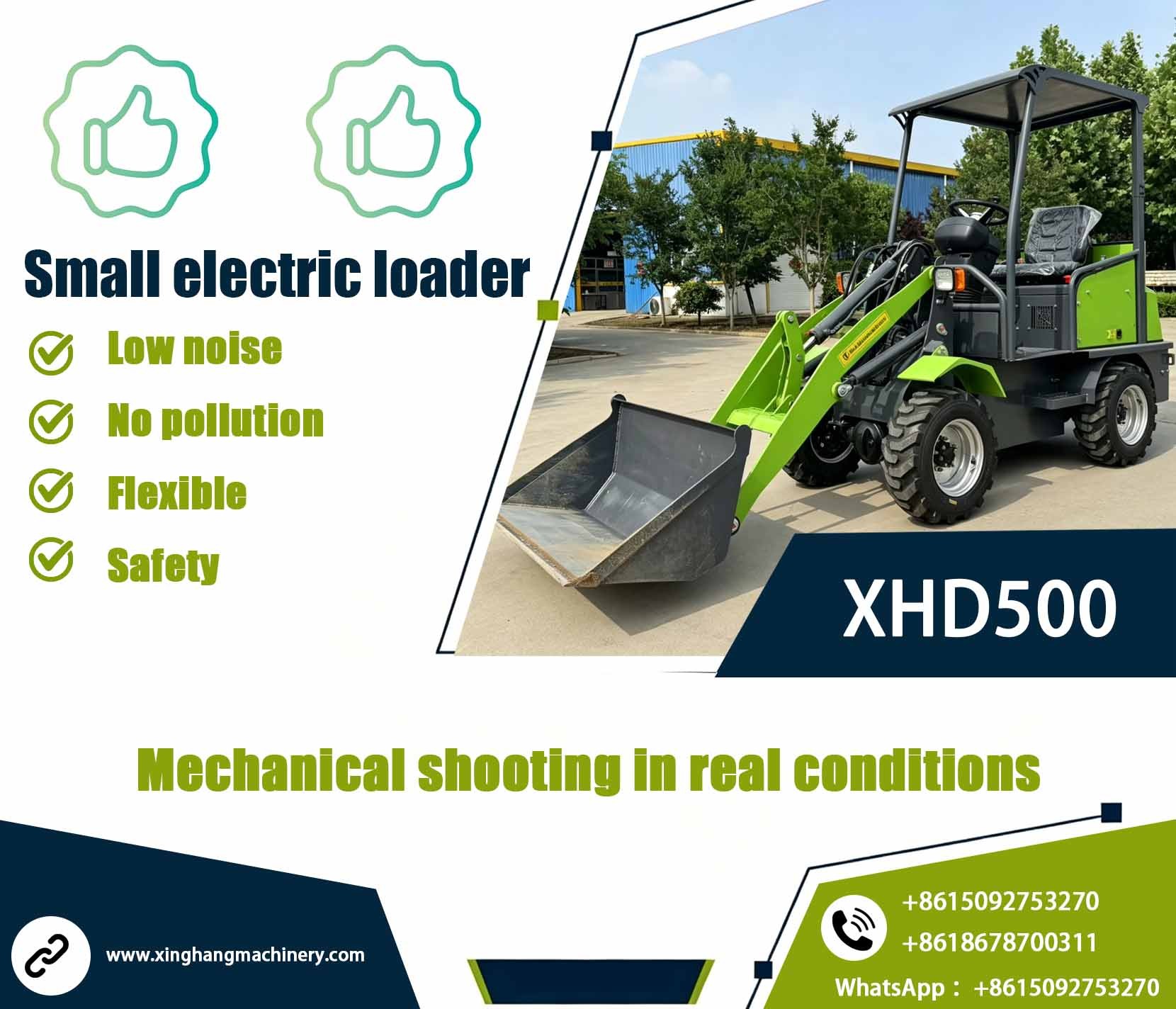
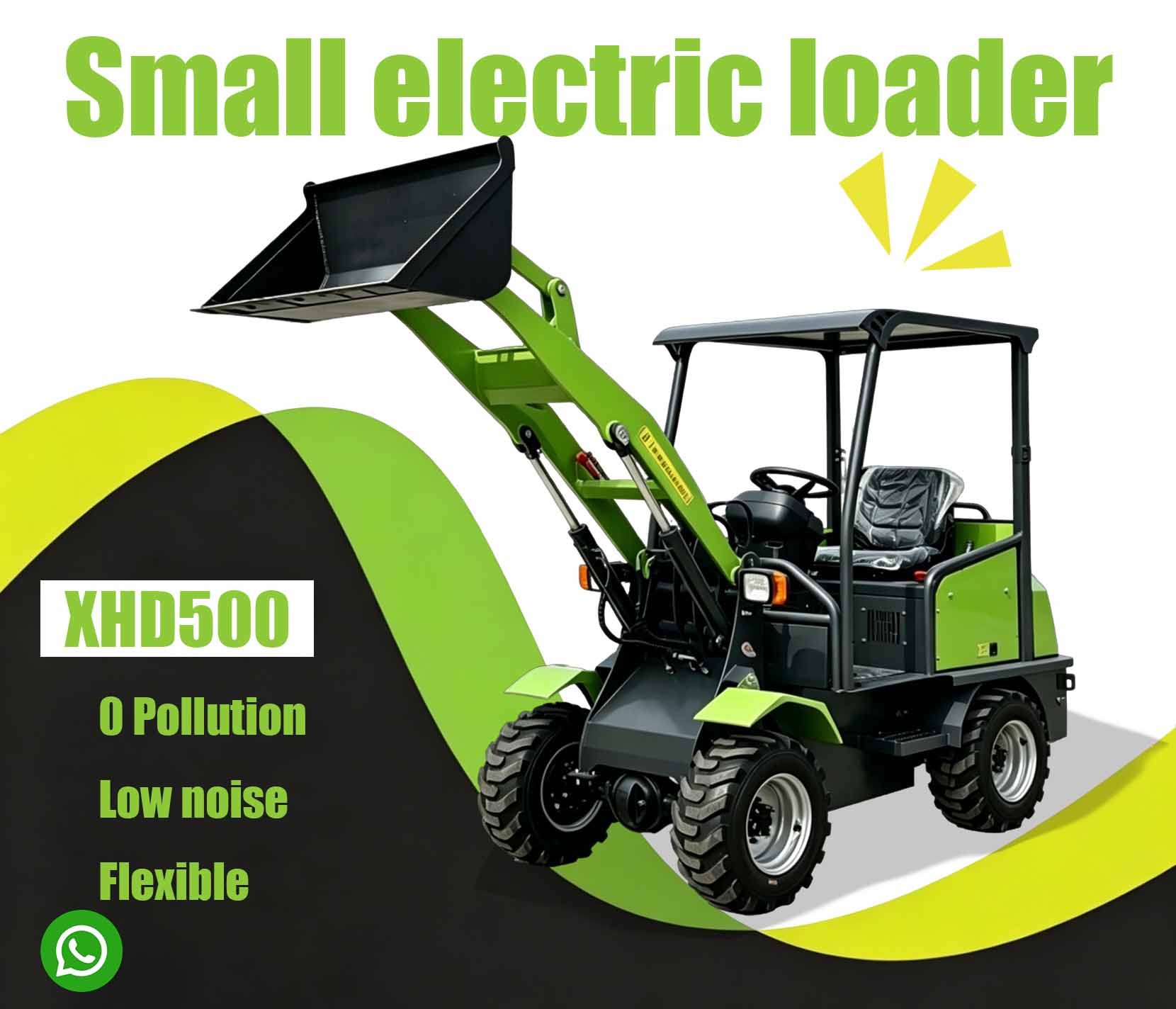
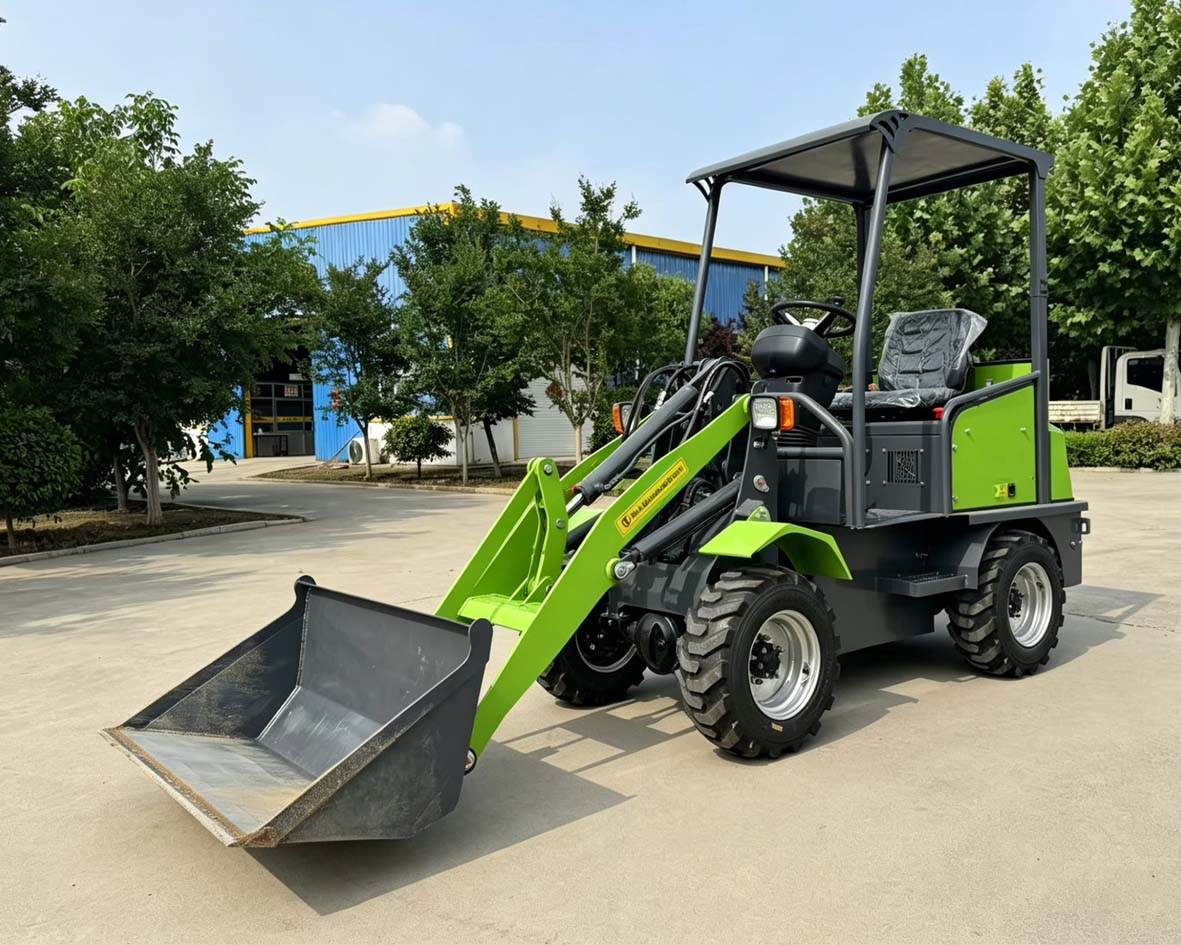
The Xinghang XHD500 and XHDL500 Mini Electric Wheel Loaders are already designed with digital readiness that prepares them for AI integration.
CAN Bus Architecture: The entire machine communicates via Controller Area Network, allowing real time data exchange between the drive controller, hydraulic controller, battery management system, and dashboard. This digital backbone is essential for feeding data to AI modules.
Digital LCD Instrument Cluster: Displays battery voltage, State of Charge (SOC), travel speed, hydraulic pump RPM, fault codes, and misuse alerts. This same screen will serve as the human interface for AI-generated notifications and diagnostics.
Intelligent Controller with Thermal Management: The motor controller monitors temperature and current continuously. It already performs automatic derating to protect the system from overheating, a primitive form of rule-based AI that will evolve into adaptive thermal management.
Integrated Electro-Proportional Joystick: Single handle control of direction, speed, boom, and bucket functions simplifies the interface, making it easier to overlay AI-assisted inputs such as auto-leveling or return-to-dig.
Flat Wire Permanent Magnet Motors: These highly efficient 4 kW drive and 3 kW hydraulic motors provide precise torque control, a prerequisite for AI-managed traction and load sensing.
Full Floating Heavy Duty Axle and Manganese Steel Chassis: Robust mechanical hardware ensures the platform remains reliable as electronic intelligence is added.
These features mean Xinghang machines are not merely mechanical devices but software-enabled platforms, ready for the next step in intelligence.
Xinghang Future AI Development Roadmap
Based on market demand, technological feasibility, and our commitment to providing professional-grade compact electric equipment, Jining Xinghang Machinery has defined a phased roadmap for AI integration.
Phase 1: Enhanced Diagnostics and Remote Telematics (Near Term)
The immediate next step is the introduction of a telematics module compatible with global cellular networks. This module will transmit key parameters such as battery SOC, motor temperature, fault codes, geographic location, and operating hours to a cloud-based fleet portal.
AI will be applied on the backend to:
Generate health scores for each machine in a fleet.
Send predictive alerts for battery cell imbalance or abnormal motor current draw.
Provide operators and owners with plain-language maintenance reminders via mobile app or SMS.
Allow remote troubleshooting by dealers using AI-assisted fault code interpretation.
This phase requires no major hardware change on the machine, only the addition of the telematics transceiver and a firmware update to format CAN bus data for transmission. It delivers immediate value to rental fleets and multi-site operators.
Phase 2: Smart Cab Features and Operator Assistance (Mid Term)
Subsequent model revisions will introduce operator assistance functions directly in the cab:
Automatic Return-to-Dig: After dumping a load, a single button press commands the arm and bucket to return to the preset loading position, reducing cycle time and operator fatigue.
Load Sensing and Tip Off Warning: Pressure transducers in the lift cylinders detect excessive load approaching the rated capacity and warn the operator or gently limit further lift, protecting the machine and the operator.
Auto-Idling and Energy Saver Mode: AI monitors joystick activity and automatically places the hydraulic pump into low-power standby after a configurable period of inactivity, then wakes instantly when the handle moves.
Multilingual Voice Prompts: The dashboard will audibly announce critical warnings such as low battery or overheated motor in the operator's selected language, improving safety in noisy environments where visual alerts might be missed.
These features will be powered by an upgraded main controller running embedded AI routines, still keeping the machine cost-competitive for its class.
Phase 3: Connected Intelligence and Semi-Autonomy (Long Term)
Looking further ahead, Xinghang envisions compact electric loaders participating in connected job sites:
Obstacle Detection with Ultrasonic or Radar Sensors: Front and rear sensors provide proximity alerts and can initiate automatic braking in emergency situations, particularly useful in barns and warehouses with unpredictable obstacles.
Fleet Coordination for Shared Charging: For operations running multiple electric loaders, AI software will recommend which machine should charge next based on remaining SOC and scheduled tasks, optimizing overall fleet uptime.
Over-the-Air (OTA) Firmware Updates: Authorized updates to controller logic, joystick calibration, and AI behavior rules can be pushed wirelessly, keeping machines up to date with the latest performance optimizations and bug fixes.
Data Dashboard for ESG Reporting: Compile zero-emission operating hours and estimated CO2 displacement for customers needing to document environmental compliance or sustainability metrics.
True full autonomy (unmanned operation) is less relevant for the confined, variable spaces where mini loaders excel, but semi-autonomous functions such as remote control for hazardous areas (confined manure pits, chemical storage areas) may be offered as a specialized option.
Why Electrification Accelerates AI Adoption in Compact Machinery
There is a symbiotic relationship between electric powertrains and artificial intelligence. Diesel machines can be fitted with sensors and telematics, but electric architectures are inherently digital. The Battery Management System already knows cell voltages to the millivolt. The inverter already measures phase currents in microseconds. The vehicle controller already manages torque commands algorithmically.
Adding AI to an electric loader is therefore a matter of aggregating, analyzing, and acting upon data that already exists. By contrast, retrofitting similar intelligence to a mechanical diesel drivetrain requires additional sensors and signal conditioning. Xinghang's decision to standardize on a CAN bus, lithium-compatible controller, and digital instrumentation means every XHDL500 shipped today is AI-ready at the hardware level.
Furthermore, AI helps mitigate the perceived weaknesses of electric equipment. Range anxiety, for instance, is reduced when an intelligent system can accurately predict remaining runtime based on actual load history rather than a generic amp-hour calculation. Battery life concerns are addressed when AI recommends optimal depth-of-discharge limits and charging schedules tailored to the specific user's pattern.
Competitive Advantage for Xinghang Customers
Early adopters of Xinghang's smart electric loaders will benefit in several ways:
Lower Total Cost of Ownership: Predictive alerts prevent expensive secondary damage from neglected faults. Optimized charging extends expensive LiFePO4 battery life.
Higher Resale Value: Documented digital maintenance history and demonstrable uptime make the machine more attractive on the secondary market.
Easier Operator Training: Assisted functions flatten the learning curve for new hires, critical in regions with acute skilled labor shortages.
Regulatory and ESG Alignment: Detailed records of zero-emission operation support green certification and municipal contract bidding.
Future Proofing: Machines purchased today with CAN bus architecture can accept future software upgrades, protecting the capital investment.
Conclusion: Intelligent Green Machines for a Changing World
Artificial Intelligence is not a distant concept for construction equipment. It is here now in the form of smarter diagnostics, connected fleets, and assisted operation. The natural home for AI in compact machinery is the electric platform, where digital control is native rather than retrofitted.
Jining Xinghang Machinery is committed to evolving our XHD and XHDL series mini electric loaders from today's already-advanced specification to tomorrow's intelligent job site partners. By building on a foundation of flat wire motors, full floating axles, LiFePO4 energy storage, and CAN bus connectivity, we are preparing our customers for a future where their machines do more than move material. They will think, learn, and communicate.
Choose Xinghang not only for zero emissions and proven durability, but for a platform designed to grow smarter with you.