 Chinese
 English
 Russian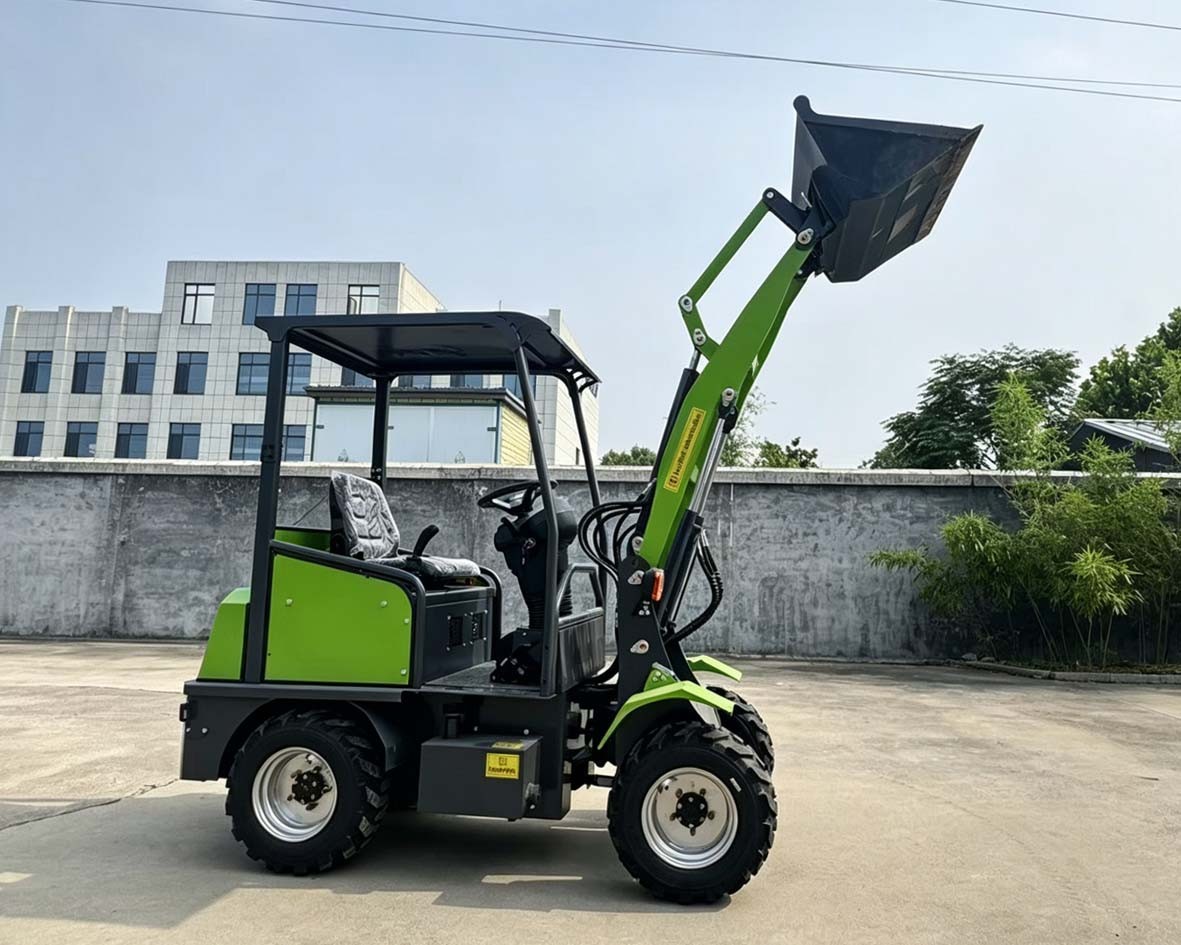
The Quiet Revolution in Tight Spaces
For decades, the sight and sound of a diesel engine has been synonymous with construction. But if you step into a modern urban basement renovation, a food processing plant, or a high-end residential remodel, that familiar rattle and exhaust smell is no longer welcome—in fact, it's often prohibited.
Cities across Europe, North America, and Australia are expanding Low Emission Zones (LEZ) and tightening indoor air quality regulations. Contractors are finding that their trusty compact diesel loader—no matter how small—cannot legally or practically enter many of the highest-paying job sites. Ventilation is poor. Fumes linger. Neighbors complain about the noise. And project managers on LEED or BREEAM-certified builds are required to document equipment emissions.
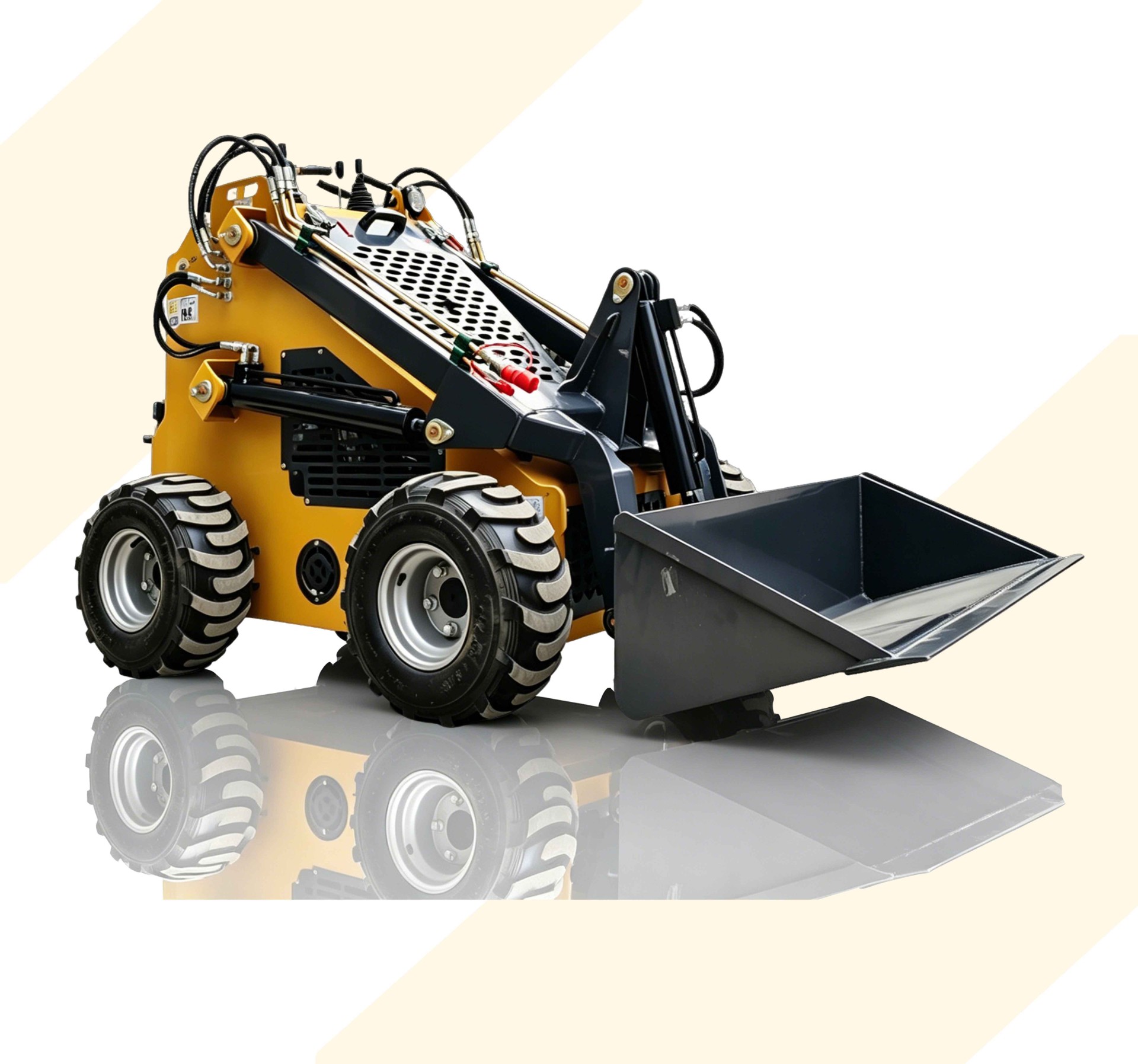
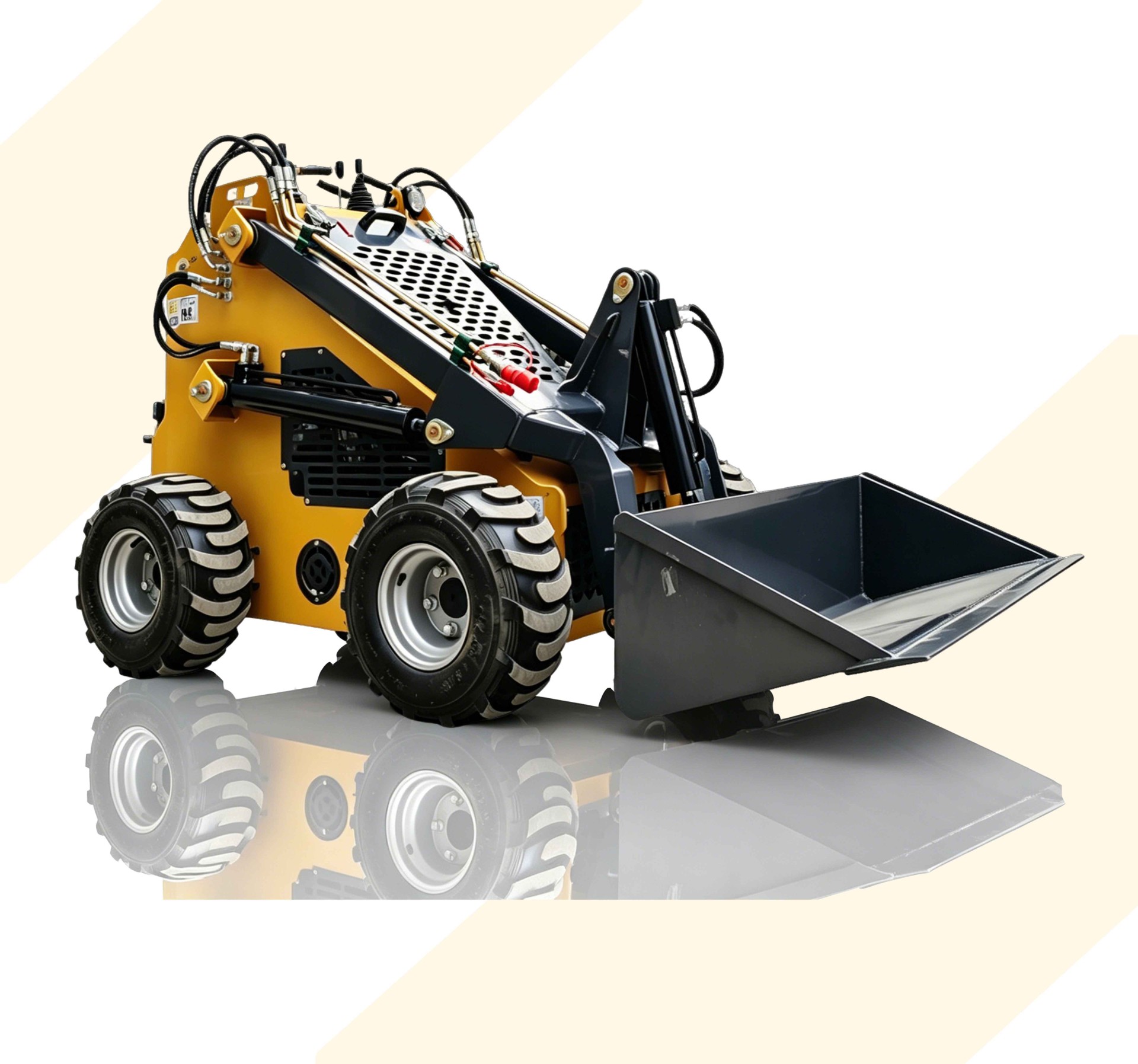
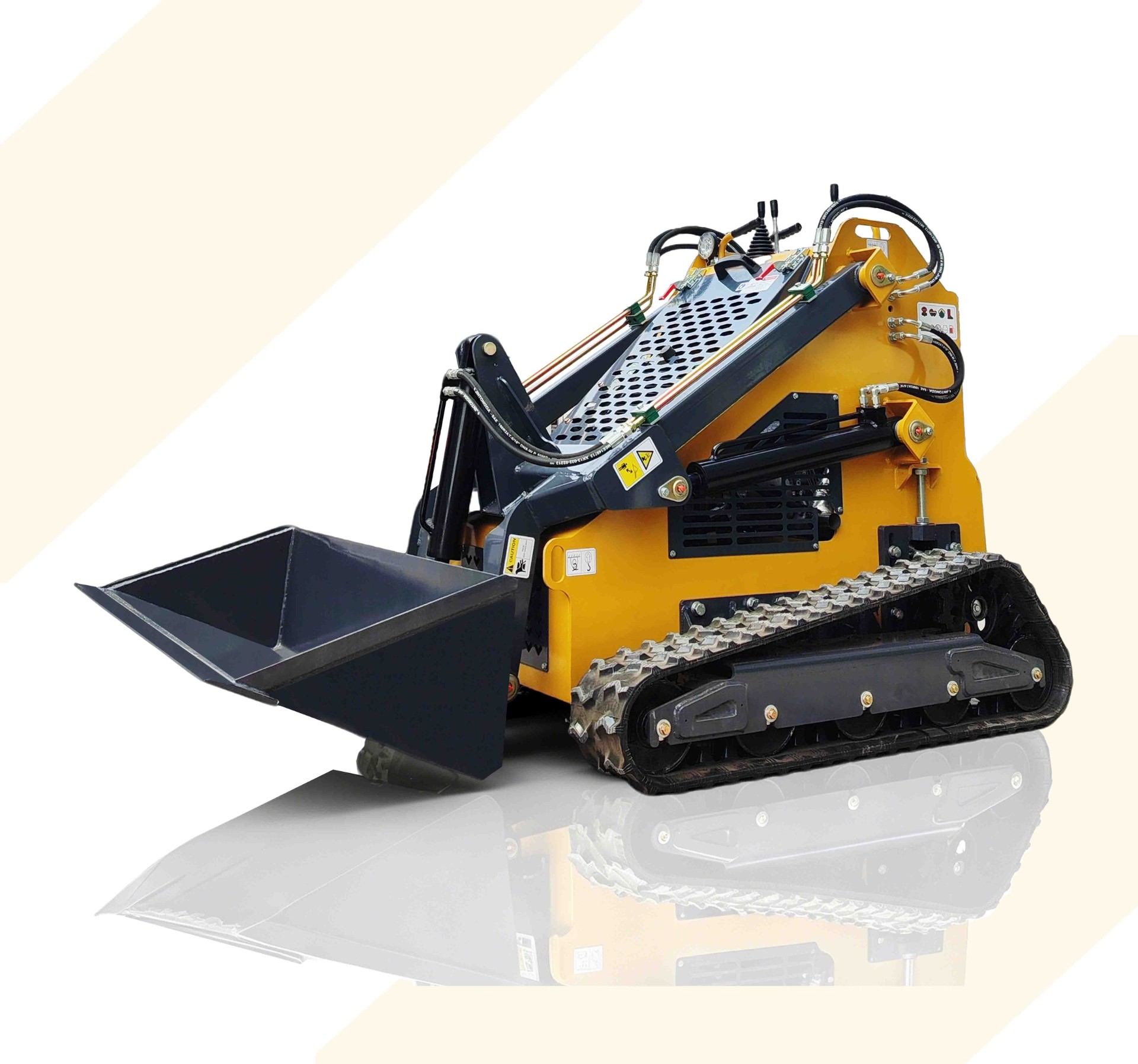
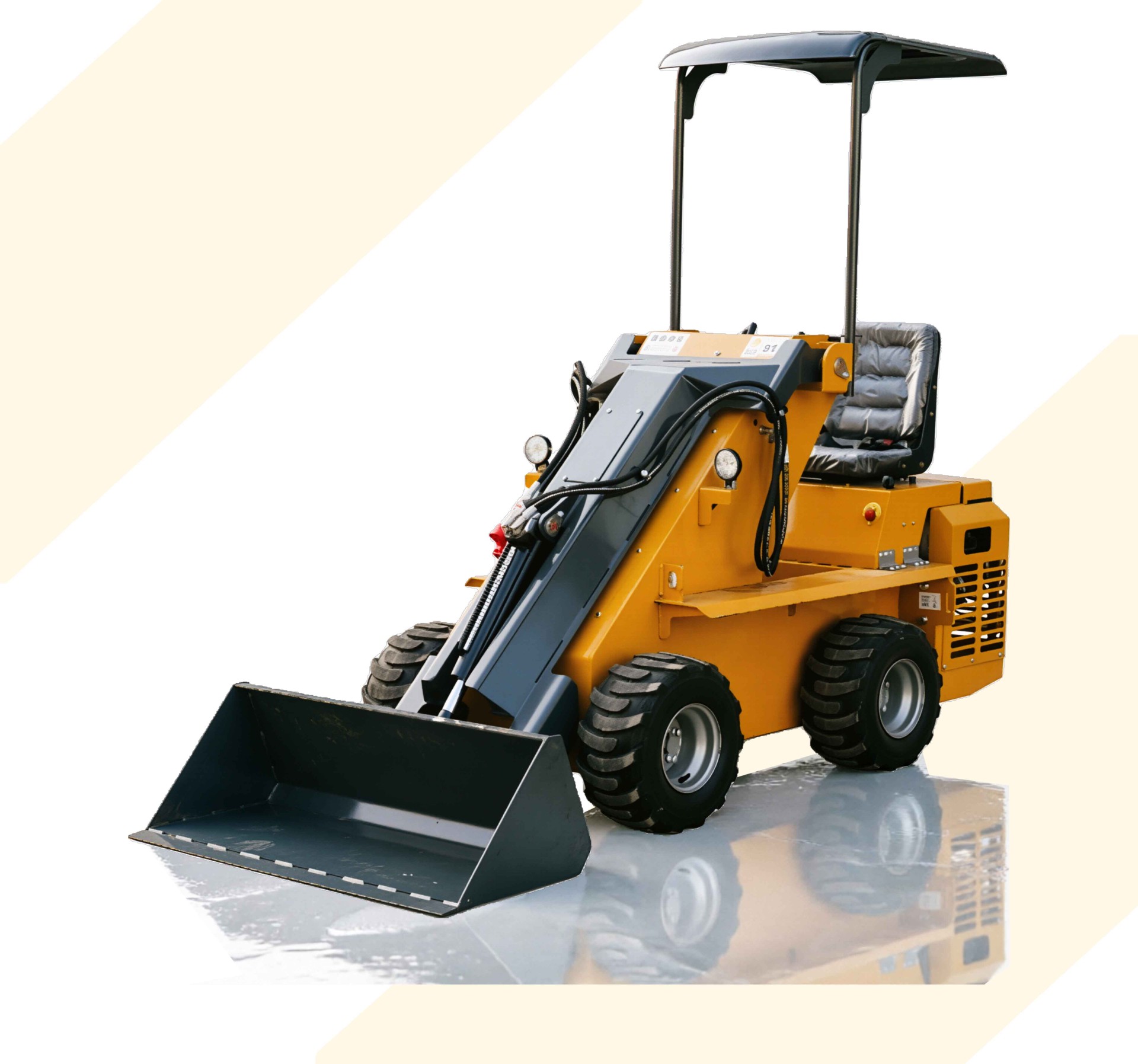
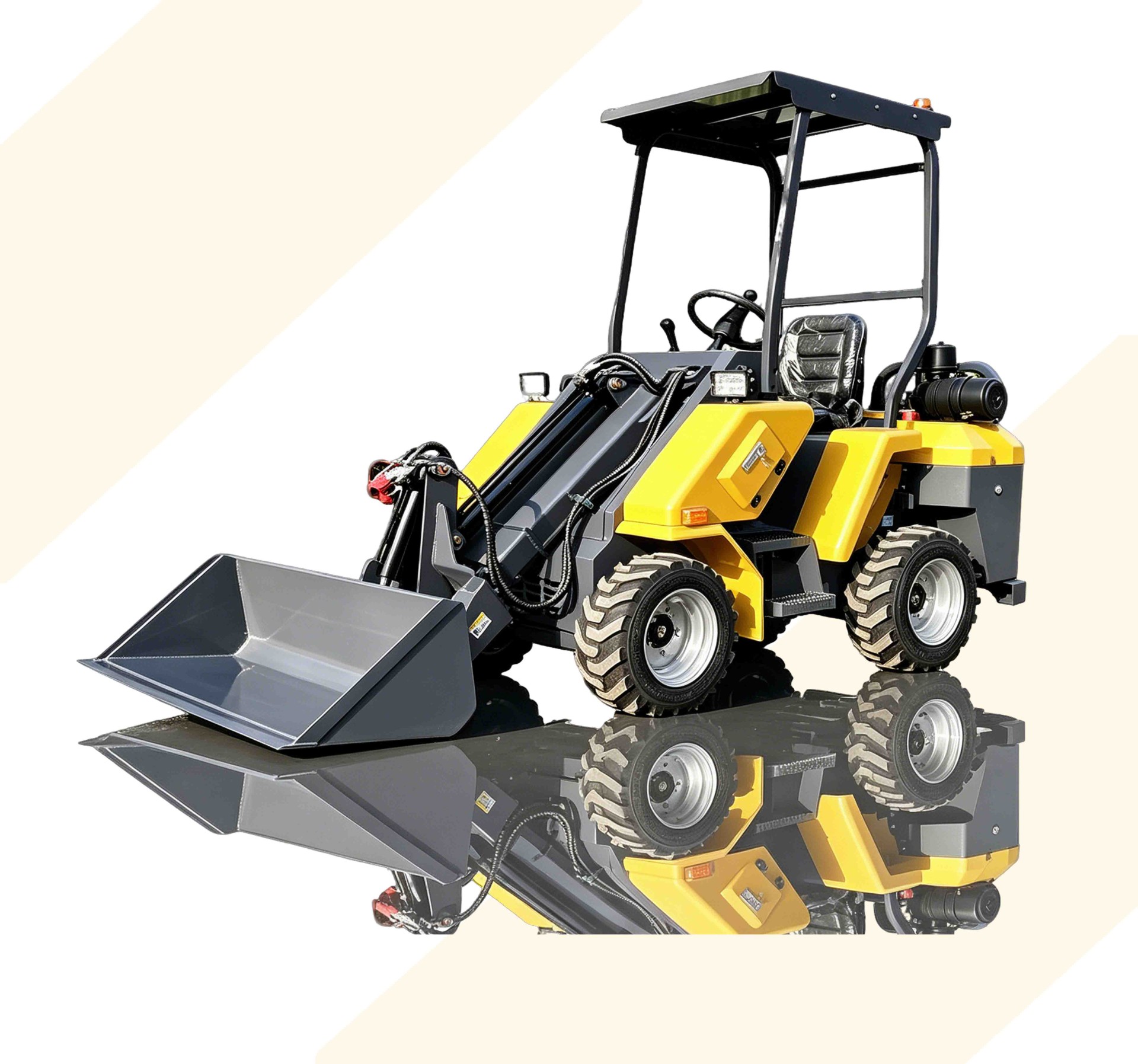
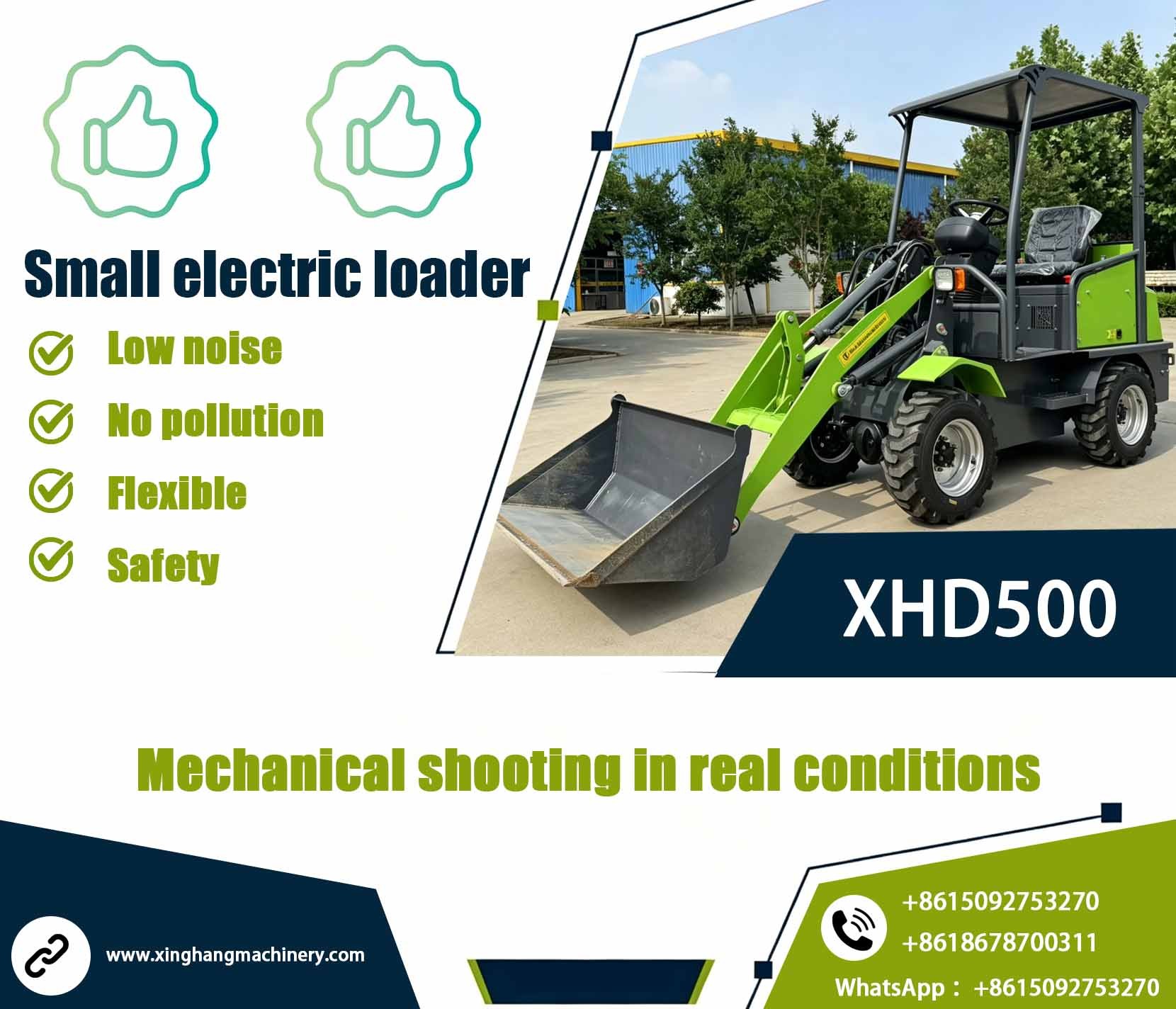
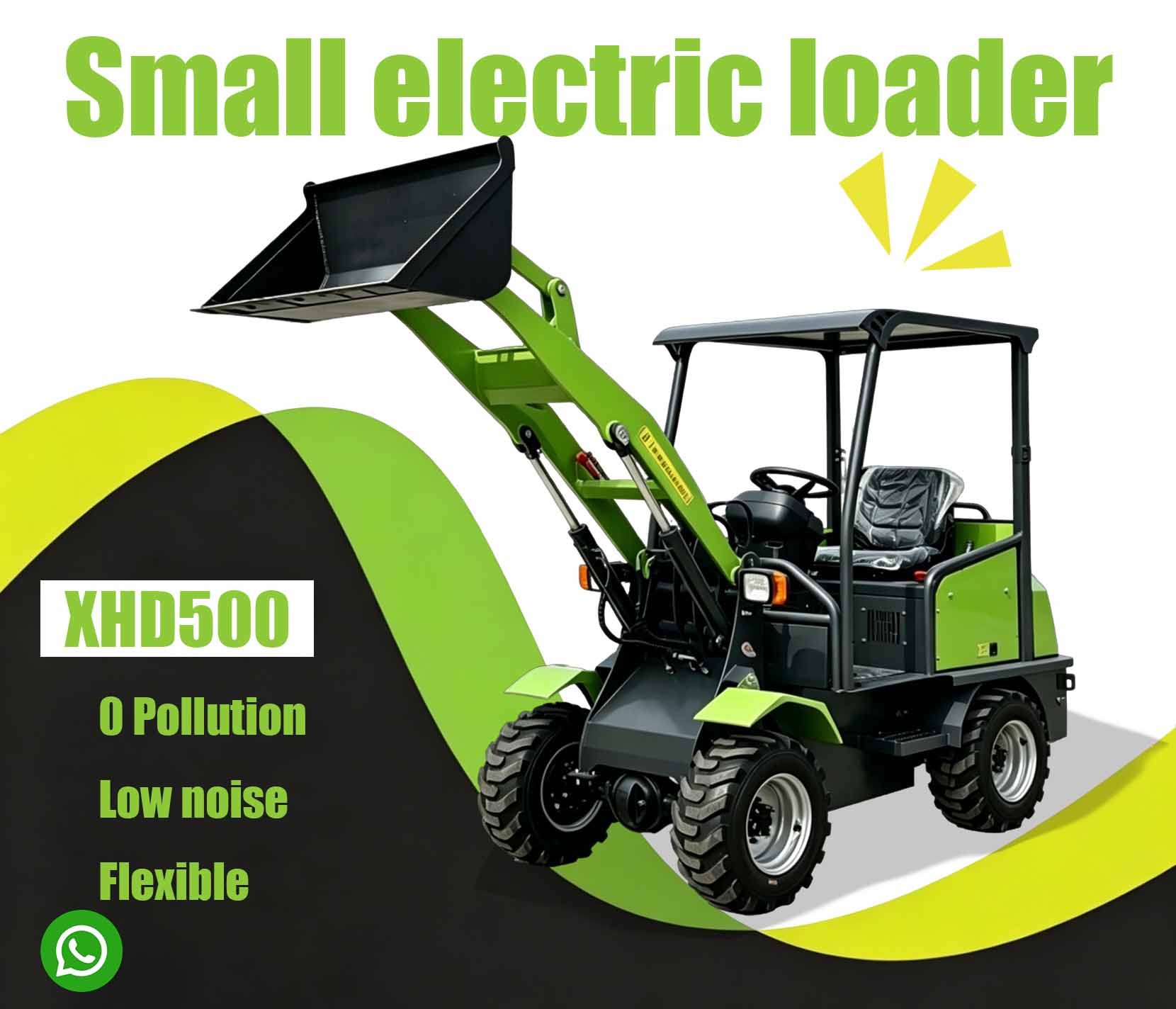
This is where the Electric Mini Loader enters the frame—not as a "niche experiment," but as the new standard for sensitive environments. At the forefront of this shift is the Xinghang XHD500 Electric Mini Loader, a machine purpose-built to combine the lifting power of a conventional mini loader with the clean, silent operation of an EV.
1. What Makes the XHD500 Different from a "Small Diesel"?
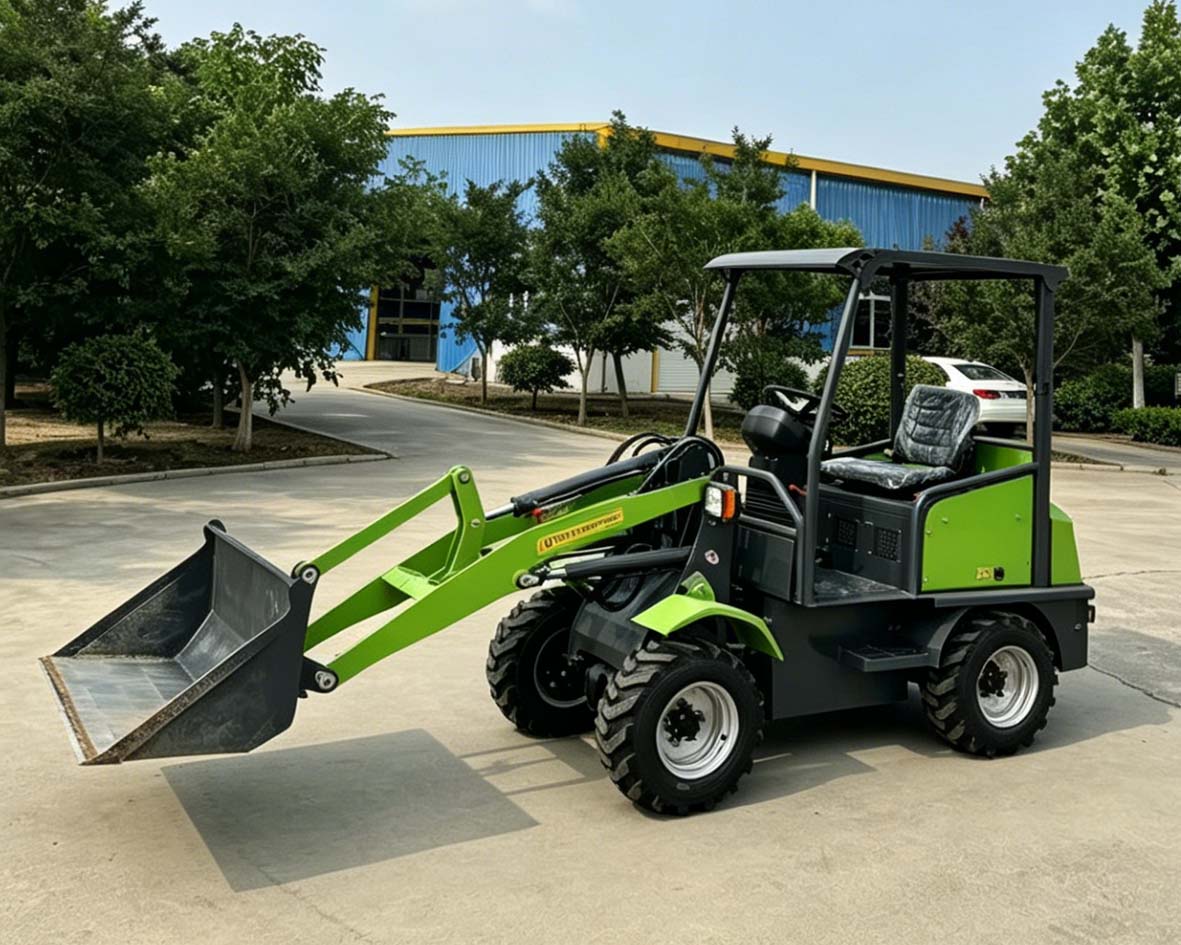
At first glance, the XHD500 looks like any other compact articulated loader: four wheels, a lift arm, a bucket. But every system has been rethought for the indoor/sensitive-environment context.
1.1 Zero Tailpipe Emissions
The most obvious distinction is the power source. Instead of a diesel burning fossil fuel, the XHD500 is driven by a 64V/180Ah LiFePO? battery system (with a 60V lead-acid economy option). There is no combustion, no CO?, no NOx, and no particulate matter. You can run it inside a sealed basement for eight hours without triggering a carbon monoxide alarm or requiring supplemental ventilation fans. This alone opens doors—literally and figuratively—to jobs that diesel machines are barred from.
1.2 Low Noise = Early/Late Work Permission
Diesel compact loaders typically produce 85–95 dB(A), necessitating hearing protection and often violating municipal noise ordinances before 7:00 AM or after 6:00 PM. The XHD500 operates at ≤50 dB(A)—roughly the volume of normal conversation.
For contractors, this is a competitive advantage. You can schedule demolition or material handling work in noise-restricted residential zones, hospitals, schools, and hotels without facing fines or neighbor complaints. Many of our European rental partners report that the "quiet factor" alone allows their customers to book more morning and evening shifts, directly increasing utilization rates.
1.3 Same 500kg Lift, Narrower Footprint
Skeptics often ask: "Does electric mean weak or bulky?" The XHD500 answers with a definitive no. It retains a 500kg rated operating load and a 2,950mm pivot pin height, matching or exceeding many diesel mini loaders in its class. Yet its overall width is just 1,060mm, allowing it to pass through standard doorways, freight elevators, and greenhouse rows—places where even a small skid steer might be too wide or too foul-smelling to use.
2. The Technology Inside: Flat-Wire Motors & LiFePO? Chemistry
We've covered elsewhere (see our Tech Deep-Dive article) why Xinghang uses Flat-Wire Permanent Magnet Synchronous Motors (PMTLIBv) instead of cheap brushed DC motors. In brief: the 4KW drive and 3KW lift motors feature rectangular copper windings that achieve a Slot Fill Factor >70%, resulting in:
Higher torque at low RPM (instant response)
Lower resistive losses (less heat, longer runtime)
Greater durability under stop?start load cycles
Coupled with LiFePO? (Lithium Iron Phosphate) cells, the XHD500 gains three critical advantages over lead-acid or NMC lithium packs:
Thermal Stability: LiFePO? is inherently safer, with a decomposition temperature >250°C.
Cycle Life: Rated for 2,000–3,000 full cycles (≈5–7 years typical use), versus 500–800 for quality lead-acid.
Consistent Power Delivery: Voltage sag under load is minimal, so the hydraulic system maintains full performance even as the battery discharges.
The onboard Battery Management System (BMS) monitors cell balance, temperature, and state-of-charge, providing both operator display data and Bluetooth/app-based diagnostics on select models.
3. Real-World Applications Where Diesel Fails
3.1 Interior Demolition & Strip-Out
Removing drywall, ceramic tile, and light concrete rubble from a multi-story building is backbreaking without mechanical help—but diesel is impossible indoors. The XHD500 accepts a general-purpose bucket or hydraulic breaker (light-duty) and can carry debris directly to the chute or service elevator. No fumes. No earplugs required for bystanders.
3.2 Food Processing & Pharmaceutical Plants
Sanitation protocols in FDA/EFSA-regulated facilities forbid internal combustion engines due to exhaust contaminants. The XHD500's zero-emission operation makes it compliant. Its smooth, enclosed surfaces (no oily engine block to drip) are easier to wash down, and the electric powertrain produces no sparks from ignition—a plus in dust-controlled environments.
3.3 Greenhouses, Nurseries & Livestock Barns
Diesel exhaust contains sulfur compounds and unburned hydrocarbons that can stunt plant growth or stress animals. The XHD500 can ferry potting mix, move hay bales (with fork attachment), or clear alleyways without contaminating the air. Its narrow 1060mm width fits between standard nursery benches.
3.4 LEED / BREEAM Projects
Sustainable building certifications often award points for using low?emission machinery. Documenting that your crew deployed an electric mini loader helps the project earn credits under "Construction Activity Pollution Prevention" or "Indoor Environmental Quality." This can be the deciding factor in winning a municipal or corporate campus contract.
4. Charging, Range & Jobsite Logistics
A common hesitation is range anxiety. In practice, the XHD500 is designed for exactly the duty cycle most mini loaders see:
Continuous Heavy Cycling: 4–6 hours (e.g., nonstop loading of excavated spoil)
Typical Intermittent Use: Covers a full 7–8 hour shift (load–move–idle–repeat pattern common in demolition or material handling)
Charging is straightforward:
Onboard Charger: Supports 220–240V single-phase (or 110V region-configurable). A full recharge takes ≈8–10 hours on a depleted pack—typically done overnight at the shop or via a site power outlet.
Fast Charge Option: Some markets offer an external fast charger reducing full-charge time to ≈2.5-3 hours.
Opportunity Charging: LiFePO? tolerates partial?state charging without memory effect, so a mid-day top-up during lunch is perfectly safe.
5. Comparing Total Cost of Ownership (TCO)
Upfront, an electric mini loader may carry a price premium over a basic diesel mini loader. However, the TCO tells a different story:
Energy Cost: Electricity ≈ $1.50–$3.00 per 8h shift vs diesel fuel ≈ $15–$25 per shift → annual savings of $2,500–$4,000+ (1,500h/year).
Maintenance: No oil changes, fuel filters, injectors, DPF regen, or glow plugs. Brake wear is minimal due to creep-speed control. Annual maintenance cost is typically 30–50% lower than a diesel equivalent.
Resale / Green Asset Value: As emission regulations tighten, electric machines retain higher residual value, especially in markets with LEZ/ULEZ zones.
Most commercial users find the XHD500 pays for its price difference within 12–24 months through fuel + maintenance savings alone.
6. Xinghang Support: Making the Switch Easy
We know transitioning to electric raises questions. Xinghang supports your adoption with:
? CE Certification & Declaration of Conformity
? English Operation & Parts Manual (printed + QR-code digital)
? Spare Parts Kit Recommendation (contactors, fuses, hydraulic seals)
? Battery Warranty: 2 years / 2,000 cycles on LiFePO? packs
? Video Tutorials: Charging procedure, BMS reset, attachment changeover
Our goal is not just to sell you a machine, but to ensure your crew is confident operating and maintaining it from Day 1.
Don't Wait for the Regulation to Force Your Hand
The shift toward electric jobsite equipment is not a passing trend—it's a response to urban density, environmental regulation, and client expectation. The Xinghang XHD500 Electric Mini Loader gives you a head start: access to jobs diesel can't touch, lower day-to-day costs, and a quieter, safer working environment for your crew.
Whether you're a contractor specializing in interior demolition, a facility manager at a food plant, or a rental house building a future-proof fleet, the XHD500 is more than a loader—it's a gateway to new kinds of work.
?? Contact Xinghang Machinery today for a specification sheet, FOB quotation, or to arrange a demo unit through our distributor network.
Small Machine, Giant Power — Electrified.